About
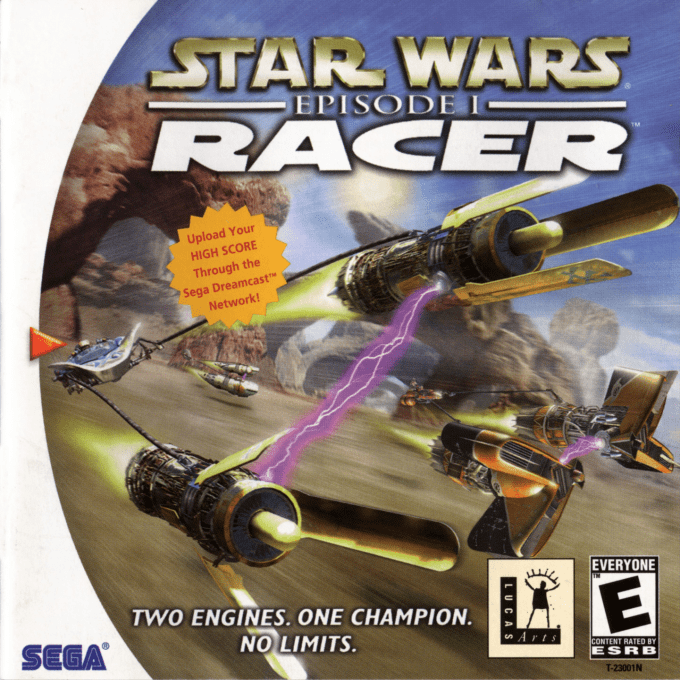
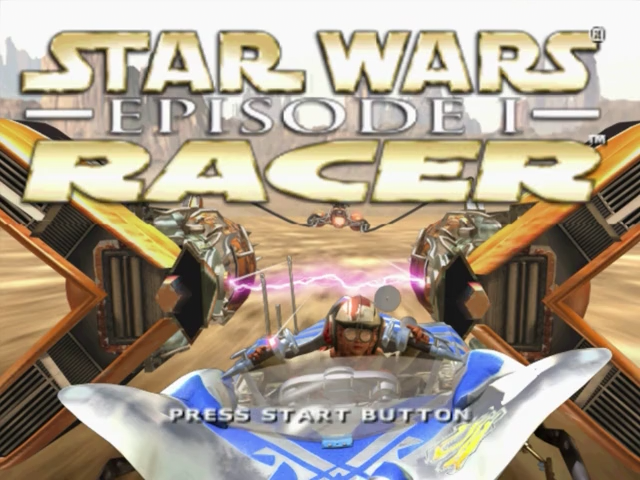
Star Wars : Episode I Racer Dreamcast brings LucasArts’ futuristic racing game to Sega’s console in 2000. Developed and published by LucasArts, it turns the podracing spectacle from Star Wars: Episode I – The Phantom Menace into a full championship of high-speed competition. Players choose a pilot and a hovering machine made from separate engines linked to a small cockpit, then race for position across alien courses where a poor turn, a collision, or an overheated engine can erase a hard-won lead.
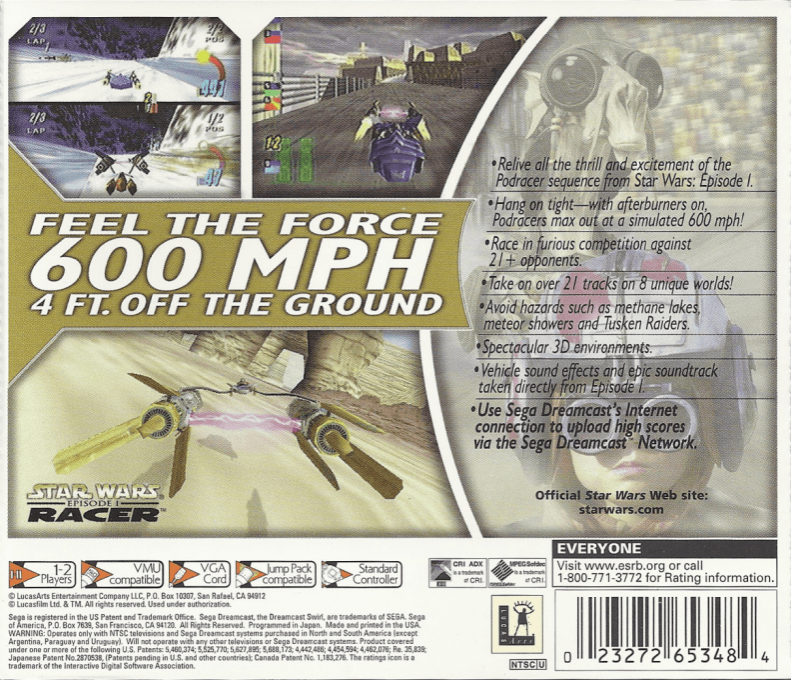
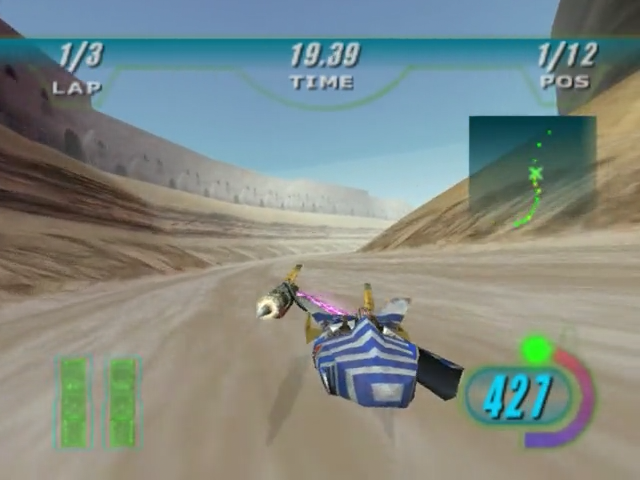
The game starts with the Tatooine contest associated with young Anakin Skywalker and the formidable Sebulba, but its circuit expands far beyond the film sequence. Twenty-five playable racers draw from the movie and the broader game roster, each with a distinct podracer and starting performance characteristics. The courses span eight worlds, using deserts, icy routes, industrial passages, caverns, and hazardous science-fiction environments to make every circuit feel different. Racers may face tight rock corridors, large drops, anti-gravity sections, obstacles, and hostile fire as they search for clean racing lines and useful shortcuts.
Tournament racing provides the long-term structure. Placing well earns prize money and opens additional events and competitors, while Free Race offers a way to return to unlocked tracks with selected opponents and difficulty settings. Time Attack focuses on a solo run against the clock. Between events, credits can be spent on new or used components for the podracer. Upgrades affect traction, steering response, acceleration, top speed, air braking, cooling, and repair performance, so a successful season is about balancing the immediate need for speed with the reliability needed to finish increasingly demanding races.
The central mechanical tension in Star Wars : Episode I Racer Dreamcast comes from managing velocity. A boost can produce the burst of speed needed for a pass, but pushing the engines too far raises their temperature. Crashes damage the vehicle as well, and repair work restores it at the cost of momentum. That gives the fast, arcade-style races a small but important layer of judgment: players must read corners, protect the engines, and decide when a risky straightaway or shortcut is worth the danger. Pit droids support the upgrading and repair economy, tying the hangar screen directly to on-track progress.
This Dreamcast edition is part of the original 1999–2000 release family, rather than the later Game Boy Color adaptation or the modern rereleases. It retains the three-dimensional course design and includes two-player split-screen competition, while the Windows and Macintosh versions used local-network multiplayer instead. LucasArts built the game around the sensation of exposed, extreme speed, with familiar film audio and voices helping connect the expanded racing circuit to The Phantom Menace. For Dreamcast players, it remains a Star Wars racing game centered on mastering tracks, tuning a pod, and trying to outpace the galaxy’s most dangerous rivals.
Gallery
Details
- Developer
- LucasArts
- Publisher
- LucasArts
- Genre
- Racing & Driving
- Players
- 1-4
- Release Date
- April 3, 2000
- System
- Dreamcast