About
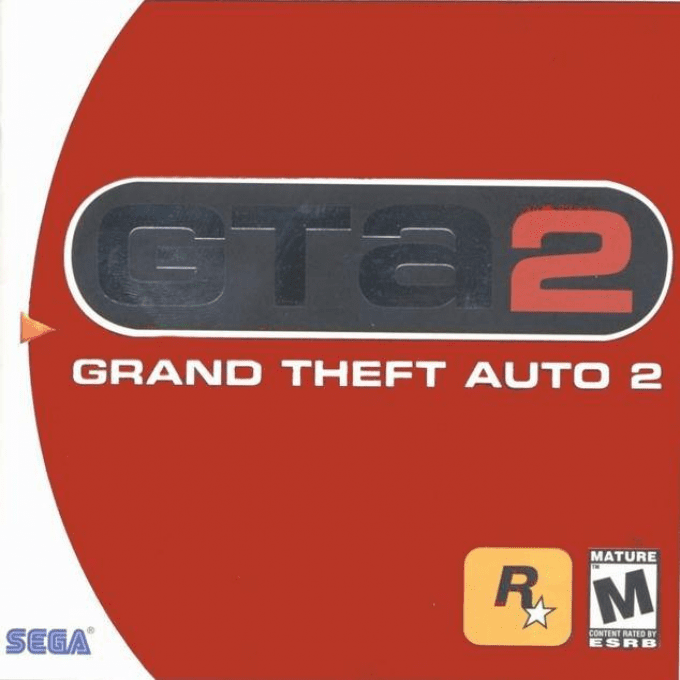
Grand Theft Auto 2 on Dreamcast preserves the anarchic, top-down character of the series before its leap into 3D. Developed by DMA Design and published by Rockstar Games, this is the second main Grand Theft Auto game: a single-player crime adventure set in Anywhere City, a stylized near-future American metropolis. The Dreamcast edition arrived in North America in 2000, after the Windows and PlayStation releases of 1999, bringing the same essential GTA2 experience to Sega’s console rather than a new sequel or a different setting.
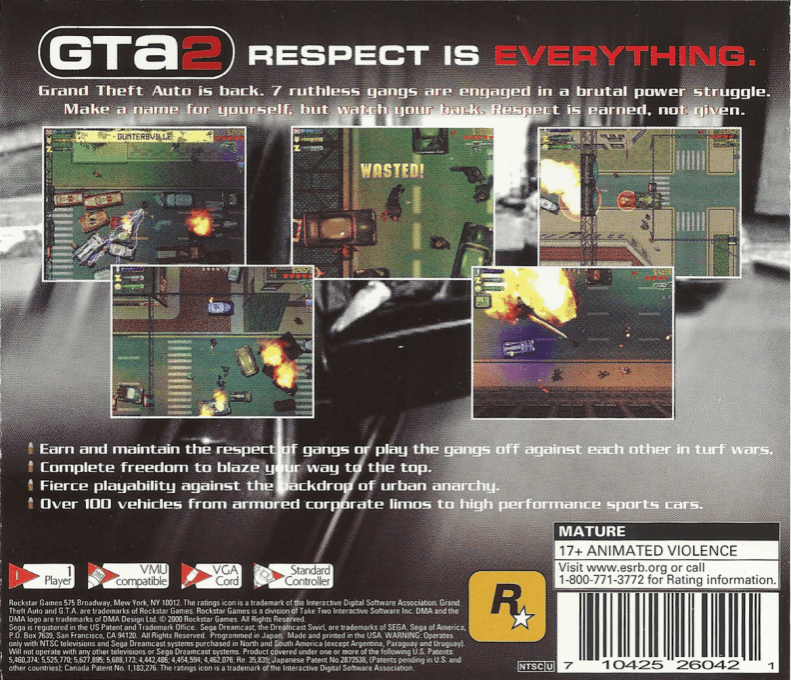
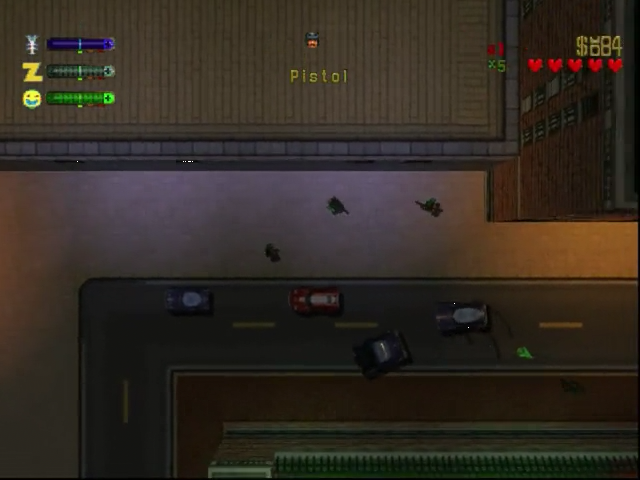
Anywhere City is built for aimless trouble as much as for missions. Seen from above, its streets fill with traffic, pedestrians, police, rival criminals, garages and useful vehicles waiting to be taken. A session can begin with a purposeful drive toward a job and veer into a police chase, a taxi run, a delivery, a vehicle sale or a reckless attempt to see how long the law can be kept at bay. Score is central to progress, so mayhem has a practical side, but missions provide the larger rewards and the clearest route through the game’s three districts: Downtown, Residential and Industrial.
GTA2’s defining idea is its gang-respect system. Each district contains three criminal syndicates whose interests collide, and taking jobs for one group can improve its opinion of you while damaging your standing with a rival. That turns mission selection into a small but lively tactical problem. Ally yourself with a gang for access to more work and special help, or knowingly burn that relationship to serve another crew. Hostile gang members do not simply disappear because a mission is over, so the city’s shifting loyalties give its free-roaming action a sharper edge than a simple list of assignments.
The Dreamcast version still delivers the early-series rhythm that makes GTA2 distinctive: steal a car, follow the map, answer a payphone, improvise when a plan collapses, then escape the consequences. Vehicles are not interchangeable props; different cars, vans, emergency vehicles and heavier machines alter the feel of a getaway. Garages can equip vehicles with special upgrades, while side activities offer more ways to earn points outside gang jobs. A health meter, hidden packages and the ability to save during a level at the church add useful structure to the city-wide disorder.
Police pressure escalates with the trouble you cause. A minor scrape may be survivable, but continued destruction or attacks bring a stronger response and make every wrong turn more expensive. Arrest or death costs the player collected equipment and affects the score multiplier, giving reckless play a real setback without taking away the freedom to cause it. The result is a compact open-world game in which every siren can turn a routine drive into a desperate route-planning exercise.
Music and ambience are a major part of the trip through Anywhere City. GTA2 uses in-car radio stations, including the returning Head Radio, alongside advertisements and emergency-service chatter. The stations help each district feel less like a static map and more like a hostile, noisy city with its own strange broadcast culture. This is an early example of a Grand Theft Auto habit that would become inseparable from the series: the car is transport, cover, weapon and radio all at once.
For players comparing formats, the key distinction is historical and practical. Windows and PlayStation received GTA2 in October 1999; the Dreamcast followed in 2000. The Dreamcast release remains a top-down GTA2 built around the same Anywhere City, score targets, gang relationships, driving and on-foot action, not the fully 3D design associated with Grand Theft Auto III. It supports the Dreamcast controller and uses the Visual Memory Unit for saved data, making it a self-contained console way to play the pre-GTA III formula.
Grand Theft Auto 2 is best approached as a piece of series history with plenty of playable personality of its own. Its city may be viewed from far above and its objectives may be framed around points, but its most memorable moments come from unpredictable intersections: a gang feud spilling into traffic, a stolen car becoming a lifeline, an ordinary mission unraveling under a growing wanted response. For Dreamcast collectors and retro action fans, it offers a direct route to the era when Grand Theft Auto’s big idea was not cinematic realism, but the mischievous freedom to make a city react.
Gallery
Details
- Developer
- DMA Design
- Publisher
- Rockstar Games
- Genre
- Action-Adventure, Racing & Driving
- Players
- 1
- Release Date
- April 30, 2000
- System
- Dreamcast