About
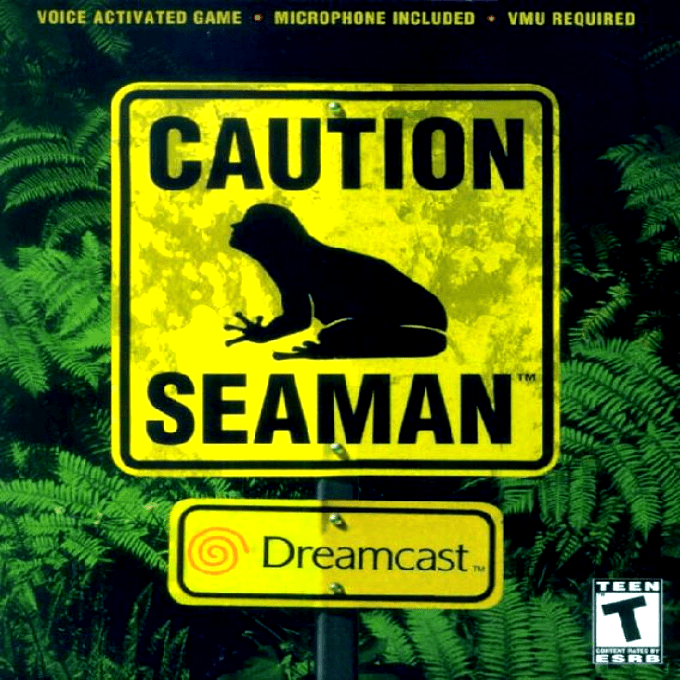
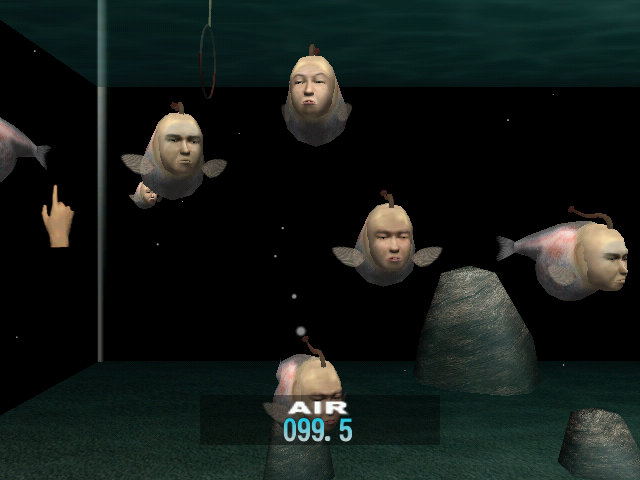
Seaman for Dreamcast is a single-player virtual-pet simulation created by Vivarium under designer Yoot Saito. It debuted in Japan in July 1999 as Seaman: Kindan no Pet before reaching North America in August 2000. Rather than presenting a conventional campaign of levels or battles, the game turns the Dreamcast into the habitat of an uncanny aquatic species: a fish-bodied creature with a human face, raised in a laboratory aquarium and gradually transformed by the player’s daily attention.
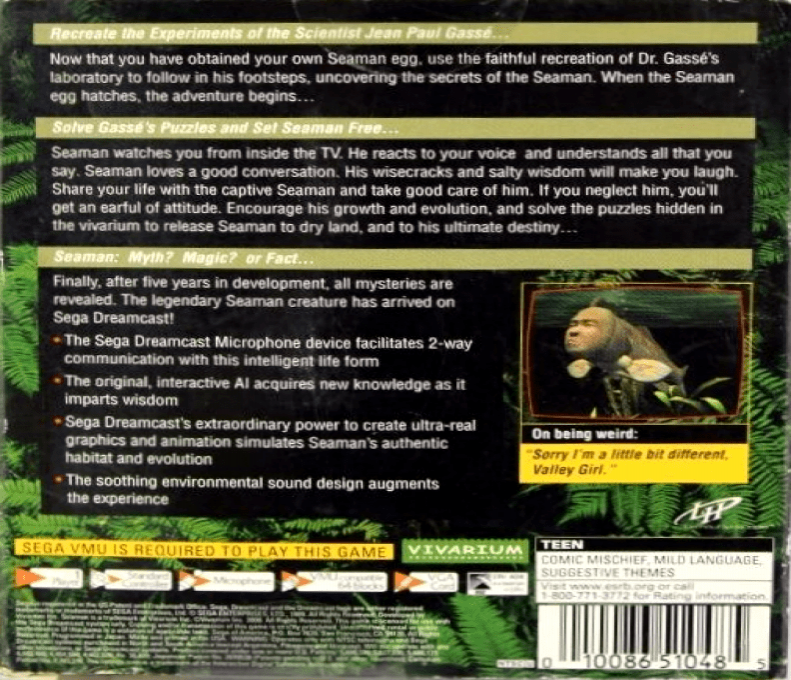
A Dreamcast microphone is central to the experience. The accessory plugs into the controller beside the VMU, and the game expects players to speak clearly and keep replies short when the creature begins to converse. Seaman asks questions, reacts to answers, repeats or mishears speech early in its development, and eventually offers comments and trivia with an intentionally prickly personality. The English-language version is framed by narration from Leonard Nimoy, while the Japanese release uses a different narration and voice presentation.
Care proceeds in real time, so a healthy habitat depends on returning regularly. Using the Dreamcast controller, players oversee essentials such as temperature, water conditions, feeding, and the equipment around the tank. The first creatures hatch in an early Mushroomer form, then pass through increasingly recognizable fish-like and amphibious stages. Observation is as important as direct input: population changes, growth, and breeding determine when the next phase of the life cycle becomes available.
The aquarium itself evolves with the animals. Gillman Seamen acquire speech and a larger vocabulary, and later forms develop limbs as the environment changes from a mainly aquatic tank to a terrarium with land. After breeding and the arrival of a new generation, the creatures progress from tadpole-like forms toward the final Frogman stage. That long transformation gives Seaman Dreamcast a clear objective—successfully guide the species through its life cycle—while its odd dialogue and uncertain responses make every check-in feel less scripted than a standard pet game.
Vivarium built Seaman around voice interaction at a time when the Dreamcast microphone was rarely the focus of a console release. The North American edition was published by Sega and arrived with the microphone needed for its conversational design; the Japanese Dreamcast game carried the Seaman: Kindan no Pet name. A Japan-only PlayStation 2 follow-up version later revisited the concept, but the original Dreamcast release remains the foundation of the series: an experimental blend of aquarium care, creature evolution, and spoken exchanges with one of the platform’s most unusual inhabitants.
Gallery
Details
- Developer
- Vivarium
- Publisher
- Vivarium
- Genre
- Other Simulation
- Players
- 1
- Release Date
- August 8, 2000
- System
- Dreamcast