About
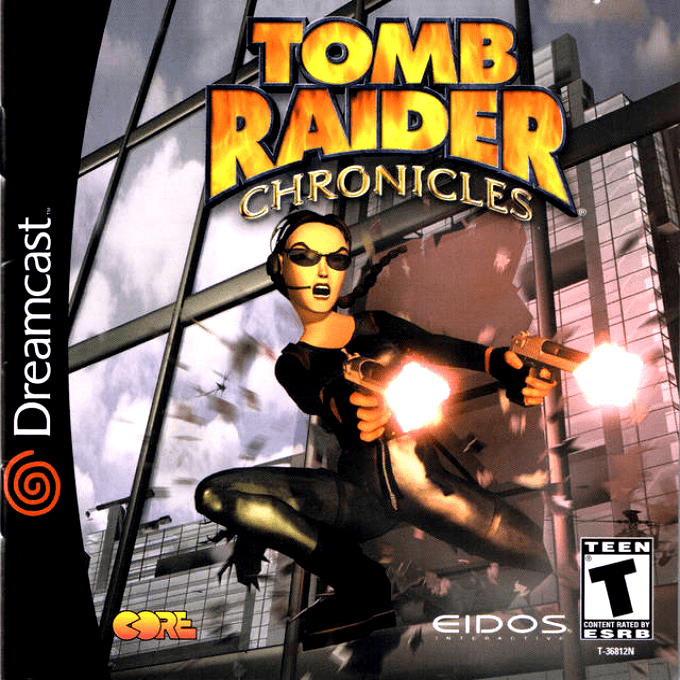
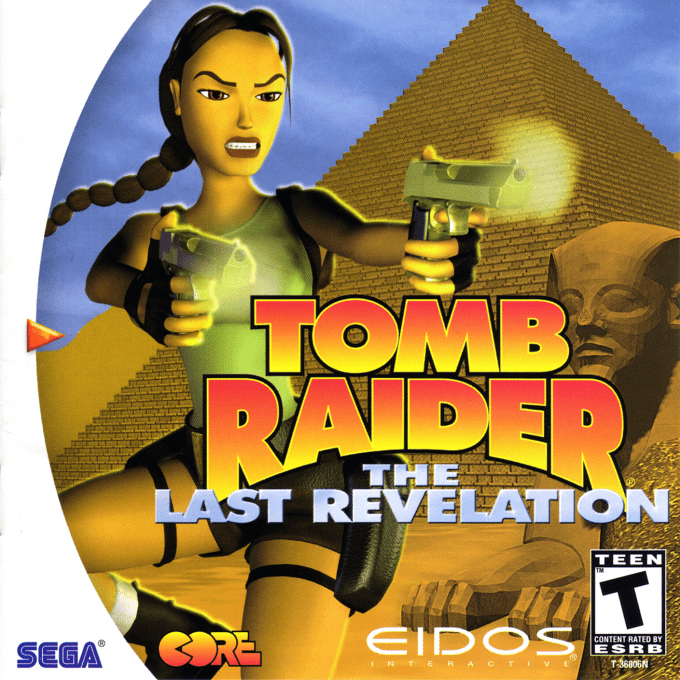
Tomb Raider: The Last Revelation brings Lara Croft’s fourth adventure to Dreamcast as a full 2000 conversion of Core Design’s 1999 PlayStation and Windows release. Published by Eidos Interactive, it sends the archaeologist back toward the series’ strongest ingredients: ancient ruins, elaborate mechanisms, quiet corridors and dangerous leaps measured one careful step at a time. Rather than scattering the adventure across the globe, the game builds a long, connected Egyptian expedition around a single escalating crisis.
The story opens with a younger Lara and her mentor Werner Von Croy exploring Cambodia, then moves to Egypt years later. A discovery tied to the god Set has gone terribly wrong, and Lara must trace a route through tombs, temples, cities and deserts to contain the danger she helped unleash. That premise gives the adventure a more focused archaeological mood than its immediate predecessor, with Egyptian mythology, lost artifacts and the uneasy relationship between Lara and Von Croy driving the journey forward.
This is classic third-person Tomb Raider at its core. Lara searches room complexes for keys, artifacts and clues; manipulates switches, chains and movable objects; and judges the timing of jumps above pits, water and traps. The level structure is split into broad zones, some of which must be revisited as new objectives open paths elsewhere. It rewards observation as much as reflexes, particularly when a newly found item, a half-seen doorway or a mechanism in a previous area suddenly becomes relevant.
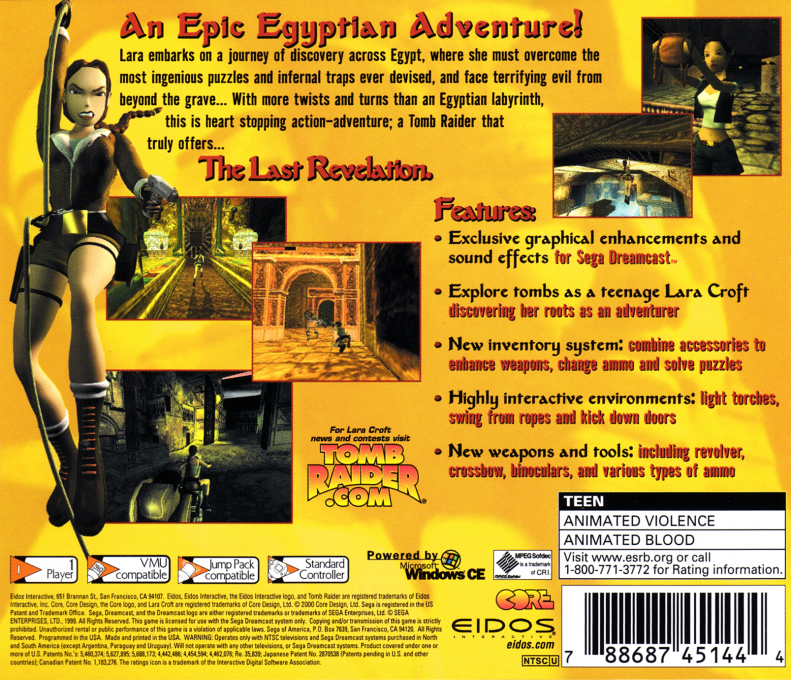
The Last Revelation expands Lara’s traversal toolkit without abandoning the deliberate, tank-style movement of the early games. She can sprint, climb, crawl through tight spaces, move objects and take manual control of the camera to inspect an area. Rope swinging and overhead monkey swinging add new platforming challenges, while the opening tutorial turns those fundamentals into part of the story instead of keeping them in Croft Manor. The redesigned inventory also puts greater emphasis on using the right equipment or key item at the right point in a puzzle.
Exploration is not limited to on foot. A jeep and a motorcycle with a sidecar break up the tomb crawling with vehicle sections, and Lara still carries the familiar firearms needed when animals, guards and supernatural threats block her route. The balance remains firmly tilted toward puzzles and atmosphere: echoing chambers, torchlight, distant hazards and the occasional burst of action make the world feel less like a simple shooting gallery and more like an expedition that can turn hostile without warning.
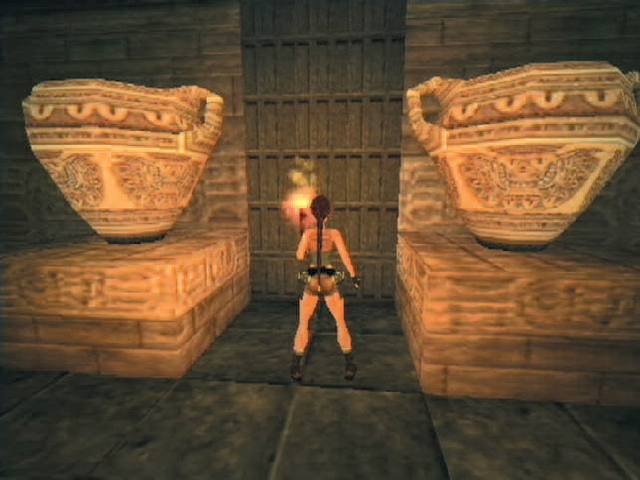
On Dreamcast, this is a port of the PC game rather than a separate redesign. It preserves the same campaign, characters, puzzles, vehicles and fundamental systems found in the PlayStation and PC editions, while the hardware gives it a cleaner, higher-resolution presentation than PlayStation. Contemporary coverage noted smoother imagery, richer color and Lara’s real-time shadow, so this version can look noticeably more polished than the original console release even though its environments still carry the visual language of the late 1990s engine.
That upgrade is not without tradeoffs. Reviews at the time reported uneven frame rates, especially in open spaces, and felt the port did not fully exploit Dreamcast hardware. The console’s controller also makes the game’s old-school precision feel more particular: Lara’s movement remains built around facing, pivoting and committed jumps, and the control setup can require players to switch between the analog stick and directional pad for functions such as sidestepping and cautious walking. Patience with that methodical rhythm is part of the experience.
For Dreamcast players, Tomb Raider: The Last Revelation is therefore a historically interesting way to play one of Core Design’s more tomb-focused sequels. It offers a substantial Egypt-centered Lara Croft adventure with dense puzzle spaces, memorable traversal ideas and a more refined image than the PlayStation version, while retaining the era’s demanding controls and occasional technical roughness. It is best approached as a deliberate exploration game: read the architecture, respect the jumps and let each newly opened route pull you deeper into its ancient mystery.
Gallery
Details
- Developer
- Core Design
- Publisher
- Eidos Interactive
- Genre
- Other Adventure
- Players
- 1
- Release Date
- March 29, 2000
- System
- Dreamcast