About
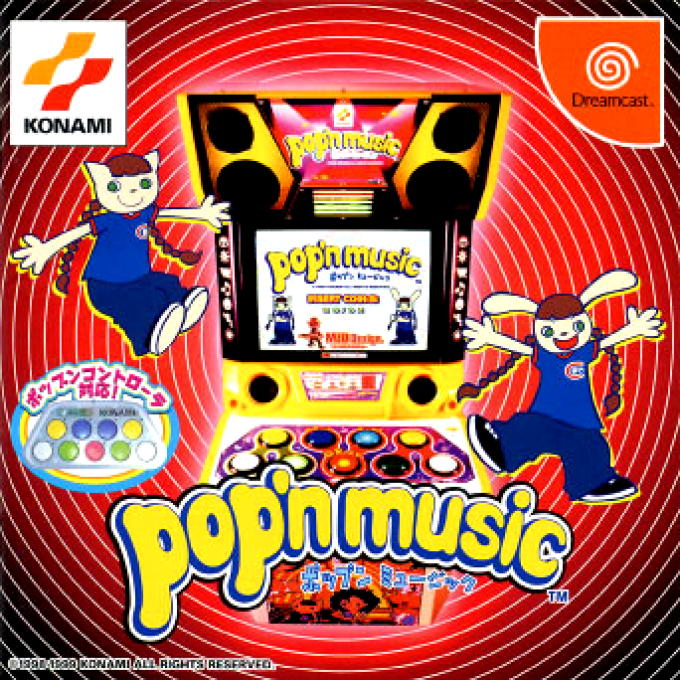
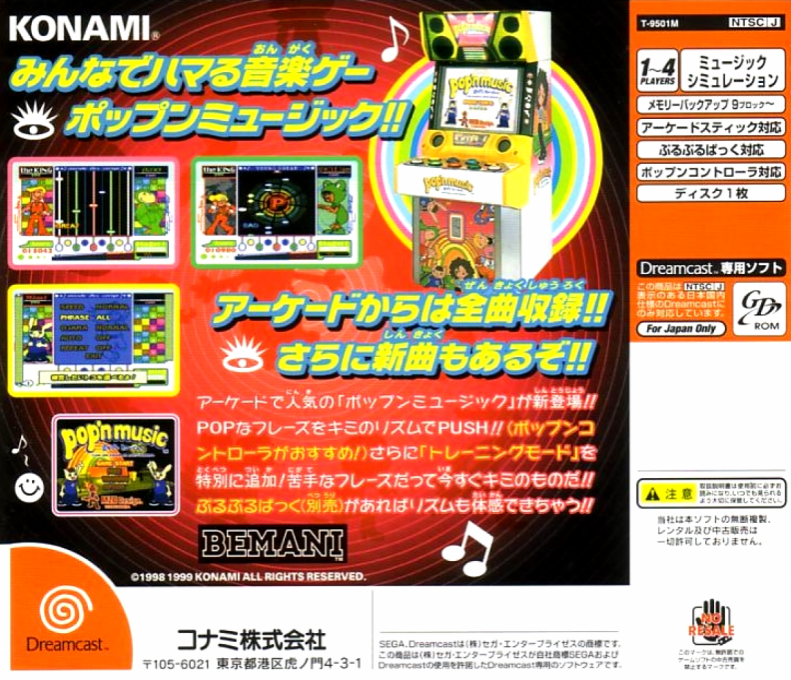
Pop'n Music for Dreamcast is Konami's Japanese home-console adaptation of the colorful Bemani rhythm-game series. Released on February 25, 1999, it brought the first arcade Pop'n Music—originally introduced in Japanese arcades in 1998—to Sega's console alongside a PlayStation edition. Rather than trying to simulate a conventional instrument, the game asks players to perform songs on a bright nine-button layout, giving the Dreamcast a characterful music game from Konami's early rhythm-game boom.
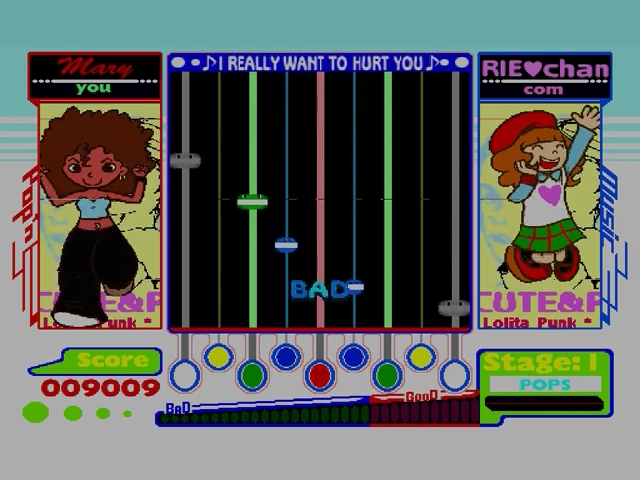
Each song is played against a vertical note display. Round Pop-kun markers descend in nine columns, and the player must press the matching colored button as each marker reaches the judgment line. Accurate timing builds the Groove Gauge and raises the score, while missed notes interrupt a run of successful hits. The simple premise makes the first stages immediately readable, but the full nine-button arrangement asks for quick hand movement, coordination, and increasingly confident timing as patterns become denser.
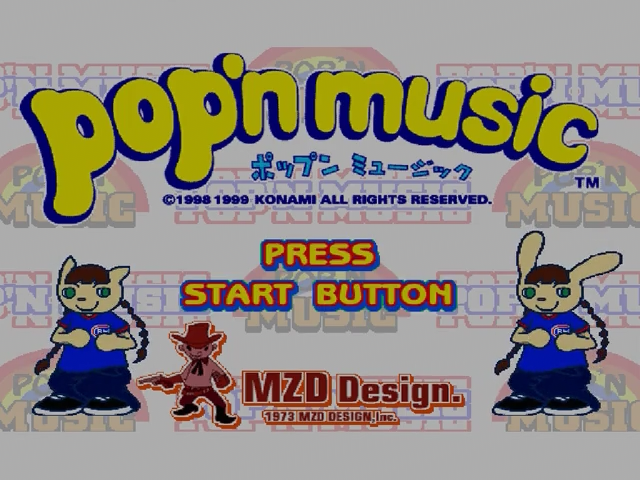
Pop'n Music frames those performances with a deliberately cheerful presentation. Players select from cartoon-style characters and work through music drawn from a broad mix of styles, a contrast to the club-oriented identity of Konami's earlier Beatmania. The colored notes, animated characters, and easily recognized button layout make the action as much about following a lively visual rhythm as memorizing a controller sequence. Difficulty options and the series' early disruptive Ojama-style obstacles add variation for players looking beyond a straightforward score attempt.
The Dreamcast release is particularly associated with Konami's dedicated Pop'n Music Controller, a flat peripheral fitted with the game's nine large colored buttons. The standard Dreamcast pad can be used, but the controller mirrors the central arcade idea more closely and makes the relationship between the falling lanes and physical inputs much clearer. This home version also includes a Training Mode not found in the original arcade release, giving newcomers a way to become familiar with the layout and timing demands before tackling songs normally.
As the first console Pop'n Music, the Dreamcast game occupies an important place in a series that would receive frequent arcade updates, new characters, and later console entries. Konami went on to bring Pop'n Music 2, Pop'n Music 3, and Pop'n Music 4 to Dreamcast as well, while subsequent mainline home releases shifted toward PlayStation hardware. For players exploring Dreamcast rhythm games, this original Pop'n Music captures the format at its foundation: nine buttons, falling Pop-kun, varied music, and an approachable design that can grow demanding once the notes begin to fill the screen.
Gallery
Details
- Developer
- Konami
- Publisher
- Konami
- Genre
- Rhythm Game
- Players
- 1-4
- Release Date
- February 25, 1999
- System
- Dreamcast