About
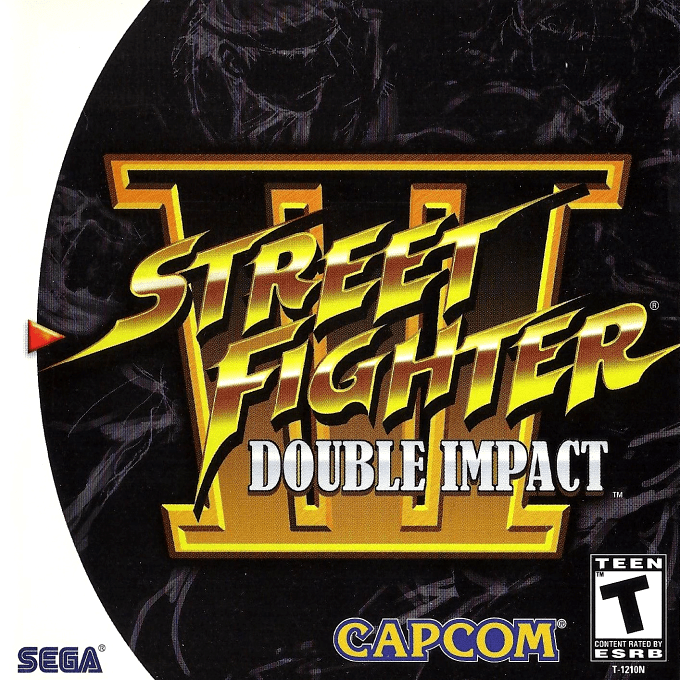
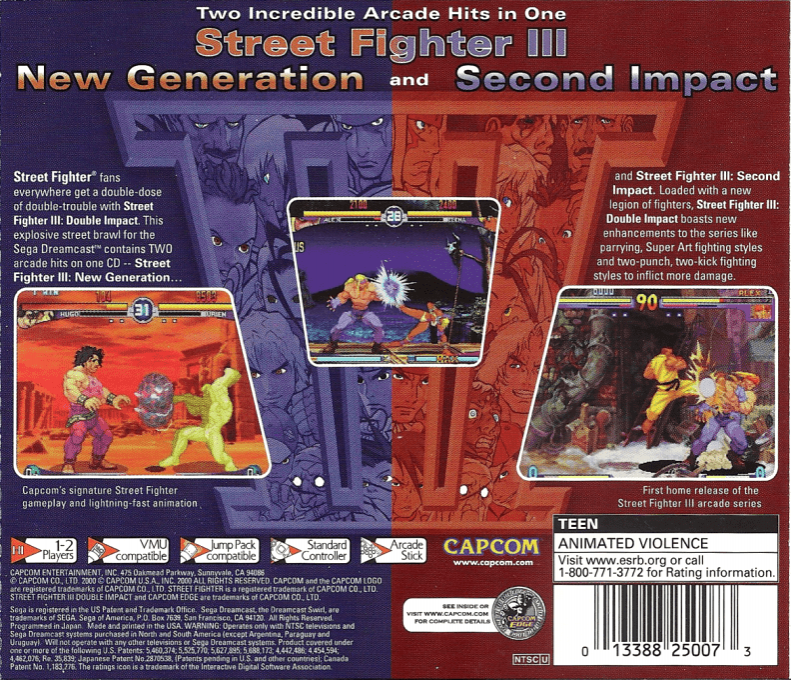
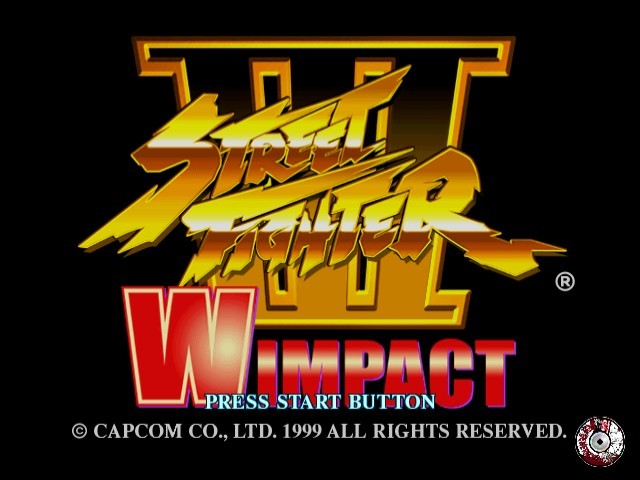
Street Fighter III: Double Impact for Dreamcast is Capcom’s two-game collection of the opening chapters of the Street Fighter III saga. Released in Japan in late 1999 as Street Fighter III: W Impact and brought to North America and Europe in 2000, it places Street Fighter III: New Generation and Street Fighter III: 2nd Impact - Giant Attack on one GD-ROM. Capcom developed the package; Capcom published it in Japan and North America, while Virgin Interactive handled the European release. It is a dedicated 2D, one-on-one fighting compilation for Sega’s Dreamcast, rather than a port of the later Street Fighter III: 3rd Strike.
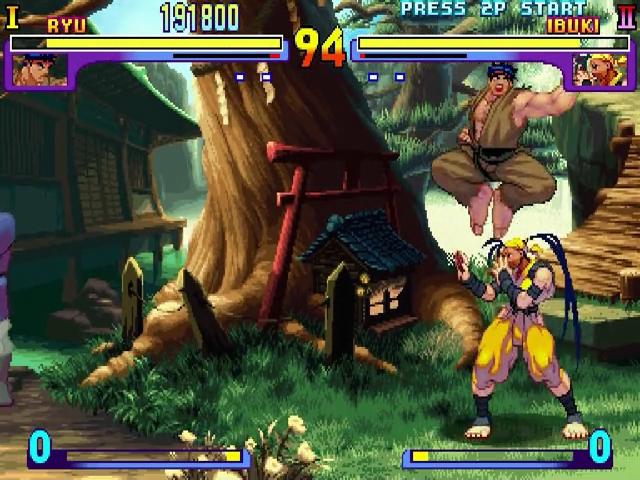
Each included game follows the familiar Street Fighter format: select a combatant and defeat a sequence of rivals through best-of-round bouts, using punches, kicks, throws, jumps, special moves, and careful positioning. The Street Fighter III games distinguish themselves with parries. By tapping toward an incoming high or mid attack, or down against a low attack, a player can deflect the strike instead of absorbing normal block damage and gain an opening for a counterattack. The timing is deliberately strict, so the mechanic rewards anticipation as much as execution. Dashes, retreating steps, super jumps, and quick recoveries add further movement options to the traditional six-button fighting controls.
Before a match, players choose one of each character’s Super Arts. Attacking and taking part in the fight builds the selected Super Art gauge, eventually enabling that character’s powerful signature technique. The choice matters because the available Super Arts have different gauges and stock capacities, giving players a reason to tailor their approach around a favorite move. New Generation also introduced a new cast led by Alex, alongside returning martial artists Ryu and Ken. Other fighters include Sean, Yun, Yang, Ibuki, Elena, Dudley, Necro, Oro, and the final opponent Gill, whose fire-and-ice attacks make him a distinctive challenge.
2nd Impact is not simply a duplicate disc selection; it is the first major arcade revision of Street Fighter III. It expands the playable lineup and makes changes to moves and systems, adding fighters such as the powerful wrestler Hugo and bringing Akuma into the series. Yang becomes separately selectable rather than sharing Yun’s character slot, giving the twins their own places on the roster. The game also restores bonus stages to the series and supplies its own version of the Street Fighter III fighting experience, so Double Impact lets players compare the original release and its update without changing platforms.
The Dreamcast presentation offers more than a straight arcade menu. Both games include Arcade, Versus, Training, and Options modes, allowing solo play, local head-to-head matches, practice, and configuration from the same collection. 2nd Impact also has Parry Attack Mode, a bonus challenge built around the timing-based defensive system. The console release makes Gill playable in both included games and unlocks Shin Akuma in 2nd Impact, characters who were computer-controlled in the arcade editions. Standard Dreamcast controllers and arcade sticks can be used for its one- or two-player matches.
Street Fighter III: Double Impact arrived during Capcom’s continued commitment to hand-drawn 2D fighting games, even as polygonal fighters were prominent in the era. The original arcade games ran on Capcom’s CP System III hardware and feature highly animated character sprites; the Dreamcast collection brought those first two installments together for home play. Its Japanese name, W Impact, reflects the paired-release concept, while the western title emphasizes the same double feature. For Dreamcast fighting-game libraries, it remains the compilation that preserves Street Fighter III’s New Generation and 2nd Impact eras together, before the separate Dreamcast release of 3rd Strike.
Gallery
Details
- Developer
- Capcom
- Publisher
- Virgin Interactive
- Genre
- Fighting
- Players
- 1-2
- Release Date
- June 20, 2000
- System
- Dreamcast