About
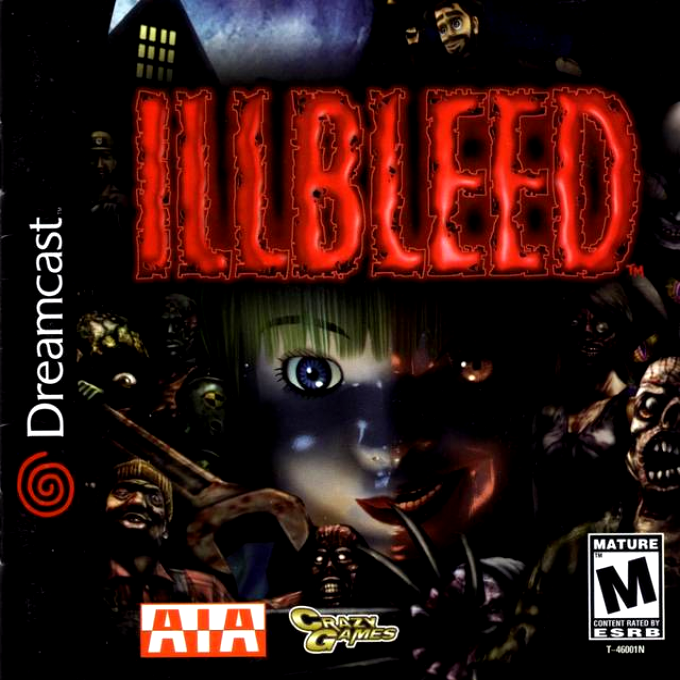
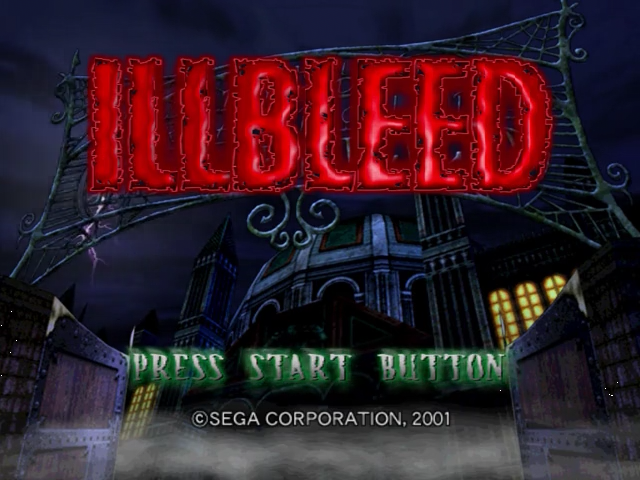
Illbleed is a Dreamcast survival-horror game released in Japan in March 2001 and in North America that April. Developed by Tokyo studio Crazy Games, formerly known as Climax Graphics, it was self-published in Japan and localized in North America by AIA USA. The game turns the familiar haunted-house premise into a deliberately extravagant B-movie amusement park adventure. Its heroine, high-school horror enthusiast Eriko Christy, follows her missing friends into the new Illbleed park after they answer an invitation from its creator, horror-film producer Michael Reynolds. What begins as a search-and-rescue mission becomes a series of dangerous attractions built around the producer's fictional movies.
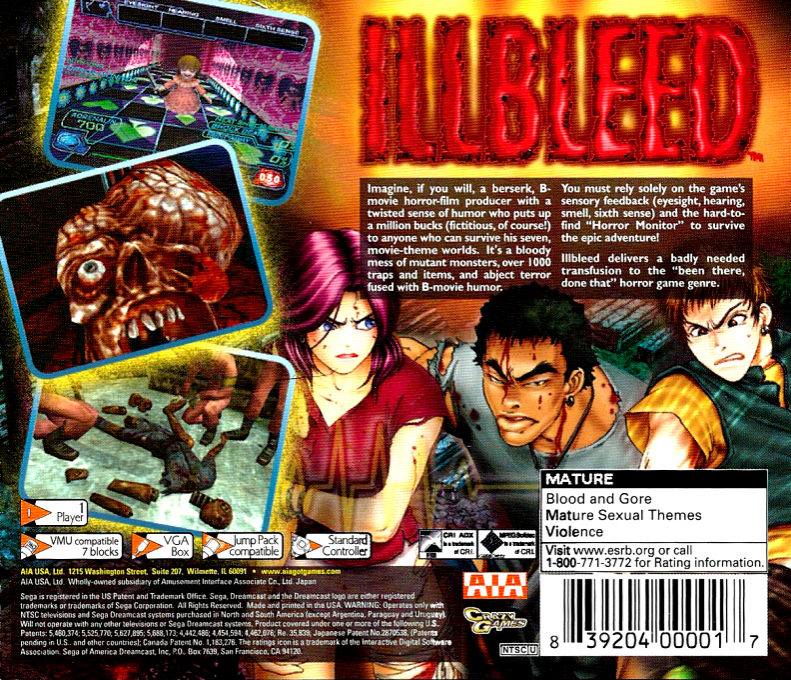
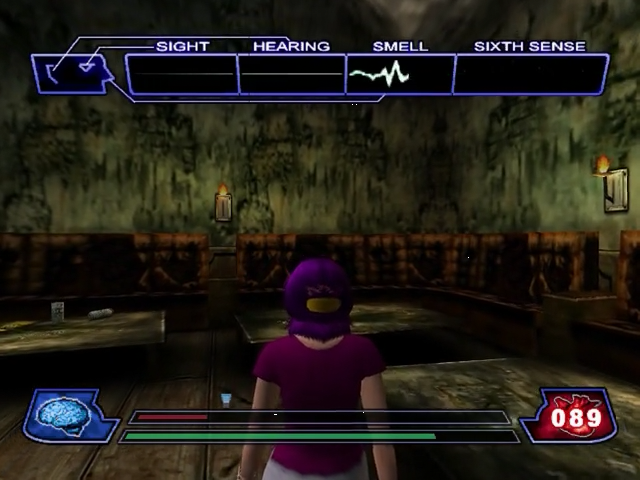
Rather than following the combat-heavy pattern of many horror games, Illbleed on Dreamcast is centered on anticipation and trap detection. Eriko moves through attraction stages filled with concealed dangers, hostile creatures, useful objects, and scripted scares. A sensory display represents sight, hearing, smell, and a sixth sense; reactions on that display warn that something nearby may deserve scrutiny. The player spends adrenaline to mark suspicious locations, then surveys them to learn whether they conceal a trap. Correctly exposing a trap disables it and restores the expenditure, while identifying an enemy can provide an advantage before a confrontation. This makes progress a careful balance between investigating rooms, preserving resources, and deciding when a warning is worth following.
The game tracks more than an ordinary health bar. Physical damage affects a character's stamina and bleeding, while frightening events can raise the heart rate; both extremes can end a run. Recovery items and upgrades are available through the park's hub and stage facilities, and prize money earned by clearing attractions helps pay for them. Combat can occur when monsters are engaged, but avoiding surprises is as important as defeating opponents. Escape is also an option in some situations. Each attraction has its own objective and horror-film theme, so the experience moves from one exaggerated scenario to another instead of presenting a single continuous mansion or town.
Eriko starts the adventure alone, but rescuing people expands the roster. Kevin Kertsman, Randy Fairbanks, and Michel Waters are among the friends she is trying to find, and saved characters can be selected for later stages. Their different strengths and weaknesses give the survival systems practical consequences: losing a character does not necessarily end the game immediately, but it limits the available team. The story's amusement-park setting gives Crazy Games room for monsters, mechanical threats, slapstick shocks, and an intentionally lurid tone. The attractions are presented as elaborate simulations of Reynolds's movies, with dangers designed to test visitors instead of simply serving as background decoration.
Illbleed arrived late in the Dreamcast's commercial life, shortly after Sega announced it would discontinue the hardware. Its unusual concept grew out of Crazy Games' interest in haunted-house attractions and American horror films, following the studio's earlier Dreamcast game Blue Stinger. Shinya Nishigaki led the project, whose development team used a new engine intended to improve on the camera and technical issues encountered in its predecessor. The result is a single-player Dreamcast game with a very specific identity: a survival-horror adventure where reading a room, recognizing a suspicious sound or object, and managing a character's condition are integral to surviving the show.
The regional releases are worth distinguishing when looking at Illbleed's history. Crazy Games issued the Japanese Dreamcast edition, while AIA USA handled the North American version; the title was also distributed in other Asian markets. An Xbox version was planned but never released. Illbleed did not become a major commercial success at launch, yet its strange mixture of trap scouting, health monitoring, dark comedy, and movie-park spectacle has kept it notable among distinctive Dreamcast horror games. For players exploring the system's late-era library, it remains an unconventional take on survival horror that places the tension before the jump scare: notice the threat, decide whether to investigate, and try to leave the attraction alive.
Gallery
Details
- Developer
- Crazy Games
- Publisher
- SEGA
- Genre
- Survival Horror
- Players
- 1
- Release Date
- April 16, 2001
- System
- Dreamcast