About
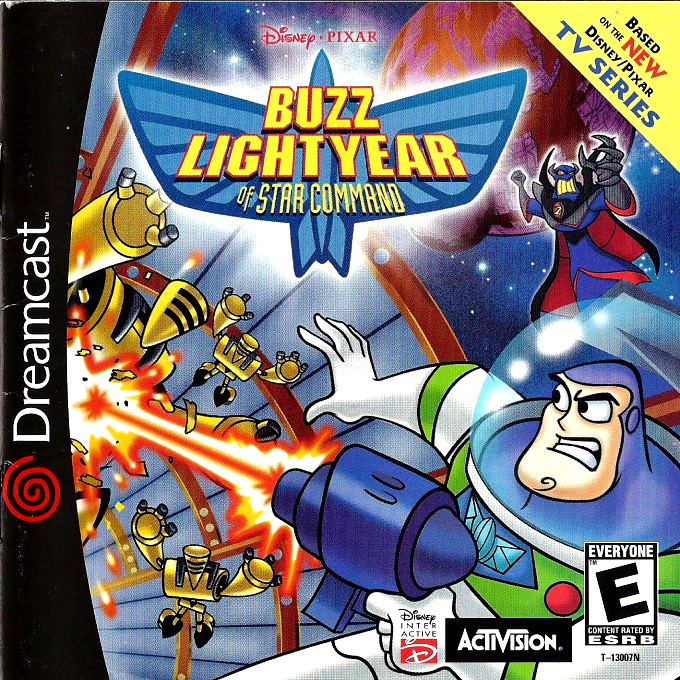
Disney-Pixar Buzz Lightyear of Star Command is a 2000 third-person action-platform game for Dreamcast, developed by Traveller's Tales and published by Activision alongside Disney Interactive. It draws on the Buzz Lightyear of Star Command animated spin-off rather than placing the player in the toy-room world of the Toy Story films. On Dreamcast, it presents Buzz as the Space Ranger hero of a colorful interplanetary pursuit, mixing running, shooting, platforming, collectible hunting, and boss encounters into a family-oriented adventure.
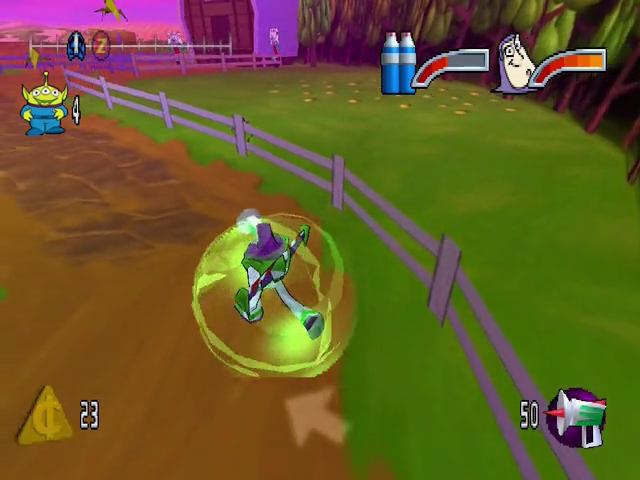
The central idea is a chase. In each mission, Buzz races through a linear route after a criminal while hostile robots and creatures try to slow him down. The villain cannot be captured until the end of the course, so success depends on reaching the final arena before the target escapes. If the villain arrives first, the game gives Buzz a brief window to catch up. Beating the opponent to the finish also brings in fellow ranger Mira Nova to weaken the foe before the confrontation, making the ensuing battle more manageable.
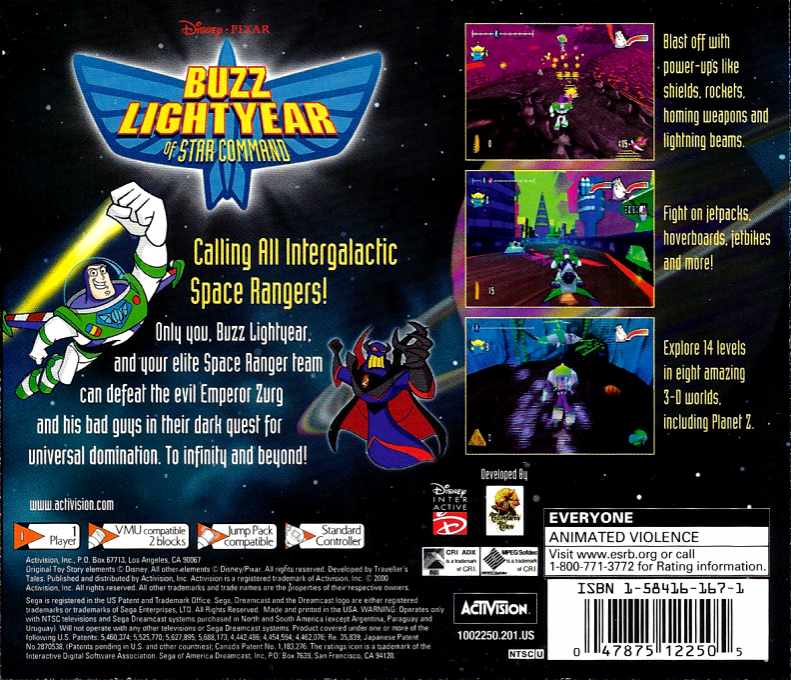
Levels take Buzz across a selection of fictional planets and build their challenges around movement and combat. His blaster is used against regular enemies, while jumps, moving paths, hazards, and alternate routes give the stages their platform-game structure. Coins scattered along the way are more than score items: they can be spent on practical upgrades such as stronger weapons and shields. This makes repeat runs useful even after a player has seen a stage's main route, especially when saving resources for a troublesome later mission.
Several purchasable gadgets change how Buzz travels through the courses. The hoverboard, jet bike, and jet pack provide fast or airborne alternatives in the appropriate situations, while teleporters and boost pads can open shortcuts or push the ranger further through a level. Buzz can also call on Booster, a fellow Space Ranger whose ground-pound attack clears nearby enemies. These systems give the game a light arcade flavor within its otherwise straightforward chase-and-platform format, rewarding players who look around a stage instead of simply running for its exit.
Progress is tied to medals, so the main campaign is not just a sequence of one-time victories. Players earn them by meeting money totals and rescuing Little Green Men hidden throughout the levels. Completed missions can then be revisited in extra objectives: one asks Buzz to recover parts for the robotic ranger XR, and another turns the level into a time trial. Those replay modes extend the search for medals and put more emphasis on route knowledge, shortcuts, and efficient use of the available power-ups.
The Dreamcast edition is one of the full home-console versions, with 14 levels and video clips from the television series. It differs substantially from the separate Game Boy Color release, which uses a top-down viewpoint and a shorter set of levels. The Dreamcast game instead keeps its action behind Buzz, framing the environments, enemies, and vehicle sections in 3D. Its Dreamcast release arrived on September 26, 2000, putting it among the platform's late-era licensed action games.
Buzz Lightyear of Star Command aims for an accessible adventure that younger fans of the character can approach while still offering optional medals and replay challenges for completion-minded players. Contemporary reviews were mixed, with critics often pointing to the camera and the repetitive chase structure, though the colorful presentation, array of power-ups, and recognizable Space Ranger setting remained central to its appeal. For Dreamcast collectors, it is a distinct early-2000s adaptation of Buzz's animated sci-fi persona, built around the simple goal of pursuing villains across the galaxy and eventually taking on Evil Emperor Zurg.
Gallery
Details
- Developer
- Traveller's Tales
- Publisher
- Activision
- Genre
- Platformer
- Players
- 1
- Release Date
- September 26, 2000
- System
- Dreamcast