About
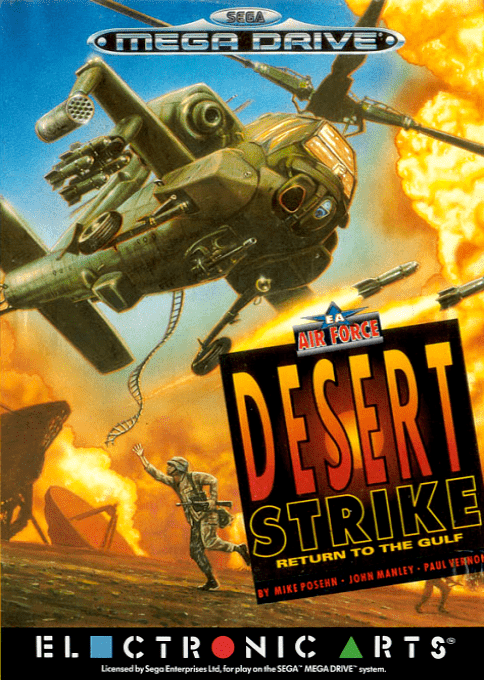
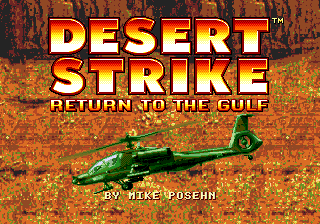
Desert Strike: Return to the Gulf for Sega Genesis/Mega Drive is Electronic Arts’ 1992 isometric helicopter action game and the opening entry in the Strike series. Designed by Mike Posehn and John Manley, it casts the player as the pilot of a heavily modified AH-64 Apache sent into a fictional Persian Gulf crisis. A self-styled dictator, General Kilbaba, has seized a neighboring emirate and is assembling a dangerous military force, leaving the United States to answer with a succession of fast, high-risk desert operations.
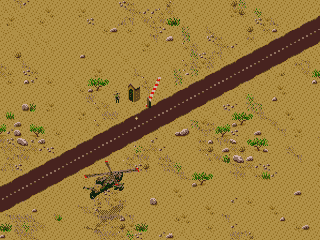
Rather than using a straight corridor of enemies, Desert Strike places the Apache over wide, freely navigable battlefields seen from an angled overhead viewpoint. The helicopter can turn and travel in every direction while the camera follows its momentum, so positioning and cautious approach routes matter as much as firing. The D-pad handles flight, while the Genesis controller assigns the chain gun, Hydra rockets, and Hellfire missiles to separate buttons. Each weapon answers a different threat, and the more destructive ordnance is correspondingly limited.
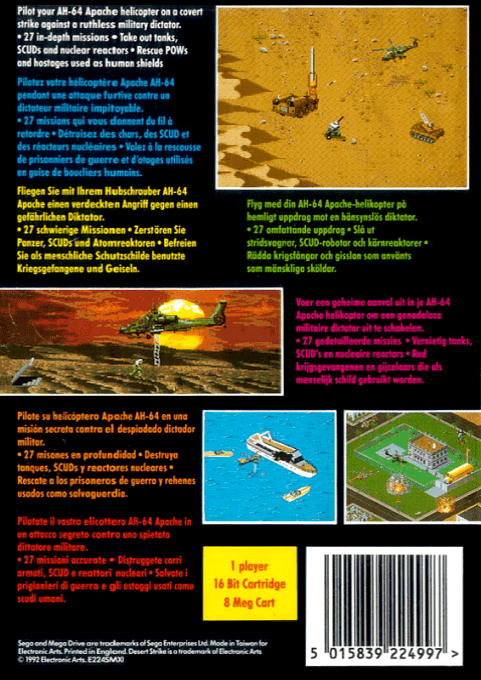
Every campaign is made up of linked tasks rather than a single target. The pilot may destroy airfields, missile launchers, weapons facilities, vehicles, and defenses; collect intelligence; take prisoners; or rescue hostages, prisoners of war, and friendly personnel. Mission information and the pause-screen battle map help identify objectives, supplies, and enemy positions. Reading updates and choosing an order for nearby work is important because a completed objective can reveal the next part of the operation or make the surrounding area safer.
Flying well also means keeping the Apache supplied. Fuel continuously drains in flight, and the helicopter can be lost if it runs dry or its armor is exhausted under enemy fire. Ammunition crates and fuel drums must be collected from the landscape, while carrying rescued people or captured enemies back to a friendly landing zone can restore armor. The aircraft can lift people, crates, and barrels by hovering over them, but it cannot carry everything at once. Those limits turn each sortie into a balance of combat, transport, navigation, and resource planning.
The Genesis game progresses through four named campaigns: Air Superiority, Scud Buster, Embassy City, and Nuclear Storm. Kilbaba’s escalating program moves from air power and chemical threats to biological weapons, hostage rescues, and a final nuclear emergency. The scenario deliberately echoes the public imagery of the recent Gulf War without representing a real battlefield or political figure. Briefings, radio-style status reports, and cinematic scenes frame the missions while keeping the player’s immediate focus on reconnaissance, extraction, and destroying the weapons that threaten the operation.
The original Genesis release was published by Electronic Arts and credits Posehn for programming as well as game design, with John Manley sharing design duties. Its team also included artists Paul Vernon, Gary Martin, and Amy Hennig, alongside sound and music by Rob Hubbard and Brian Schmidt. The game’s vehicles were built from 3D models and refined into Genesis sprites, contributing to the distinctive toy-like military hardware viewed across the desert. This is the specific 16-bit version from which the game’s central format is best known, rather than the separately produced Super NES, handheld, computer, or later Game Boy Advance editions.
Desert Strike: Return to the Gulf established the combination of isometric flight action, open mission areas, rescues, and supply management that Electronic Arts expanded in later Strike games. Its sequel Jungle Strike returned to the Genesis in 1993, followed by further entries that shifted the conflict and eventually the hardware. For Genesis players, Desert Strike remains a single-player campaign built around careful helicopter control and changing priorities: conserve missiles, watch the fuel gauge, pick up the right cargo, and decide which danger needs attention first.
Gallery
Details
- Developer
- Visual Concepts
- Publisher
- Electronic Arts
- Genre
- Shoot 'em Up
- Players
- 1
- Release Date
- March 1, 1992
- System
- Genesis/Megadrive