About
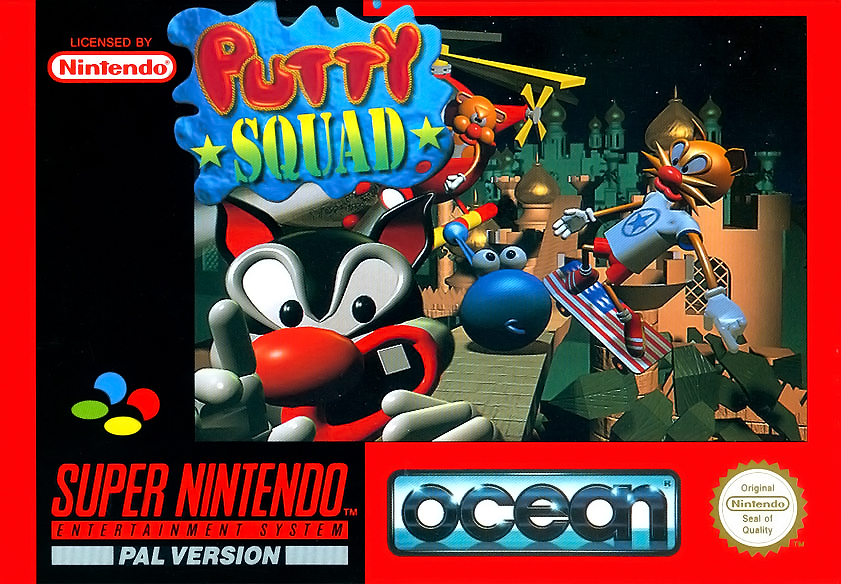
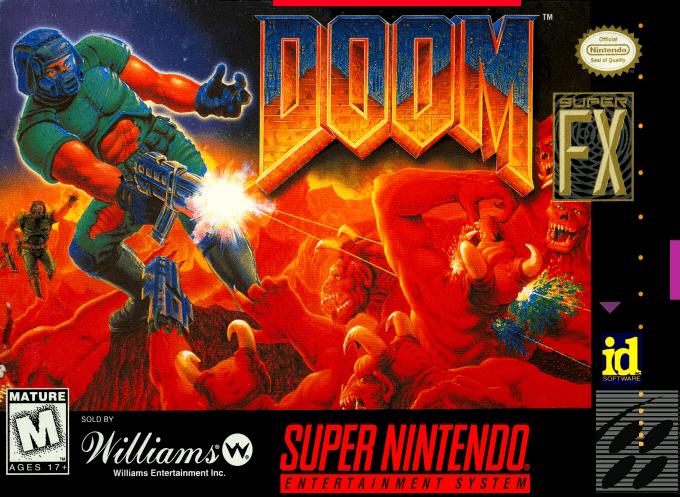
Doom brings id Software’s 1993 first-person shooter to the Super Nintendo in a port developed by Sculptured Software. This catalogue entry covers the PAL release issued by Ocean Software in February 1996; Williams Entertainment handled the North American edition, while Imagineer published it in Japan. Randy Linden began the conversion as an independent prototype before Sculptured Software turned it into a commercial release, an unlikely late-generation showcase for Nintendo’s 16-bit machine.
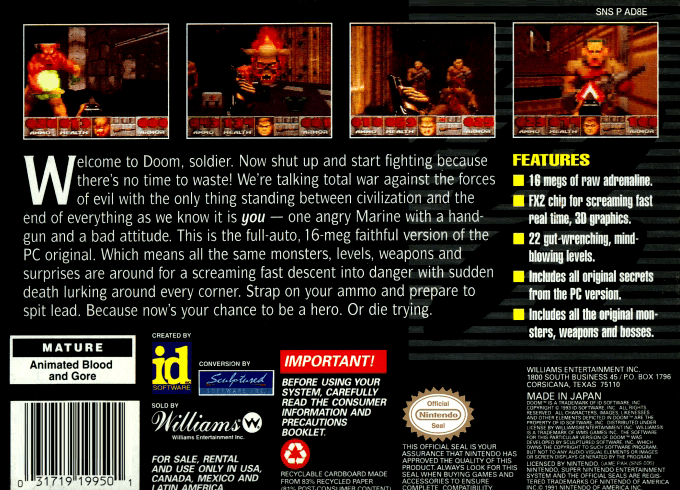
A lone space marine enters the Union Aerospace Corporation’s overrun installations after teleportation experiments on Mars’s moons open a route to Hell. The campaign follows the original game’s progression from the Phobos tech base through Deimos and into Inferno, asking the player to locate colour-coded keys, operate switches, survive traps and reach each level’s exit. It retains 22 adapted maps from Doom’s three original episodes, rather than the full 27-map PC set, and several stages were reshaped to fit the console’s constraints.
The essentials of Doom’s combat remain intact: the marine begins with fists and a pistol, then finds the shotgun, chaingun, rocket launcher, plasma gun, chainsaw and BFG 9000 while managing bullets, shells, rockets and energy cells. Possessed troops and imps give way to charging pink demons, floating Cacodemons and heavier boss threats, so movement, ammunition discipline and knowledge of the maze-like layouts matter as much as shooting. Health, armour, keycards, toxic floors, lifts, secret areas and the automap preserve the game’s exploration-and-combat rhythm.
The SNES pad condenses first-person movement, turning, firing, using doors or switches, strafing and weapon selection into the system’s digital controls, with the automap available for navigation. The port also includes support for the Super NES Mouse and Super Scope, unusual input options for a console shooter of its era. Its deliberate, digital-pad movement and lower update speed make aiming and circling enemies feel markedly different from the mouse-and-keyboard PC original.
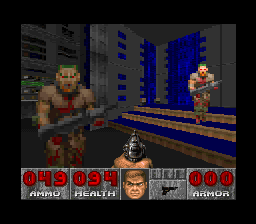
Doom’s red cartridge contains the GSU-2, commonly called the Super FX 2 coprocessor, which performs the rendering work the base SNES could not handle alone. Linden created a dedicated toolchain and rendering technology for the project rather than simply transplanting id’s PC engine. The resulting view is a genuine textured, first-person 3D-style environment, but it runs at a reduced resolution and frame rate, with heavy pixelation that can make distant targets difficult to identify.
To make that renderer and the cartridge’s storage budget viable, the conversion uses solid-colour floors and ceilings instead of their PC texture mapping, simplifies architecture and removes or alters demanding features such as wide outdoor views, crates and some complex openings. Enemy graphics also make visual compromises, and the port’s maps are reduced versions rather than exact reproductions. Those trade-offs explain both its rougher presentation and the technical achievement of fitting a recognisable Doom campaign on Super NES hardware.
Multiplayer was not a standard split-screen feature of the SNES cartridge. The game was designed to work with the XBAND modem service, allowing supported owners to play networked Doom, including competitive play; this depended on the external modem and the service rather than a second controller alone. That specialised compatibility, along with the Super Scope and Mouse support, makes the original SNES Doom an especially curious console adaptation rather than a straightforward local multiplayer port.
Gallery
Details
- Developer
- Sculptured Software
- Publisher
- Ocean
- Genre
- First-Person Shooter
- Players
- 1
- Release Date
- February 29, 1996
- System
- SNES