About
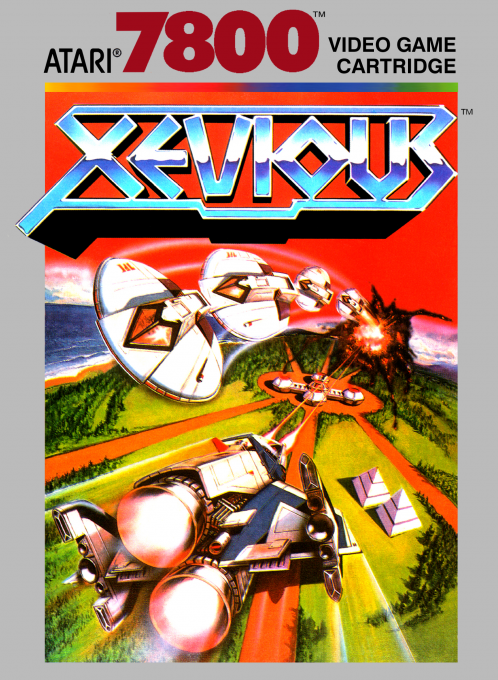
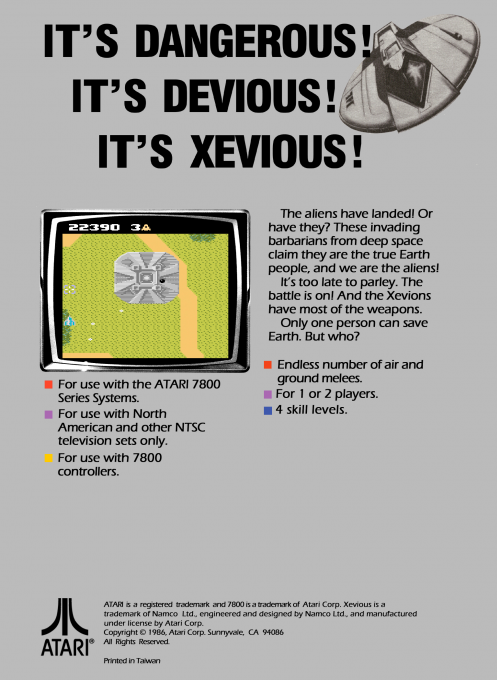
Xevious for Atari 7800 brings Namco’s landmark vertical shooter to Atari’s 8-bit ProSystem in a 1986 conversion developed by General Computer Corporation and published by Atari. Based on the 1982 arcade game, it puts the player in the cockpit of the Solvalou Fighter, Earth’s last major defense against the Xevions. Atari’s version retains the science-fiction premise of an invasion whose claim to Earth turns humanity’s assumptions upside down, then makes the conflict immediate: fly into hostile territory, survive its defenses, and confront the Andor Genesis Mother Ship.
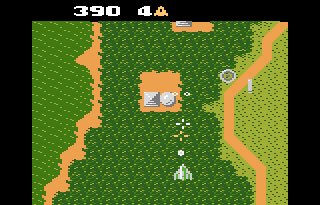
The action scrolls continuously across a top-down landscape, asking the pilot to watch two battlefields at once. Airborne attackers must be intercepted with the Solvalou’s Zapper, while installations and vehicles on the ground require the Blaster. Pressing the controller button fires both weapons; the sight positioned ahead of the ship shows where a Blaster attack will land. That separation is central to Xevious: success depends not only on dodging incoming fire and lining up shots in the sky, but on reading the terrain and placing attacks precisely against threats below.
A single joystick directs the Solvalou through the screen as formations of Xevion craft, energy fire, and ground emplacements arrive over forests, water, and other changing scenery. The Atari 7800 release supports one or two players, with participants taking turns, and lets players select Novice, Intermediate, Advanced, or Expert skill before the mission begins. The manual starts each game with five ships, while score milestones at 20,000 points, 60,000 points, and each additional 60,000 points award extra chances to continue the fight.
Its scoring targets encourage more than simply clearing whatever is closest. Named airborne opponents include Toroid Fleet Ships, Torkan Scout Ships, Zoshi Death Squads, and more dangerous energy weapons. On the ground, Domogram Rovers, defensive stations, tanks, and other targets create a second layer of priorities. Some of the most useful discoveries are concealed in the scrolling terrain: a red glow from the target sight signals a buried Sol Citadel, which can be raised and then destroyed for points. Hidden flags can likewise be exposed with the Blaster, and flying over a raised flag earns an extra ship.
Survival eventually leads to the Andor Genesis Mother Ship. A hit on its central reactor disables the craft and briefly eases the pressure, but it is not a final ending to the invasion; new forces and another Mother Ship lie ahead. This recurring structure makes the Atari 7800 Xevious a score-driven endurance game as well as a shooter, balancing immediate danger against opportunities to uncover targets, accumulate points, and extend a run.
The cartridge arrived during the Atari 7800’s 1986 North American launch period, as one of Atari’s licensed home versions of a major Namco arcade property. Its release preserves the defining design of Xevious—the Solvalou, the air-and-ground weapon split, the scrolling battlefield, and the cryptic hidden rewards—within a joystick-controlled console format. For players exploring Atari 7800 shooters, Xevious stands as an early example of the genre’s two-plane targeting idea and an important home adaptation of a foundational arcade series.
Gallery
Details
- Developer
- General Computer Corporation
- Publisher
- Atari
- Genre
- Shoot 'em Up
- Players
- 1-2
- Release Date
- November 1, 1986
- System
- Atari 7800