About
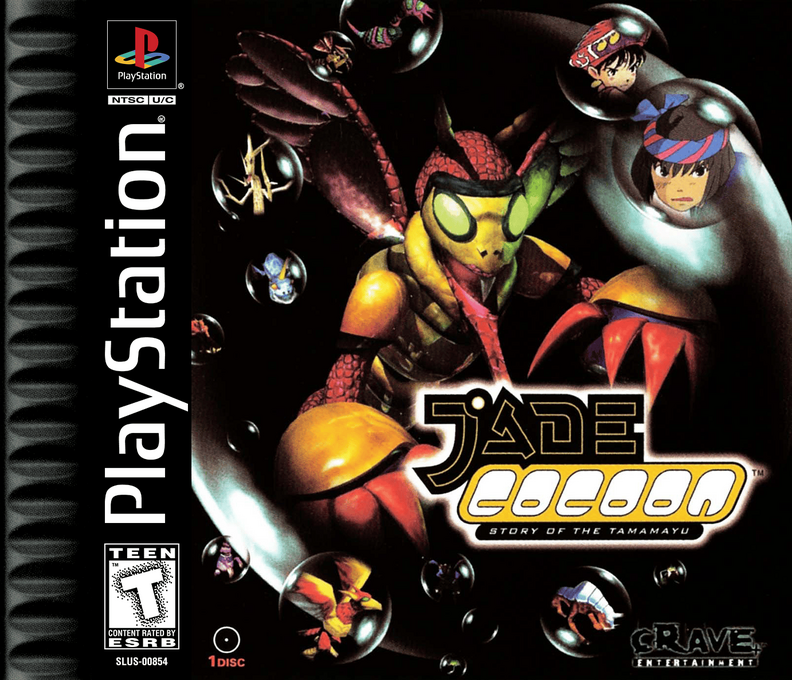
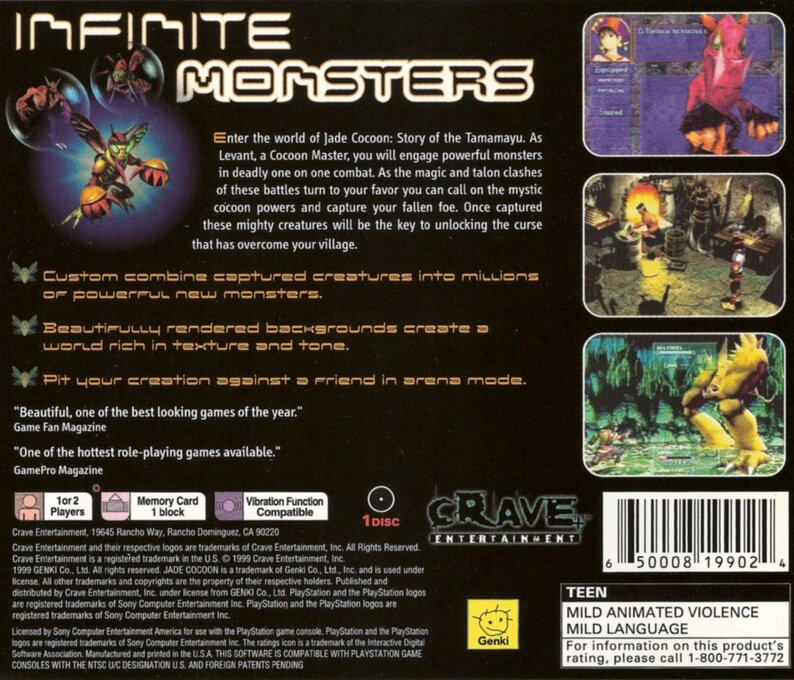
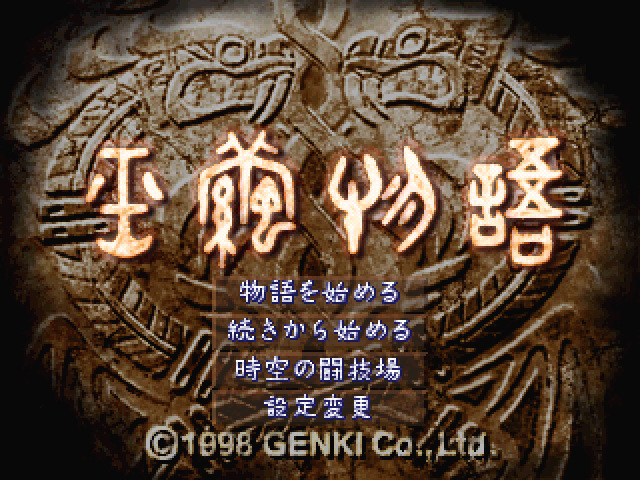
Jade Cocoon: Story of the Tamamayu PS1 is a fantasy role-playing game developed by Genki for the original PlayStation. It debuted in Japan in December 1998 as Tamamayu Monogatari, with Crave Entertainment publishing the North American edition in July 1999; European releases followed under the Jade Cocoon name. The game pairs a self-contained adventure with creature collecting and raising, set in a country where thick forests shelter dangerous, insect-like beings called Minions. Its distinctive visual identity was shaped under the art direction of Katsuya Kondo, known for his animation work, while Genki built the game as its own original fantasy world.
The story follows Levant of Syrus, a young man preparing to take up his missing father's calling as a Cocoon Master. A Cocoon Master uses sacred cocoons to capture troubled Minions and calm their corrupted souls. Levant's initiation is interrupted when the Onibubu, a destructive swarm, brings disaster to his village and leaves many residents under a curse. With his new wife Mahbu and the traditions of the Na'gi people central to the journey, Levant enters the surrounding woods in search of a way to save Syrus and learn the truth behind its legends.
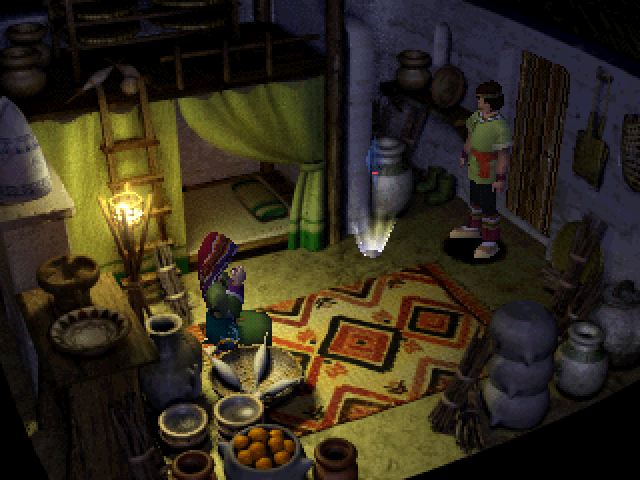
Exploration unfolds through forest regions whose creatures, hazards, and story events gradually expand Levant's responsibilities. The PlayStation game presents its locations through character movement over rendered scenes, with visible encounters leading into menu-driven, turn-based battles. Levant does not simply defeat every opponent: weakening a wild Minion can create an opportunity to capture it. That choice turns combat into preparation for later challenges, because the creatures collected along the way become the partners he can call on when facing other Minions.
Each trained Minion brings its own elemental affinities and attacks to battle. The elemental system creates a cycle of advantages between wind, earth, water, and fire, so selecting a creature is part of the tactical decision rather than a matter of using one permanent party. Levant can also use items and defensive options while managing encounters. Capturing stronger wild creatures becomes easier as his ability as a Cocoon Master develops, providing a direct connection between progress through the adventure and the range of creatures available to the player.
Fusion is Jade Cocoon's defining system. At the village, two Minions can be merged into one descendant that inherits traits and elemental attacks from its parents. The result is not merely a statistical upgrade: Genki designed the process to alter the creature's polygonal appearance as well, giving fused Minions combinations of their parents' forms. Building a useful roster therefore involves experimenting with lineages, passing on desired attacks, and making trade-offs among elements and abilities. It gives the single-player quest a collecting and customization layer that can continue alongside the story.
The game's world and presentation grew from Genki's aim to make a fantasy setting with a pronounced Asian influence. Kondo oversaw the game's design direction, but Studio Ghibli itself was not a developer of Jade Cocoon. The tale's concern with forests, spirits, marriage, and the relationship between people and nature is woven into Levant's role as someone who purifies creatures instead of treating them only as enemies. This original PS1 release should not be confused with Jade Cocoon 2, the PlayStation 2 sequel set a century later and built around substantially different systems.
Completing the main quest opens the Eternal Corridor, an extended post-game area of randomly arranged paths. It introduces additional wild Minions, progressively tougher encounters, equipment, and cosmetic skins, giving the breeding and fusion systems a further place to use newly made creatures. Jade Cocoon: Story of the Tamamayu remains a PlayStation-era RPG notable for combining an authored fantasy journey with a creature-raising system in which players can make their own evolving monsters.
Gallery
Details
- Developer
- Genki
- Publisher
- Crave Entertainment
- Genre
- JRPG
- Players
- 1
- Release Date
- November 30, 1998
- System
- PS1