About
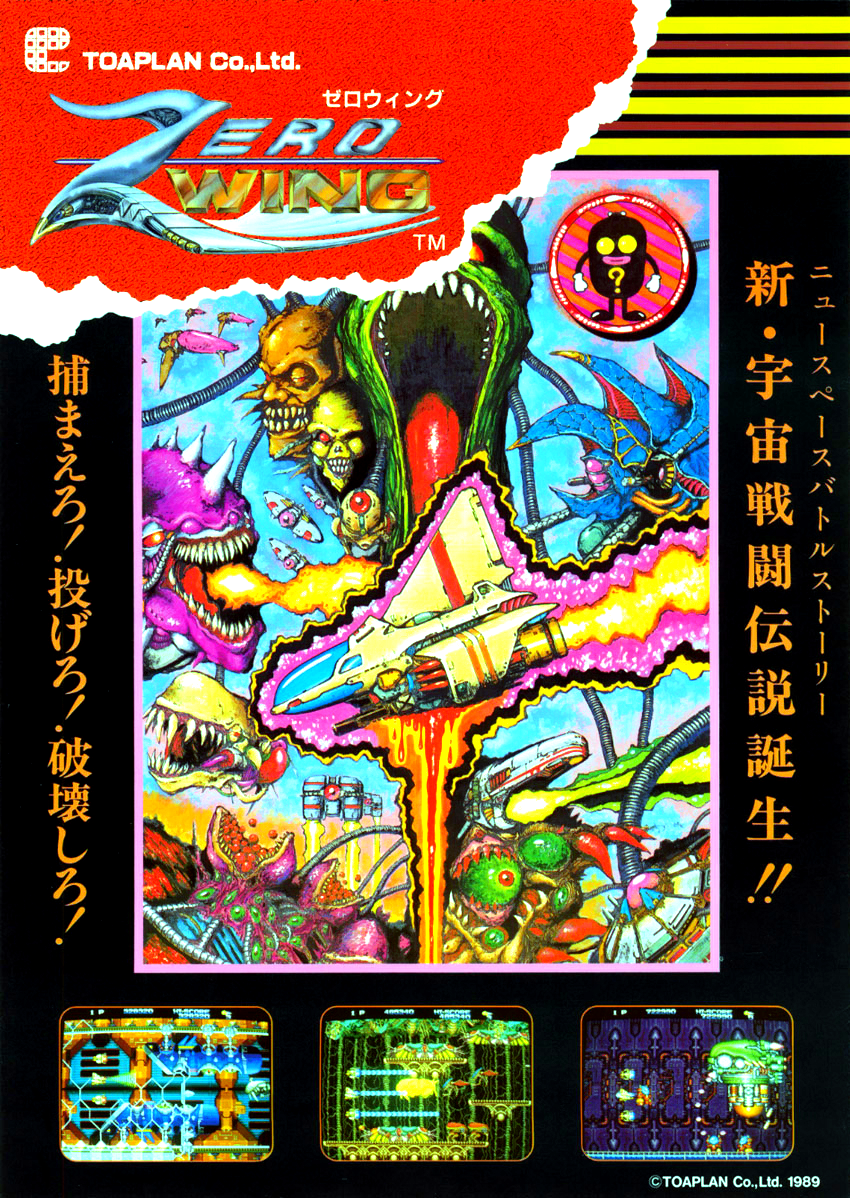
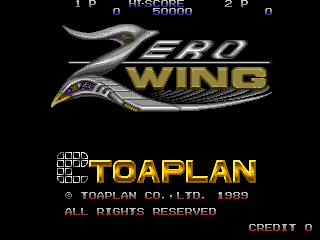
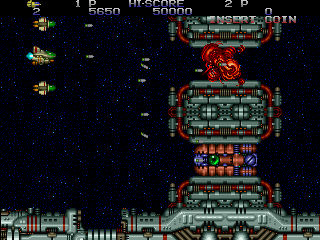
Zero Wing is a 1989 arcade horizontal scrolling shooter developed by Toaplan. This two-player arcade set puts one or two players in control of ZIG space fighters on a mission to break the power of the hostile CATS organization. Set in the year 2101, the game begins after a treaty collapses and CATS seizes space colonies, leaving the pilots to fight back through a succession of alien-controlled battle zones. It is a compact, fast-moving science-fiction shoot ’em up built around continuous forward motion, dense formations, and large end-of-stage confrontations.
Each stage scrolls from left to right until the action reaches a boss encounter. Players guide their ships with an eight-way joystick, firing at incoming craft, ground targets, and environmental threats while steering clear of shots, solid scenery, and collisions. The basic goal is direct but demanding: survive the route, bring down the stage boss, and advance through all eight stages. As in many arcade shooters of its period, a lost ship also costs the player accumulated firepower, making recovery after a mistake an important part of each credit.
Zero Wing gives its arsenal more variety than a simple fixed blaster. Destroyed carriers can leave color-changing power-up items, letting players select a red straight shot, a blue laser, or green homing missiles. Collecting matching items strengthens the selected weapon, so players can choose between concentrated forward pressure, piercing fire, or shots that help track moving enemies. Speed items and extra lives add further rewards, while bomb devices can clear a dangerous area when released at the right moment.
The game’s signature mechanic is the Seizer Beam. With it, a pilot can seize certain smaller enemies or a bomb-like object, carry the captured item beside the ZIG, and release it into a threat. A held enemy can absorb fire on its way to a target, while a captured bomb becomes a thrown explosive. That interaction turns close-range danger into an opportunity and gives the arcade action a small tactical layer: the safest response is not always to destroy every approaching object immediately.
The two-player setup makes that system especially lively. Partners share the scrolling route and can concentrate fire on bosses, divide attention between formations, or use their respective power-ups and captured objects to manage crowded sections. Depending on the cabinet settings, a fallen player can resume from a checkpoint or re-enter the action after a loss. Completing the final stage does not simply end the challenge; the game can loop back with increased difficulty and more aggressive enemy fire, rewarding players who can maintain control under pressure.
Zero Wing arrived during Toaplan’s prolific arcade-shooter period and uses the studio’s recognizable mix of colorful mechanical enemies, rapid scrolling, and elaborate boss designs. It later received distinct home versions for the Mega Drive and PC Engine CD-ROM², but the arcade original remains the foundation: an eight-stage cooperative shooter with its own presentation and pacing. The European Mega Drive conversion later became associated with a famously mistranslated opening, yet that sequence is not the defining feature of this arcade version. Here, Zero Wing is best understood through its immediate two-player combat, flexible weapon choices, and unusual ability to turn an enemy or explosive into a weapon of its own.
Gallery

Details
- Developer
- Toaplan
- Publisher
- Taito
- Genre
- Shoot 'em Up
- Players
- 1-2
- Release Date
- January 1, 1989
- System
- Arcade