About
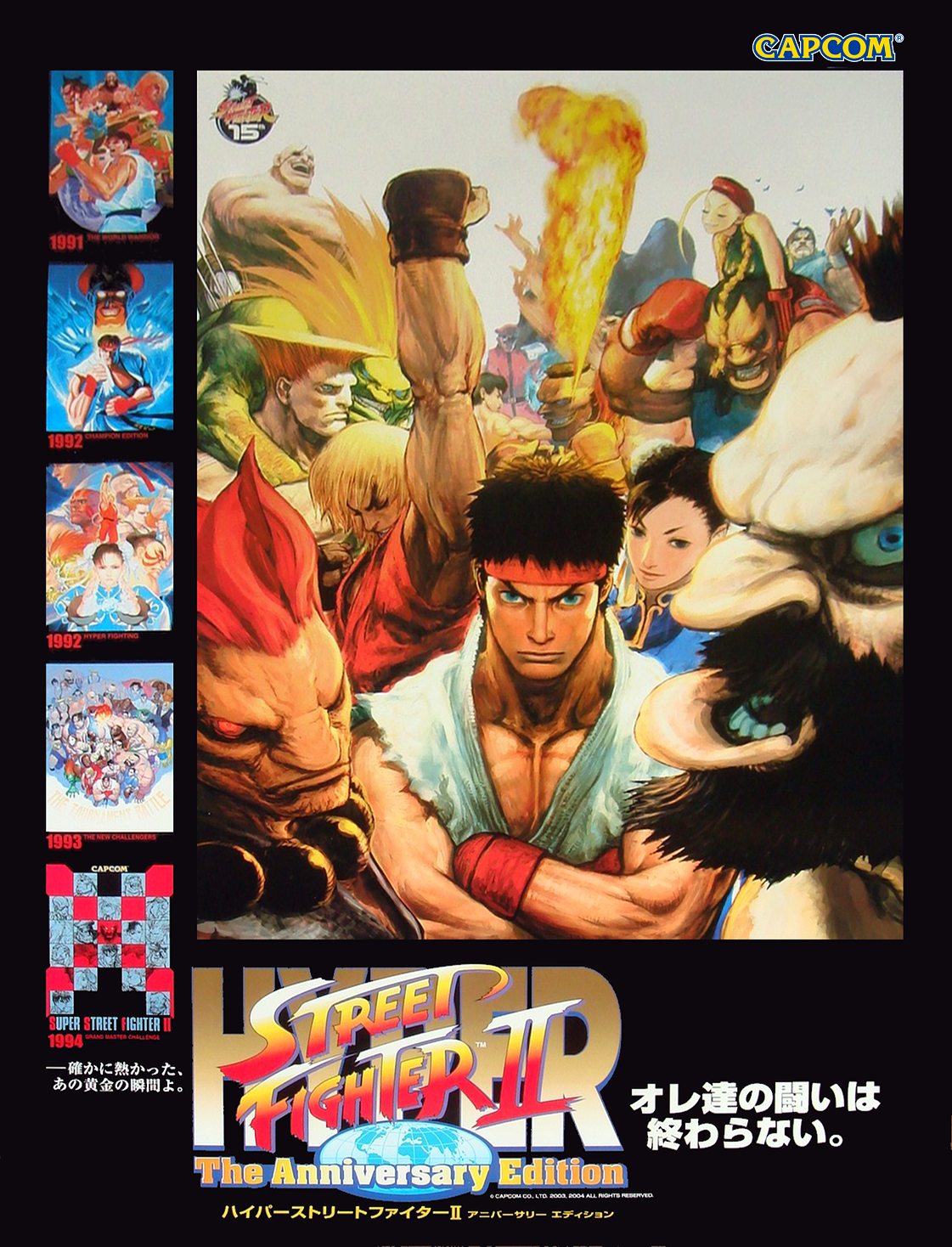
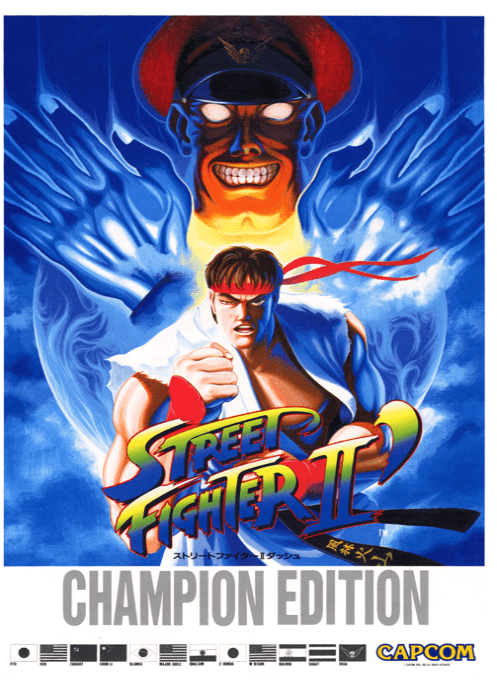
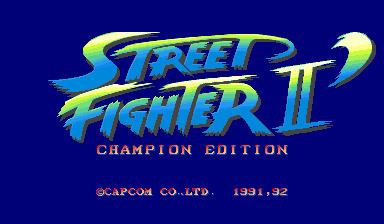
Street Fighter II'': Champion Edition (US 921209) is Capcom’s 1992 arcade fighting game, an expanded version of 1991’s Street Fighter II: The World Warrior. Known in Japan as Street Fighter II Dash, it runs on Capcom’s CP System arcade hardware and keeps the series’ international tournament format: two combatants meet in best-of-three-round matches, using distinct martial-arts styles and special techniques to empty the opponent’s life gauge. This U.S. arcade revision represents the Champion Edition release, the second major Street Fighter II arcade game and an important chapter in the rapid rise of competitive head-to-head fighting games.
The basic contest is immediately readable but leaves plenty of room for practice. Each fighter has punches and kicks at light, medium, and heavy strengths, so the six-button control panel gives attacks different speed, reach, and recovery. A player can walk, jump, crouch, block, throw, and attempt a character-specific special move by combining joystick directions with an attack button. Fireballs, rising uppercuts, spinning kicks, throws, aerial attacks, and anti-air responses create a constant exchange of distance, timing, and risk. Winning a round is not simply a matter of attacking first; players must read jumps, guard against pressure, choose when to commit to a move, and capitalize when an opponent leaves an opening.
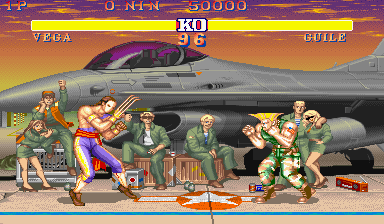
Champion Edition retains the world-spanning roster from The World Warrior. Ryu, Ken, Chun-Li, Guile, E. Honda, Blanka, Zangief, and Dhalsim return with their own stages, move sets, visual identities, and approaches to combat. The single-player route sends the chosen fighter through opponents drawn from that group before the former computer-only final quartet: boxer Balrog, claw-wielding Vega, Muay Thai master Sagat, and the crime-lord M. Bison. Every character brings a different challenge, whether it is a projectile game, a long-range normal attack, a powerful throw, a sudden aerial approach, or a charge-based special technique. The structure makes the solo game a tour of the roster while also preparing players for the variety of human matchups found in an arcade.
The edition’s defining change is that those four Grand Masters become selectable fighters. Their inclusion raises the roster from eight to twelve and lets players use the same bosses that previously ended the one-player campaign. Champion Edition also introduces mirror matches, allowing two players to select the same character; alternate color palettes and identifiers make the combatants legible on screen. That feature matters in a game built around character knowledge, since it allows two players to test the same tools against one another instead of forcing different choices. The expanded selection screen, mirrored encounters, and revised opponent order give both solitary players and regular arcade rivals more combinations to explore.
Capcom also adjusted the original eight characters, refining their fighting techniques for the new version and further separating the play styles of Ryu and Ken. The changes are small enough that the game still feels recognizably like the original Street Fighter II, but substantial enough to change priorities in particular pairings. Champion Edition updates background color palettes, character portraits, and some ending presentation as well. Its stages continue to supply the series’ sense of place: fights take place in locations associated with each entrant, with animated crowds and scenery framing the action without obscuring the clear, large character sprites and life bars that make a fast arcade match easy to follow.
In the arcade, the game supported both a one-player campaign and direct two-player competition, the latter becoming central to its identity. A challenger can take the second side of a cabinet and turn a current match into a contest between people, making the next opponent unpredictable in a way the computer ladder cannot be. The fast rematch-friendly format, broadening roster, and ability to choose bosses helped keep Street Fighter II active in arcades after the first release had already become a phenomenon. Champion Edition was followed later in 1992 by Street Fighter II’ Turbo: Hyper Fighting, which increased the pace and made further changes, but Champion Edition remains the version that established playable Grand Masters and same-character bouts as lasting Street Fighter II conventions.
The original arcade game later reached home formats in different forms. Japan received a PC Engine port, while the Mega Drive/Genesis version, Street Fighter II’: Special Champion Edition, combined Champion Edition material with options based on the later Turbo update; it should not be mistaken for a straight arcade conversion. An X68000 release pursued closer arcade presentation for Japanese computer owners, and the arcade Champion Edition has subsequently appeared in several Capcom retrospective collections. Those releases preserve the game’s place within the Street Fighter series, but the arcade version is the foundation: a compact competitive fighter whose expanded twelve-character roster gave players new reasons to step back to the cabinet.
Gallery
Details
- Developer
- Capcom
- Publisher
- Capcom
- Genre
- Fighting
- Players
- 1-2
- Release Date
- March 1, 1992
- System
- Arcade