About
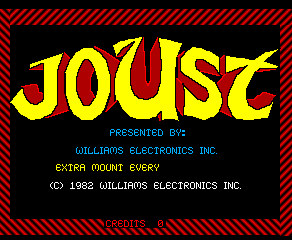
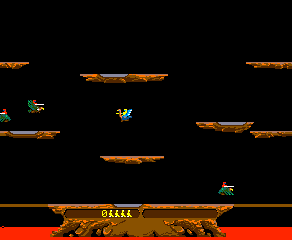
Joust is a 1982 Williams arcade action game in which fantasy jousting becomes a contest of aerial positioning. Designed by John Newcomer and developed and published by Williams Electronics, it places one or two players in a single-screen arena of floating platforms above a lava field. The first player is a yellow knight mounted on an ostrich; a second can enter as a blue knight riding a stork. Rather than use a conventional fire button, Joust turns flight itself into the central skill, creating an arcade game where timing, height, momentum, and a split-second collision decide each encounter.
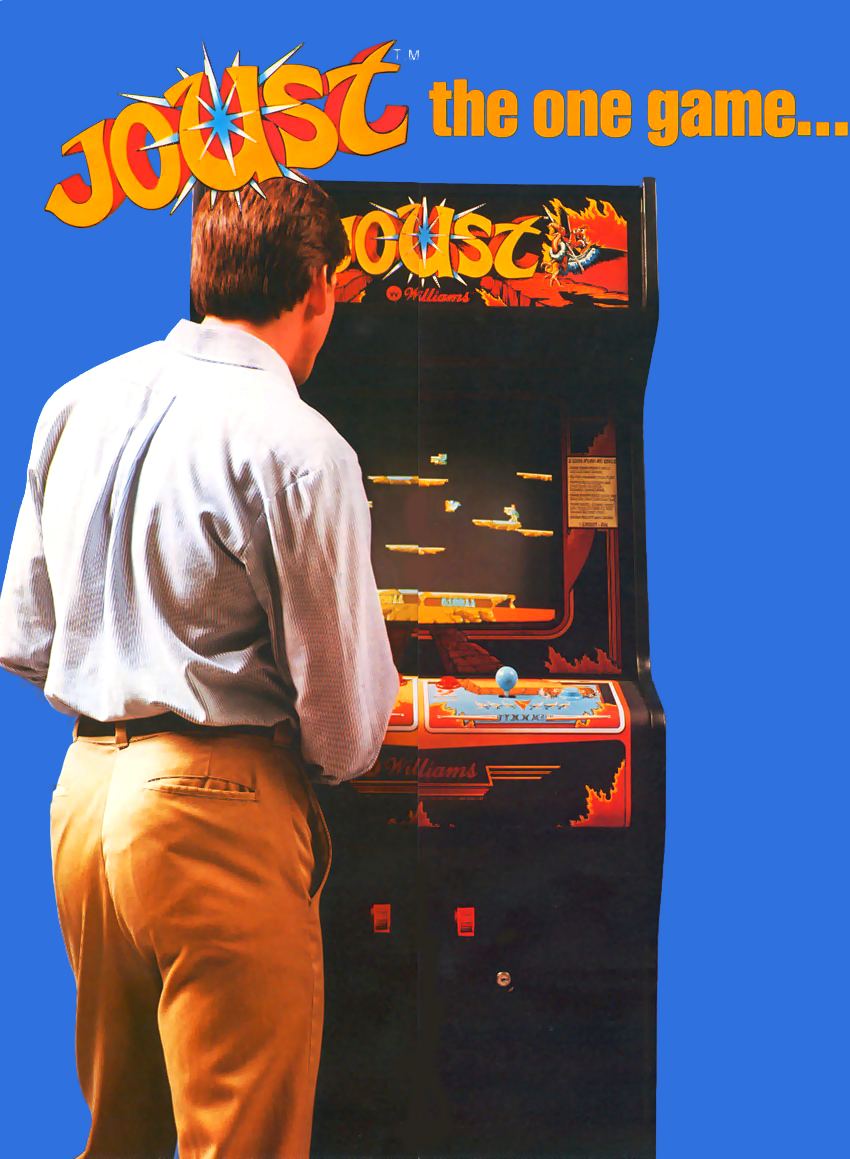
The upright cabinet uses a two-way joystick to steer left and right and one Flap button to make the bird climb. Repeated presses generate lift, while easing off lets the mount drift or descend, so players constantly manage inertia instead of simply pointing in eight directions. The arena wraps horizontally: flying off one side brings a rider back from the other. That compact control scheme makes the screen easy to read but demanding to master, since platforms can obstruct a route and even a small loss of altitude can turn an attack into a defeat.
Each wave fills the arena with enemy knights riding buzzards. To win a joust, the player’s lance must strike from a higher elevation than the opponent’s; a tie rebounds both riders, while approaching from below knocks the player from the mount. Defeated foes leave eggs that fall through the arena. Collecting an egg quickly earns points and prevents it from hatching, whereas an ignored egg eventually produces another enemy that must be faced again. This makes cleaning up after a successful attack part of the objective, not just a visual reward.
The opposition grows more hazardous as the waves advance. Bounders wander relatively freely, Hunters pursue the players more directly, and Shadow Lords move quickly and favor the upper part of the screen. A pterodactyl arrives to pressure anyone who lingers too long, while the lava at the bottom of the arena remains a constant danger. The Lava Troll’s reaching hand removes riders who fly too low. Lives are lost by losing a clash or falling victim to the lava, so surviving involves judging both the enemies’ approach paths and the safe space available between platforms.
Joust supports simultaneous two-player play with an unusual choice for its era: riders can cooperate to clear waves or attack one another for points. The same elevation rule applies regardless of who collides, making an ally’s route another tactical consideration. Players can join in together, and the game’s fast restarts and fixed-screen layout keep the focus on readable local competition. Its bird-mounted knights and deliberately non-space setting also set it apart from the shooting games common in early-1980s arcades, while its animated flapping gives the simple sprites a strong sense of weight and movement.
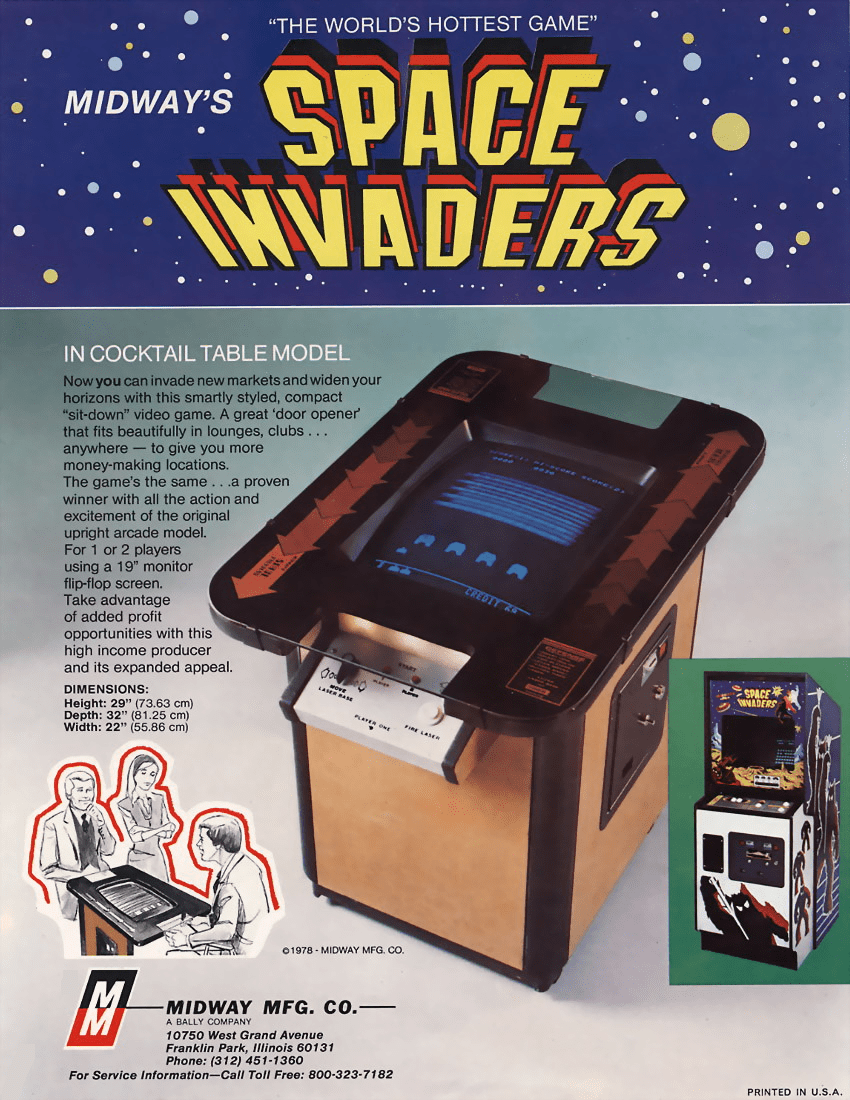
Williams released Joust for arcades in 1982, with both upright and cocktail-table versions. Its distinctive premise, direct competitive play, and cooperative possibilities helped establish it as one of the company’s best-known coin-operated games. The original was later adapted for several home platforms and returned in Williams and Midway arcade collections, but the arcade version remains defined by its dedicated controls and immediate two-player tension. Williams followed it with Joust 2: Survival of the Fittest in 1986, extending the series while leaving the first game’s compact, height-based duels as its signature idea.
Gallery

Details
- Developer
- Williams
- Publisher
- Williams
- Genre
- Platformer
- Players
- 1-2
- Release Date
- January 1, 1982
- System
- Arcade