About
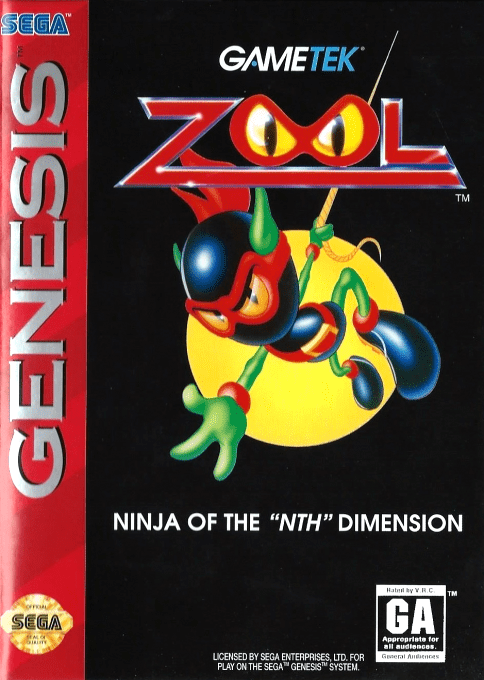
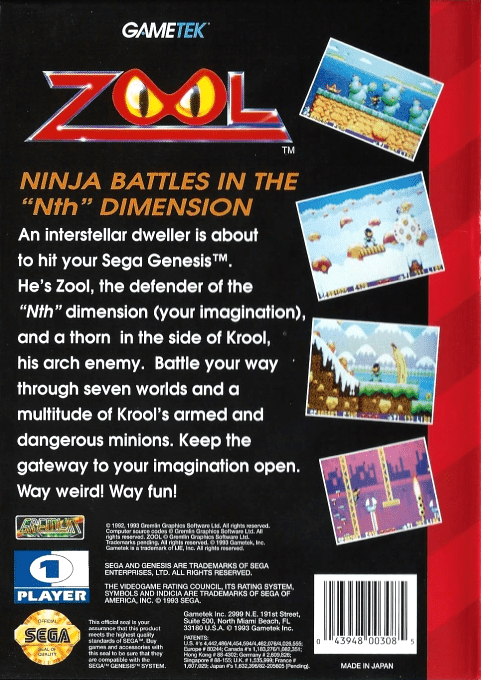
Zool: Ninja of the “Nth” Dimension for Sega Genesis/Mega Drive is a fast-moving side-scrolling platform game from Gremlin Graphics, released for Sega’s 16-bit console in the early 1990s. Electronic Arts handled the Mega Drive edition in the catalogue’s region. The game stars Zool, a small ninja from the Nth Dimension who has landed on Earth while pursuing the status he wants to earn. Its bright worlds, arcade pace, and immediately recognizable hero place it among the era’s many colourful console platform adventures, while retaining a character and setting created for Gremlin’s earlier computer release.
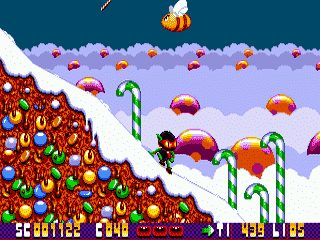
The goal is to guide Zool through themed stages, reach their exits, and survive the hazards and creatures placed along the way. He can run at speed, jump across gaps, fire at enemies, and use walls as part of his movement through the courses. That mixture makes the game about more than simply holding right: routes are filled with platforms, obstacles, vertical sections, and collectibles, so attentive movement matters when the scenery becomes busy. A life counter and limited chances to continue give each run some consequence.
Power-ups change the rhythm of play. Pickups can restore health, provide protection, clear danger with a smart bomb, or improve Zool’s jumping ability. One of the most unusual bonuses creates a delayed duplicate that repeats Zool’s movements, allowing a second stream of attacks to follow the player’s actions. These temporary aids complement the basic run, jump, and shoot controls rather than replacing them, and deciding when to press ahead or collect them is part of completing a stage safely.
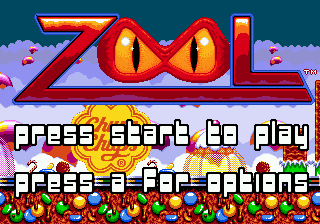
Zool’s presentation is deliberately playful and packed with oversized fantasy imagery. The campaign moves through six worlds divided into multiple stages, with a boss encounter at the end of each world. The opening and ending use illustrated story sequences, and the game’s commercial tie-in with Chupa Chups is visible in the original release’s candy-themed branding and scenery. Options let players select difficulty, alter game speed, set the number of continues, and choose between rock and funk arrangements for the music.
Although Zool began on home computers, the Genesis/Mega Drive version is not merely a smaller copy of the Amiga game. Its levels were rearranged, its backgrounds were redrawn for the console, and it includes bosses specific to this 16-bit conversion. Those changes make it important to distinguish this edition from the Game Gear, Master System, Super NES, and computer releases, which have their own technical compromises or design differences. The Genesis name was used in North America, while Mega Drive was Sega’s name for the same hardware in many other territories.
Zool became a recognizable Gremlin character during the early-1990s platform boom and later returned in Zool 2. The original game has also been revisited through later collections and the 2021 Zool Redimensioned project, whose classic material drew from the console version. For players exploring the Genesis/Mega Drive library, Zool remains a distinctively stylized platformer built around rapid traversal, item hunting, and a hero striving to prove himself worthy of his ninja rank.
Gallery
Details
- Developer
- Gremlin Graphics Software
- Publisher
- Electronic Arts
- Genre
- Platformer
- Players
- 1
- Release Date
- February 1, 1994
- System
- Genesis/Megadrive