About
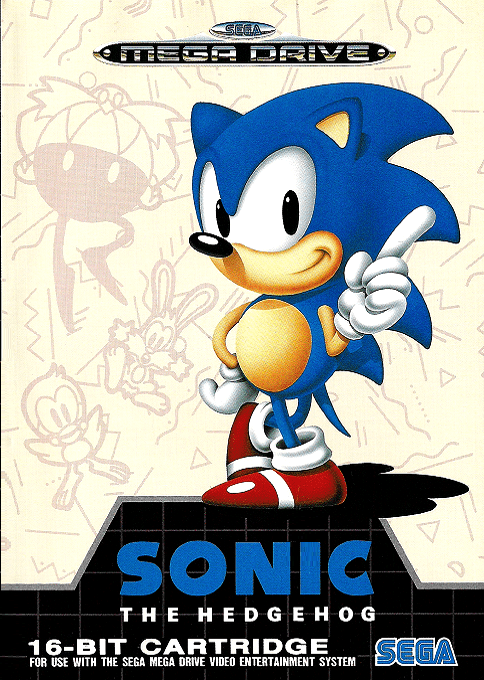
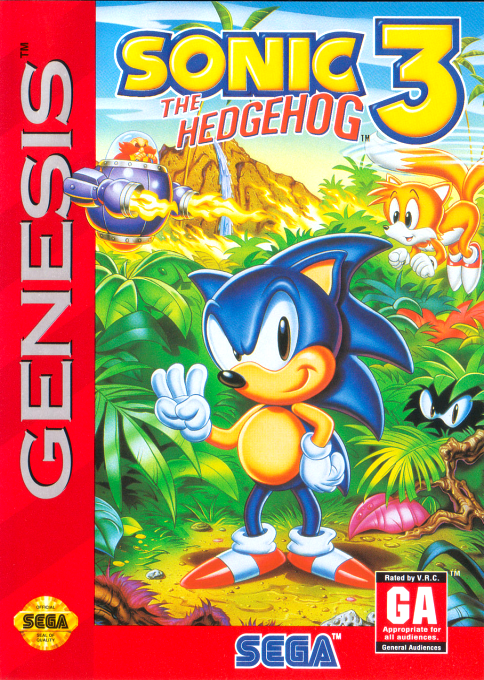
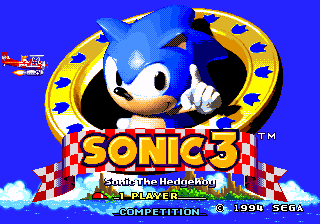
Sonic the Hedgehog 3 is a 1994 side-scrolling platformer published by Sega for the Sega Genesis in North America and the Mega Drive elsewhere. The production was developed at Sega Technical Institute in California, with the Sonic Team name closely associated with its creative staff and series identity. It arrived first in the United States on February 2, then in Europe that month, and in Japan on May 27. The regional hardware name and release schedule differed, but this is the same 16-bit adventure: the first half of the story later completed by Sonic & Knuckles.
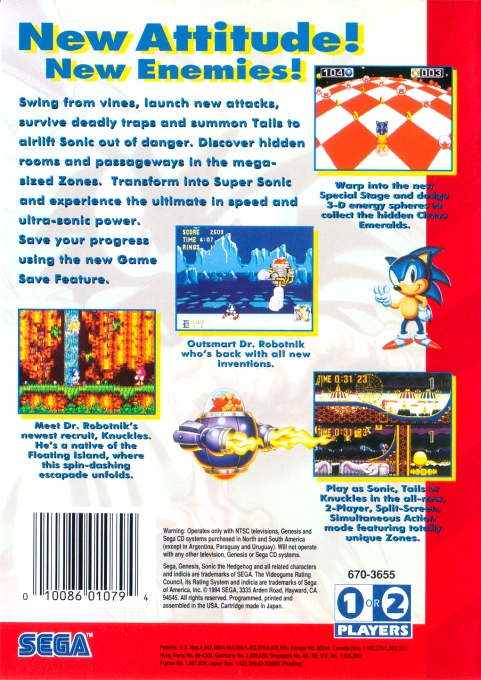
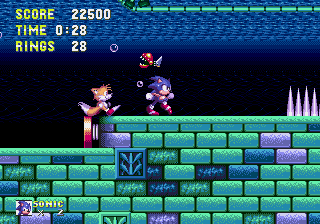
Sonic and Tails race through six large zones on Angel Island, each split into two acts with changing set pieces, hazards, minibosses, and a Robotnik battle. The standalone cartridge includes Angel Island, Hydrocity, Marble Garden, Carnival Night, IceCap, and Launch Base. Its stages build speed into the scenery—loops, corkscrews, curved ramps, breakable walls, moving platforms, water, and alternate routes—while rewarding exploration with hidden rings, monitors, giant rings, and passages. Reaching a new zone can be recorded in one of six save slots, an important convenience for a game whose individual acts are much larger than the series’ earlier levels.
The core remains recognizably Sonic: run, jump, curl into a ball to defeat Badniks, and charge the Spin Dash from a standstill. Rings act as protection; a hit scatters them, while a hit without any rings, drowning, crushing, falling, or exceeding an act’s ten-minute limit costs a life. Sonic and Tails may be selected together or alone, and a second player can take control of Tails during the main game. Tails can fly briefly by spinning his twin tails and can swim underwater, giving him different ways to investigate routes. A separate Competition mode turns five dedicated courses into head-to-head races or time attacks.
Sonic 3 adds three shields that change both defense and movement. The Fire Shield protects against fire and lets Sonic launch a fiery dash, but disappears in water. The Bubble Shield provides unlimited breathing underwater and a bounce jump. The Lightning Shield attracts nearby rings and enables a double jump, although water discharges it. Giant Rings hidden in the stages lead to the Blue Spheres special stages, where collecting every blue sphere earns a Chaos Emerald; gathering all seven lets Sonic become Super Sonic. Checkpoints with at least 50 rings instead lead to a different bonus stage for extra items.
The story begins after the Death Egg falls from the sky following Sonic the Hedgehog 2. Dr. Robotnik, called Dr. Eggman in later material, wants the Chaos Emeralds to repair and relaunch the station. On Angel Island he deceives Knuckles the Echidna, guardian of the Master Emerald, into believing Sonic and Tails are thieves. Knuckles therefore ambushes the heroes, steals their Chaos Emeralds, blocks paths, and sets traps while Robotnik works in the background. The narrative is told largely through animated, wordless encounters rather than dialogue, making the journey from the island’s beaches and ruins to Launch Base feel like one continuous pursuit.
The original cartridge deliberately stops after the Launch Base confrontation and the Death Egg’s next crash, with the conflict continuing in Sonic & Knuckles. Both games had been planned as one adventure, but time, cartridge capacity, and production costs led Sega to split them. Sonic & Knuckles contains a lock-on adapter under its top flap: inserting the Sonic 3 cartridge creates Sonic the Hedgehog 3 & Knuckles, the intended combined game. This expands the adventure with the latter zones, Knuckles as a playable character in Sonic 3’s stages, Tails in Sonic & Knuckles’ stages, revised boss and route access, Super Emeralds and enhanced transformations, stronger saving options, and a fuller ending.
That relationship matters when approaching a period cartridge today. Sonic the Hedgehog 3 is a complete, playable release with its own conclusion, but it is also structured as the opening movement of the larger lock-on adventure. The North American label says Genesis while the European and Japanese releases use Mega Drive branding, and their launch dates were staggered; players should not mistake those regional presentation differences for separate games. For the fullest original design, use a compatible Sonic 3 cartridge with Sonic & Knuckles’ lock-on hardware, or a modern release that presents Sonic 3 & Knuckles together.
Gallery
Details
- Developer
- Sonic Team
- Publisher
- SEGA
- Genre
- Platformer
- Players
- 1-2
- Release Date
- January 23, 1994
- System
- Genesis/Megadrive