About
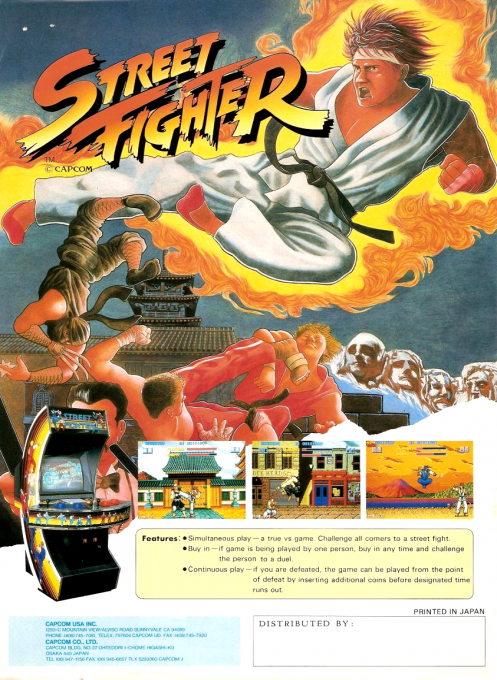
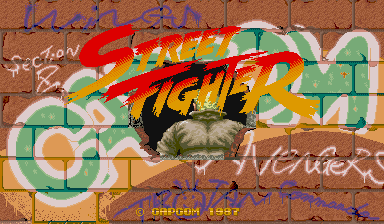
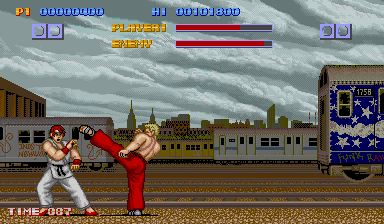
Street Fighter (US) is Capcom’s 1987 arcade fighting game and the starting point of the long-running Street Fighter series. Built for coin-operated cabinets, it casts the player as Japanese martial artist Ryu in a world tournament against specialists from several countries. A second player can enter as Ryu’s rival Ken, turning the current battle into a head-to-head challenge. Although its cast and presentation are far leaner than the games that followed, the original Street Fighter established the international martial-arts contest and direct one-on-one confrontations that became central to the series.
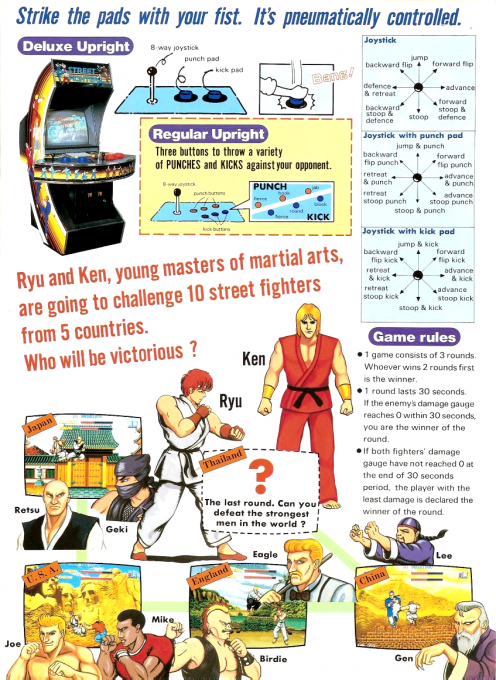
Arcade matches are fought in best-of-three rounds under a time limit. The objective is simple: reduce the opposing fighter’s energy to zero, or have more energy remaining when the clock expires. Ryu advances through a fixed lineup of computer-controlled challengers, while a player-versus-player interruption can put Ken in the ring. Movement uses an eight-way joystick for walking, jumping, crouching, and defensive positioning, with attacks changing according to whether a fighter is standing, crouching, or airborne. Learning range, timing, and when to commit to an attack matters because every bout is a direct test against a single opponent.
The regular Street Fighter arcade cabinet uses six attack buttons: three punches and three kicks with light, medium, and heavy strengths. Capcom also released a deluxe cabinet with two large pressure-sensitive pads, one for punches and one for kicks; the force of the press determined the attack’s strength. That unusual control setup gave the game a physical arcade presence, while the regular six-button layout proved a more practical way to access its attacks. The split between these cabinet designs makes the original game especially distinct from the standardized control arrangements associated with later Street Fighter releases.
Beyond normal strikes, Street Fighter introduced command-input techniques that reward precise joystick-and-button combinations. Ryu and Ken share three famous special moves: the Hadoken projectile, the rising Shoryuken, and the spinning Tatsumaki Senpu-kyaku. The arcade game does not plainly spell out those commands during play, so experimentation and repeated practice are part of its challenge. These techniques can change the pace of a match by attacking from range, punishing an approach, or carrying a fighter across the screen, and their discovery became one of the game’s defining attractions.
Ryu’s solo journey visits opponents associated with Japan, the United States, China, England, and Thailand. The early roster includes fighters such as Retsu, Geki, Joe, Mike, Lee, Gen, Birdie, and Eagle, each presented with a different fighting identity and stage setting. After those regional bouts, the tournament culminates in Thailand against Muay Thai practitioners Adon and Sagat. Sagat serves as the final challenge, giving the game a clear progression from introductory matches to a demanding championship encounter.
Street Fighter was developed and published by Capcom during the arcade boom of the late 1980s. It was later adapted for several home platforms; the PC Engine CD-ROM2 and TurboGrafx-CD edition was titled Fighting Street and used press duration to determine attack strength because the system did not yet have a six-button controller. The arcade original remains important as the first Street Fighter game and as an early foundation for command-based special moves, six-button fighting controls, and the competitive format that Capcom expanded dramatically with Street Fighter II.
Gallery
Details
- Developer
- Capcom
- Publisher
- Capcom
- Genre
- Fighting
- Players
- 1-2
- Release Date
- January 1, 1987
- System
- Arcade