About
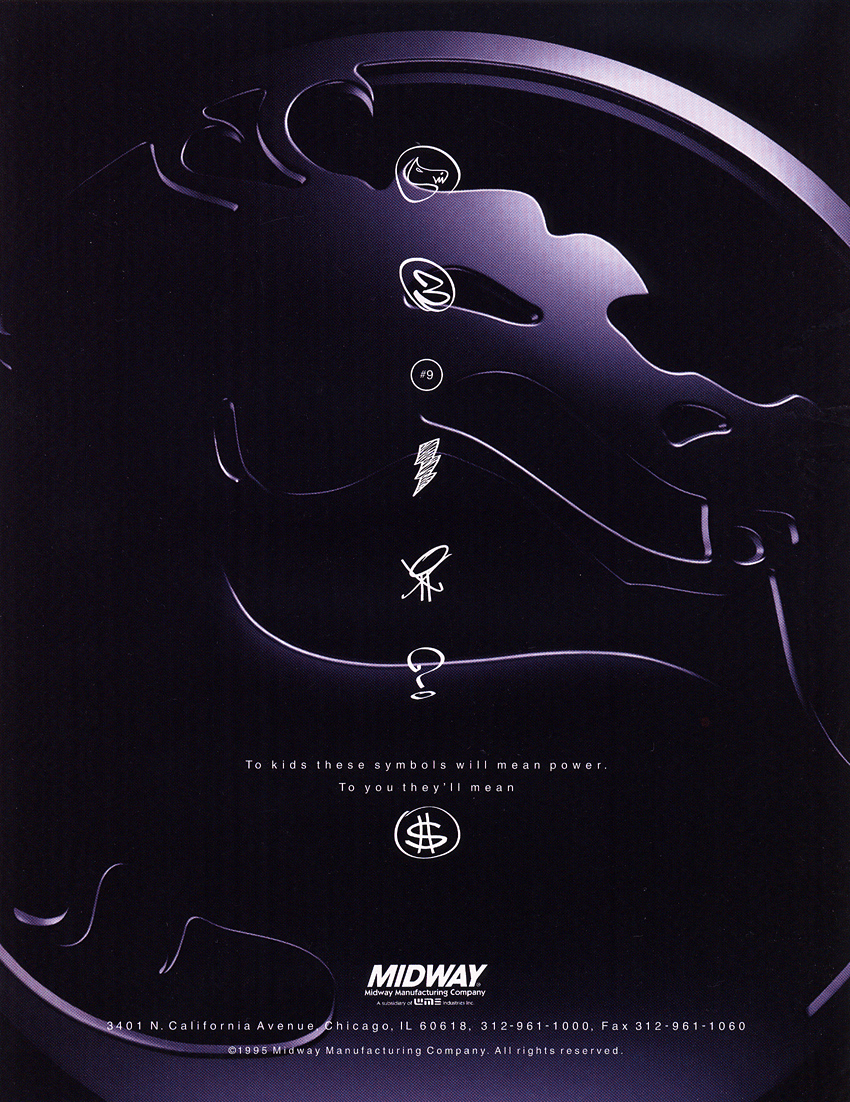
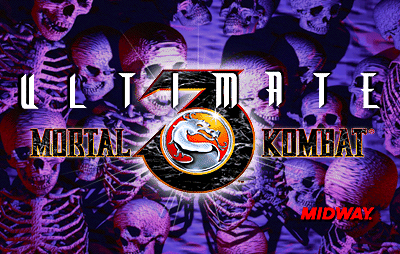
Ultimate Mortal Kombat 3 (rev 1.2) is Midway's 1995 arcade update to Mortal Kombat 3, built around fast one-on-one fights between digitized fighters. Each match uses the series' high punch, low punch, high kick, low kick, block, and Run controls, with rounds won by emptying an opponent's life bar. The Run button and its meter encourage close pressure, quick advances, and aggressive reversals rather than a purely defensive pace.
Combat combines character-specific special moves with long preset chains. Launches, jump attacks, throws, projectiles, and strings can be linked into damaging combos, while blocking and movement decide whether a fighter can break free or punish an opening. The arcade version also adjusts moves and combo damage from Mortal Kombat 3, making the game a distinct competitive revision rather than simply a larger character select screen.
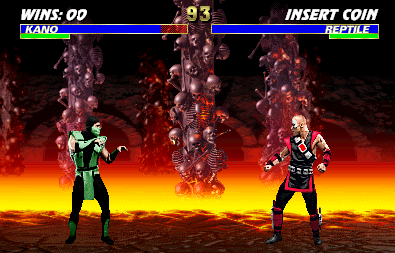
The roster retains Mortal Kombat 3 fighters and restores Kitana, Jade, Reptile, and Scorpion. Further combatants are concealed behind Ultimate Kombat Kodes, including Ermac, Mileena, and Classic Sub-Zero, while Human Smoke can be enabled through a pre-match code. Noob Saibot appears as a hidden opponent in the standard arcade game, and Rain's appearance in the introduction is a tease rather than an arcade-selectable character.
Its arena rotation adds settings such as Scorpion's Lair, Jade's Desert, River Kombat, Kahn's Kave, Lost, and Noob's Dorfen alongside Mortal Kombat 3 locations. Some stages use vertical transitions after an uppercut, and Scorpion's Lair contains a stage fatality that sends the loser into lava. The places are more than backdrops: their hazards, transitions, and secrets shape the spectacle surrounding each bout.
After a winning round, players can enter finishing commands for Fatalities, Babalities, Friendships, Animalities, and stage-specific deaths. A Mercy can give a defeated rival a sliver of health and return the fight to normal, creating another chance to continue. Brutalities belong to certain later home versions and Mortal Kombat Trilogy rather than this standard arcade release, an important difference when comparing move lists.
Solo play sends a chosen fighter up a tower toward Motaro and Shao Kahn, with higher difficulty settings and Shao Kahn's Lost Treasures rewarding completed runs. The arcade game also offers 2-on-2 endurance-style battles and an eight-player tournament mode, allowing groups to compete through a bracket. Revision 1.2 identifies this late standard arcade revision; it should not be confused with the later WaveNet arcade test, which added network play and made Noob Saibot selectable, or with home ports that changed rosters, stages, and finishing moves.
Gallery

Details
- Developer
- Midway
- Publisher
- Midway
- Genre
- Fighting
- Players
- 1-8
- Release Date
- November 6, 1995
- System
- Arcade