About
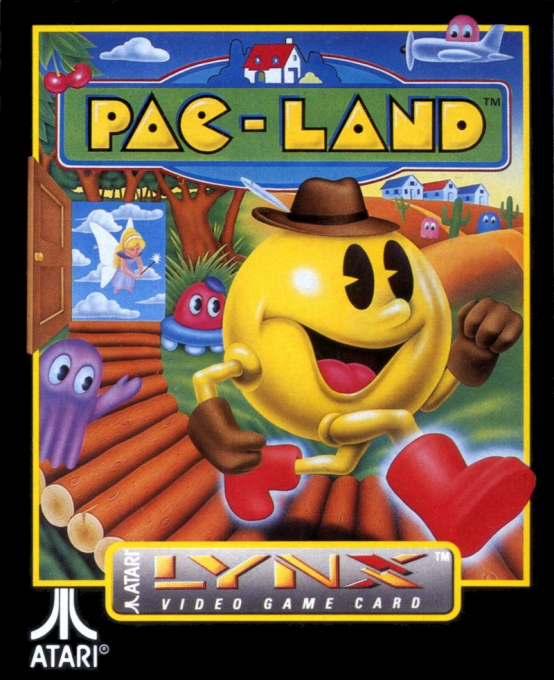
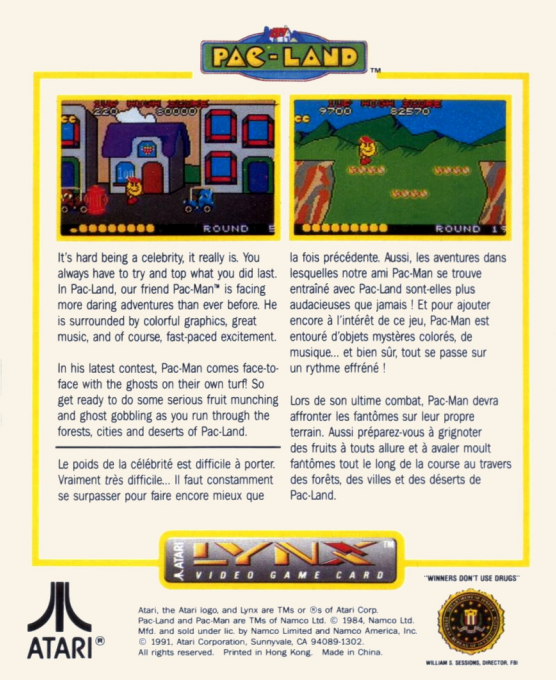
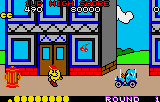
Pac-Land for Atari Lynx brings Namco's 1984 arcade platform adventure to Atari's color handheld in a version developed and published by Atari Corporation in 1991. Rather than replaying the maze-chase formula that made Pac-Man famous, it sends the yellow hero across a colorful, horizontally scrolling world of streets, woods, water hazards and strange fantasy scenery. The objective is a rescue mission: guide the fairy princess Buttercup safely through Pac-Land, then make the journey back to Pac-Man's own home.
The Lynx game is built around momentum, timing and a steadily shrinking supply of time. Pac-Man begins on foot in Pac-Town and must keep moving before the on-screen time tablets run out. The joypad controls direction, while quick repeated presses make him run; the A button is used to jump. That simple setup asks players to judge approaches to obstacles while staying ahead of the Ghost Gang, turning a familiar mascot into the star of a brisk side-scrolling challenge.
Each trip mixes ordinary routes with hazards that demand different responses. Pac-Man jumps over obstacles and can use ramps to leap pools he cannot swim across. Rolling logs, changing terrain and pursuing ghosts make safe movement more complicated than simply running right. The portable version lets players choose a starting trip, with Trip 1 presented as the easiest and Trip 5 as the toughest, so newcomers and experienced players can enter the adventure at different difficulty points.
The familiar Power Pellets are still central to survival. Finding one briefly lets Pac-Man turn the tables on the ghosts and eat them for points, including the purple pursuer Sue. Fruit such as cherries and strawberries adds score opportunities, while careful exploration can uncover extra help. The Lynx manual describes hidden hard hats that protect against falling baby ghosts, temporary invisibility that permits a run through enemies, balloons for bonus points and warps that move the player to later rounds.
Pac-Land also rewards players who pay attention to its playful scenery. Some obstacles can be jumped on and certain objects can be pushed to reveal treasures, creating short detours within a game otherwise driven by speed. Reaching Buttercup's home does not immediately end the story: Pac-Man must complete another leg to return to his family, and later rescue missions become more dangerous. This looping structure preserves the arcade game's escalating rhythm while giving the handheld port a clear sense of progress.
The Atari Lynx release is a single-cartridge game for one or two players. Two-player play is alternating rather than simultaneous, with both players sharing one Lynx and taking turns. AtariAge credits Joe Seider as programmer for the port. For Pac-Man fans and Lynx collectors, Pac-Land stands out as an early portable version of an influential platformer, combining expressive cartoon-style action, frantic time pressure and the series' recognizable ghosts, pellets and score chasing in a format designed for short but demanding runs.
Gallery
Details
- Developer
- Atari
- Publisher
- Atari
- Genre
- Platformer
- Players
- 1-2
- Release Date
- January 1, 1991
- System
- Lynx