About
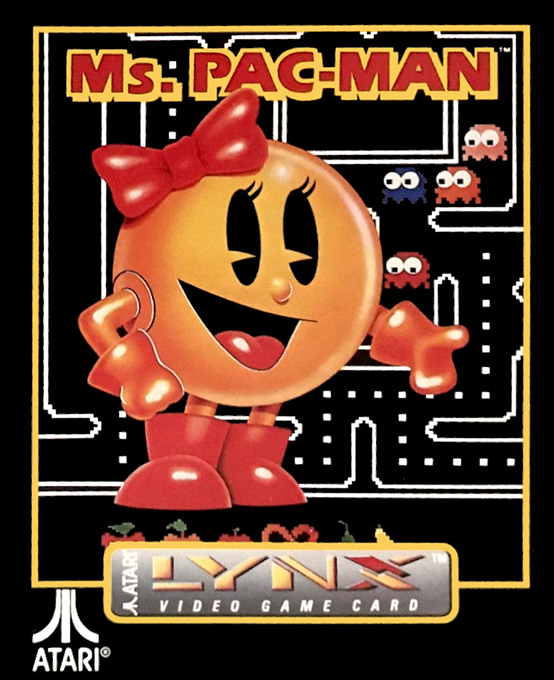
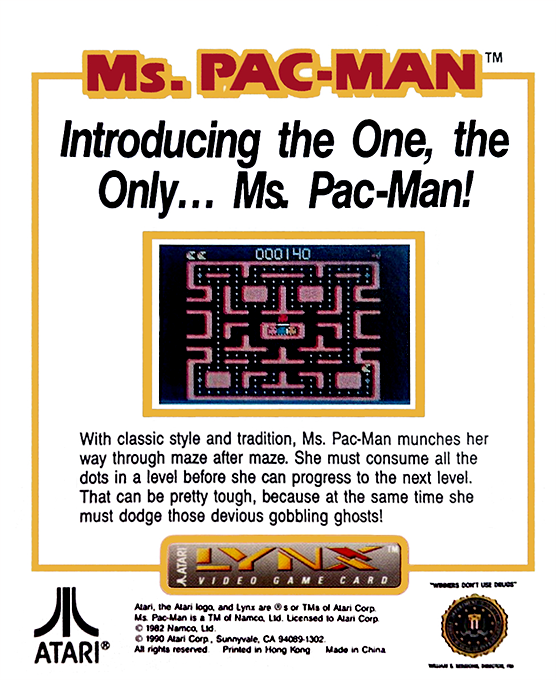
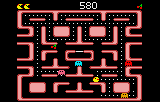
Ms. Pac-Man on Atari Lynx brings the famous maze chase to Atari’s color handheld with the familiar objective intact: guide Ms. Pac-Man through a maze, eat every dot, and stay clear of the ghosts that patrol its corridors. Each round becomes a race between clearing safe routes and reacting to danger at the next intersection. Four energizers briefly turn the tables by making the ghosts blue and edible, while fruit and pretzels add bonus points to the score. Contact with a ghost outside that vulnerable state costs a life, so timing, turns, and escape routes matter as much as speed.
This Lynx edition is not simply the 1982 arcade game compressed onto a smaller screen. It includes the four standard arcade-style mazes as one set, then expands the cartridge with 21 additional, more elaborate mazes. At the title screen, players choose a starting difficulty represented by fruit icons; higher selections make the ghosts faster and reduce the time they remain vulnerable after an energizer. An Option 1 selection enables the more complex maze set, making the handheld version a substantial variant for players who already know the original layouts.
The distinctive addition in those extended mazes is the lightning bolt. A bolt appears only briefly, inviting a dash across the maze to collect it before it disappears. Picking one up does not trigger it automatically: Ms. Pac-Man carries it until the player presses A or B, then moves at a heightened speed for 15 seconds. It must be used in the level where it was found, and losing a life forfeits it. That small system changes the usual Pac-Man rhythm, creating a deliberate choice between spending speed to escape an immediate trap or saving it for a better chance to finish a difficult section.
The classic scoring loop remains clear and demanding. Dots, energizers, fruit, and defeated ghosts all contribute points, and the game awards an extra life at 10,000 points. Fruit or a pretzel appears at the start of each level, while the speed and pressure build as play advances. The ghosts do not need to be defeated to complete a round, but an energizer can turn a crowded pursuit into a high-value counterattack. Learning where to leave dots, when to take an energizer, and how to draw several ghosts together is central to surviving longer runs.
Three short Pac-themed cartoon breaks appear after designated mazes, preserving the intermission spirit associated with the arcade game. The Lynx also offers practical portable-system controls: Pause stops and resumes play, Option 2 can show the high score during a game, and a combined Option 2 and Pause command flips the display and reverses the controls. That last feature lets the game accommodate the handheld from the opposite orientation without changing its maze-chase fundamentals.
The original arcade Ms. Pac-Man was released by Midway in 1982 as a follow-up to Pac-Man, built around pellet clearing, four ghosts, power pellets, moving bonus items, and alternating maze designs. Its moving fruit, changing layouts, and less predictable ghost behavior helped distinguish it from Pac-Man. Those arcade traits are the foundation here, but they should not be mistaken for everything the Lynx cartridge offers: the 21 extra mazes and collectible lightning boost are specific to this portable version.
Atari published the Lynx release in 1990, and the cartridge uses the system’s color display for a compact, direct take on an arcade staple. Its rules are easy to understand in a few seconds, yet lasting scores depend on reading ghost positions, planning turns before reaching them, and keeping enough open maze space to recover from a mistake. Players looking for a straightforward score challenge can stay with the arcade-style selection; players after a different route through the game can switch to the extended mazes and work the lightning item into their strategy.
Ms. Pac-Man for Atari Lynx is therefore best approached as both a portable arcade conversion and an expanded maze game. It retains the essential tension of eating the final dots while pursuers close in, but its larger alternate layouts and stored burst of speed give repeat sessions their own character. Whether chasing a high score, mastering a familiar maze, or discovering the Lynx-only challenges, the game rewards quick decisions and calm route planning far more than button complexity.
Gallery
Details
- Developer
- Atari
- Publisher
- Atari
- Genre
- Maze
- Players
- 1
- Release Date
- January 1, 1990
- System
- Lynx