About
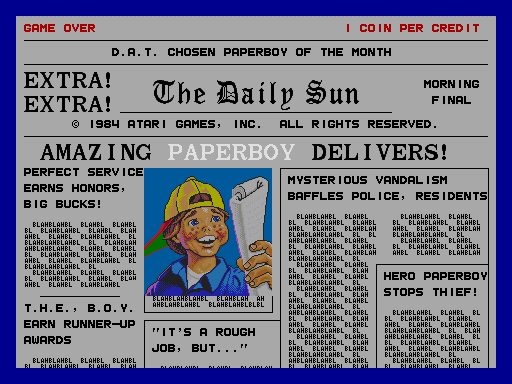
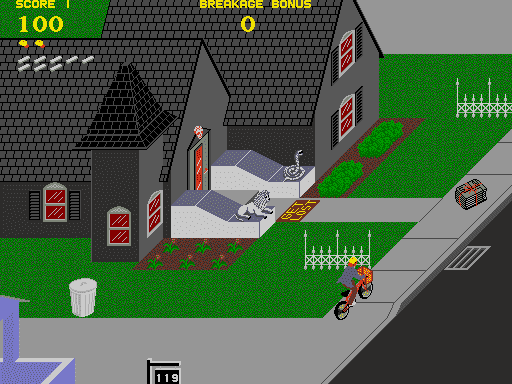
Paperboy (rev 3) is the arcade revision of Atari Games’ bicycle-delivery action game, developed by Atari in 1984 and released to arcades in 1985. Seen from an angled, scrolling view of an American suburban street, it casts the player as a young carrier for the fictional Daily Sun. The simple job—put a newspaper where it belongs—becomes a fast arcade challenge as the route fills with traffic, pedestrians, animals, and hazards. This is the original dedicated-arcade Paperboy experience, built around an unusual cabinet control rather than a conventional joystick.
Before setting off, the player selects one of three routes: Easy Street, Middle Road, or Hard Way. Each delivery day presents a line of twenty homes, with ten active subscribers initially marked by bright colors and the other houses treated as non-subscribers. The aim is to ride along the street and send papers into customers’ mailboxes or onto their porches without damaging their property. Missed deliveries and accidental damage can cost subscriptions, turning former customers into non-subscribers on later routes. A successful day, meanwhile, protects the delivery base and can bring a customer back, so careful aiming matters as much as survival.
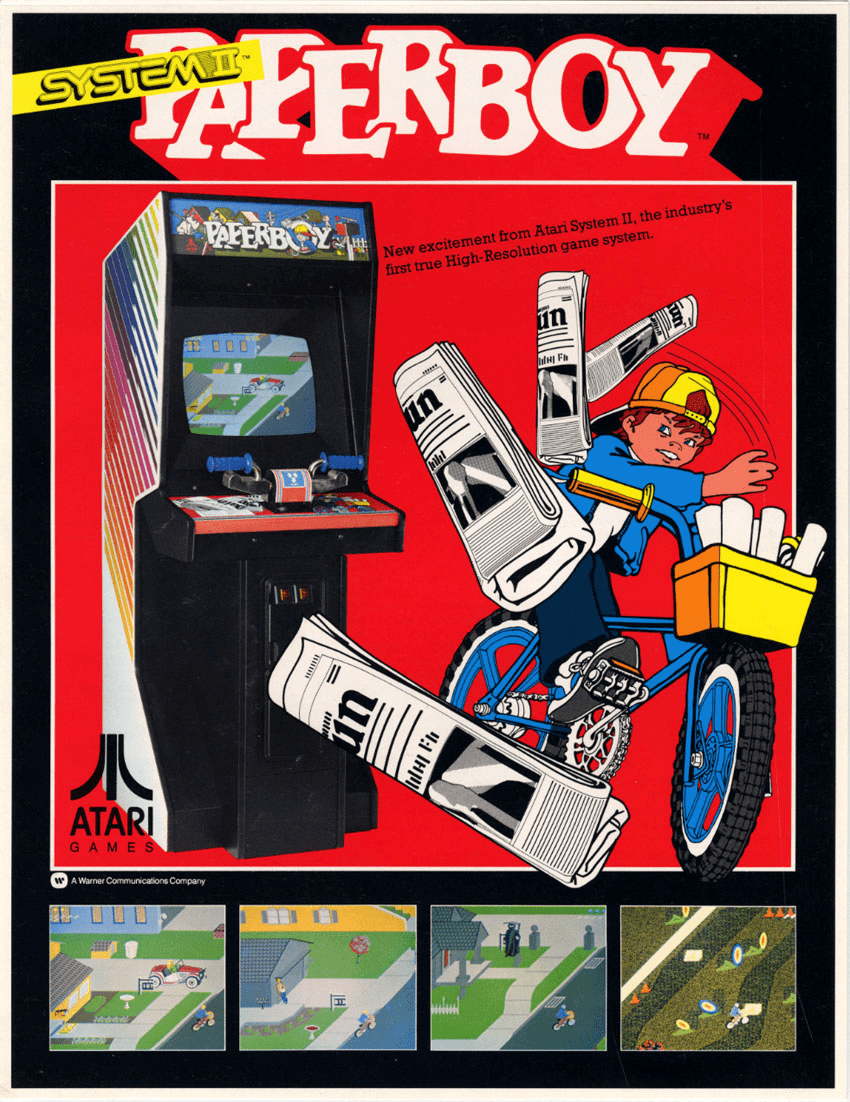
The arcade machine makes that balancing act physical. Its bicycle-style handlebars steer the rider, with forward and backward movement used for speed control and buttons on the grips used to throw newspapers. Paperboy can ride on the pavement, in the road, and across lawns, but collisions with obstacles cost a life. Paper supplies are limited during the neighborhood run, making bundles placed along the course important pickups. The player must judge position, timing, and throw direction while weaving past such dangers as cars, skateboarders, tires, people, and animals. Papers also interact with scenery, creating a second risk-and-reward layer beyond straightforward deliveries.
Non-subscribers’ properties supply targets for a running Breakage Bonus. Windows, garden features, and other objects can be hit with spare papers to build points, but subscribers must be treated much more carefully: breaking their property loses their business. The result is a route that constantly asks whether to conserve papers, line up a safe delivery, or take a scoring opportunity at a house that is already off the customer list. At the end of a neighborhood run, the game moves to the Paperboy Training Grounds, an obstacle-course bonus section with targets, ramps, and jumps. Crashes there end the practice run but do not take a life, giving the player a change of pace before the next delivery day.
The full arcade week runs from Monday through Sunday, with the subscription map at the start of each day showing which households remain on the route. Losing every customer ends the job, as does exhausting the available lives; reaching the end of the week provides the long-term goal behind the quick individual throws and evasive maneuvers. Paperboy’s oblique presentation and deliberately busy street turn an everyday task into a tightly organized arcade course, while the handlebar interface ties steering, braking, acceleration, and throwing to the cabinet itself. The game later reached many home systems, but Paperboy (rev 3) refers to the Atari arcade program revision and preserves the original machine’s distinctive delivery run.
Gallery

Details
- Developer
- Atari
- Publisher
- Atari
- Players
- 1-2
- Release Date
- January 1, 1984
- System
- Arcade