About
Pac-Man (Midway) is the North American arcade release of Namco’s 1980 maze game, manufactured and distributed by Midway in the United States. It is the coin-op cabinet that turned a compact blue maze, a yellow character, and four pursuing ghosts into an arcade landmark. The game began in Japan as Puck Man, but this is not a separate sequel or a home conversion: it is the Midway release associated with the Pac-Man name in North American arcades. Its immediate appeal is easy to grasp. One four-way joystick, one clear objective, and a maze that seems simple until every turn begins to matter.
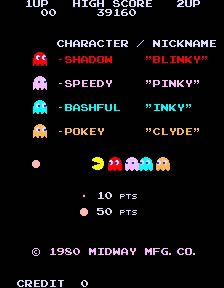
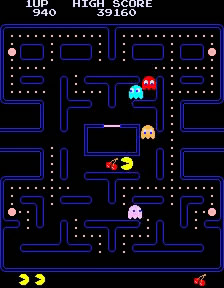
Guide Pac-Man through the enclosed pathways and eat every dot to clear the board. Four ghosts patrol the maze, and contact with one costs a life. Their different movement behavior gives the chase its character: the safest-looking route can become a trap, while a close call can open a route through the center or toward a side tunnel. The screen never needs a long explanation. Dots show the work remaining, the score records the run, and the small fruit display along the bottom marks progress through the stages.
The large flashing energizers near the maze’s corners are the crucial change in momentum. Eating one reverses the relationship between hunter and hunted for a limited time, turning the ghosts blue and allowing Pac-Man to eat them. Taking several blue ghosts during the same energizer window raises the reward, so a successful escape can become a scoring opportunity. The tension returns quickly as the effect expires and the ghosts resume their pursuit, making each decision about when and where to use an energizer part of the game’s rhythm.
Bonus items appear beneath the central ghost house and can be collected for extra points. The side passages link one edge of the maze to the other, offering both an escape route and a way to reposition. These elements make the board more than a route to sweep clean: players weigh safe dot collection against fruit, plan a path around the ghosts, and decide whether to use an energizer merely to survive or to chase a bigger score. The joystick’s four directions keep control direct, but the game asks for timing, spatial awareness, and a willingness to change course before a route closes.
Pac-Man grows more demanding as stages advance. The ghosts become harder to outmaneuver, and the periods in which they are vulnerable become less generous. That escalating pressure is why the familiar maze continues to reward careful play. A run can be guided by practiced routes, but it still depends on reading where the ghosts are, preserving room to turn, and making the most of the brief moments when the maze belongs to Pac-Man.
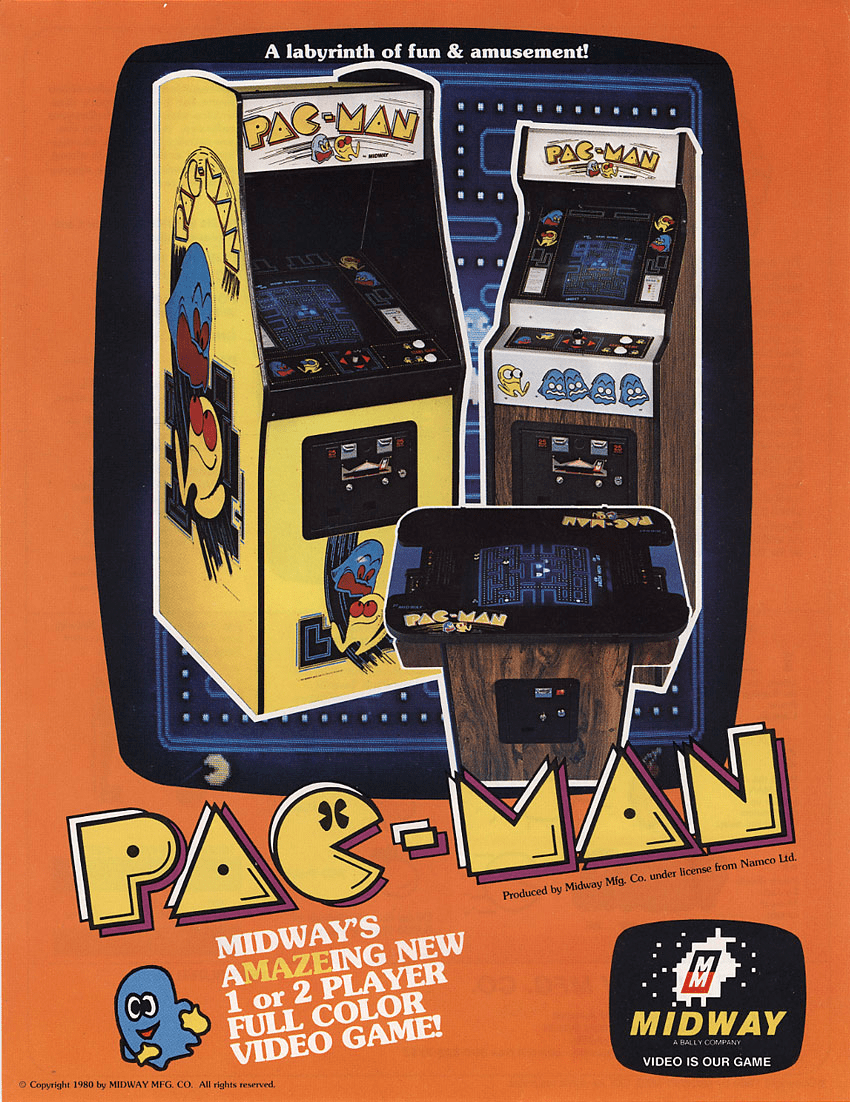
Midway’s cabinet documentation reflects the game’s place in the arcade: it supported upright, mini, and cocktail-table versions, built for the quick coin-operated session. The presentation is spare but expressive—animated pursuit, distinctive ghost colors, chomping sound effects, and short comic intermissions between rounds. Those details give the game personality without interrupting the action, and they make the next attempt feel inviting even after a difficult loss.
This Midway release should be distinguished from Namco’s Japanese Puck Man release, as well as from the many ports, remakes, and later Pac-Man games. The foundation is here: clear every dot, avoid the ghosts, seize the energizers, collect the bonuses, and keep the chase alive. Pac-Man (Midway) remains a defining maze-chase arcade game because its rules are instantly readable while its scoring, routes, and split-second escapes keep revealing new challenges.
Gallery

Details
- Developer
- Coleco Industries
- Publisher
- Coleco Industries
- Genre
- Maze, Logic Puzzle
- Players
- 1-2
- Release Date
- January 1, 1981
- System
- Arcade