About
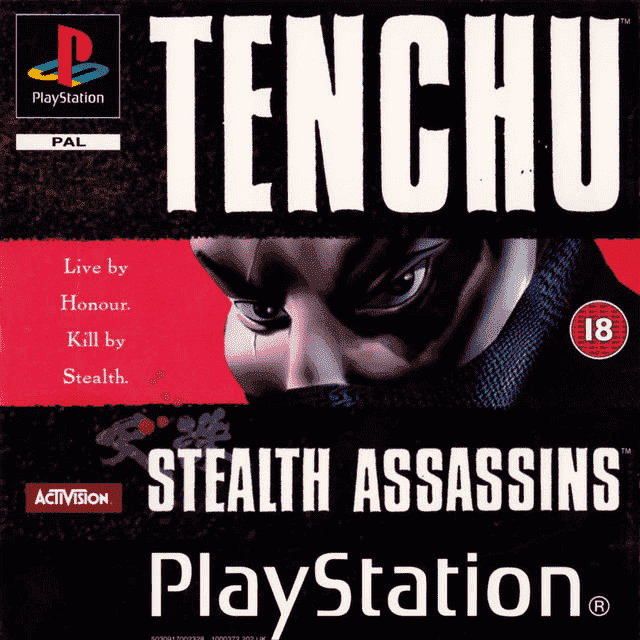
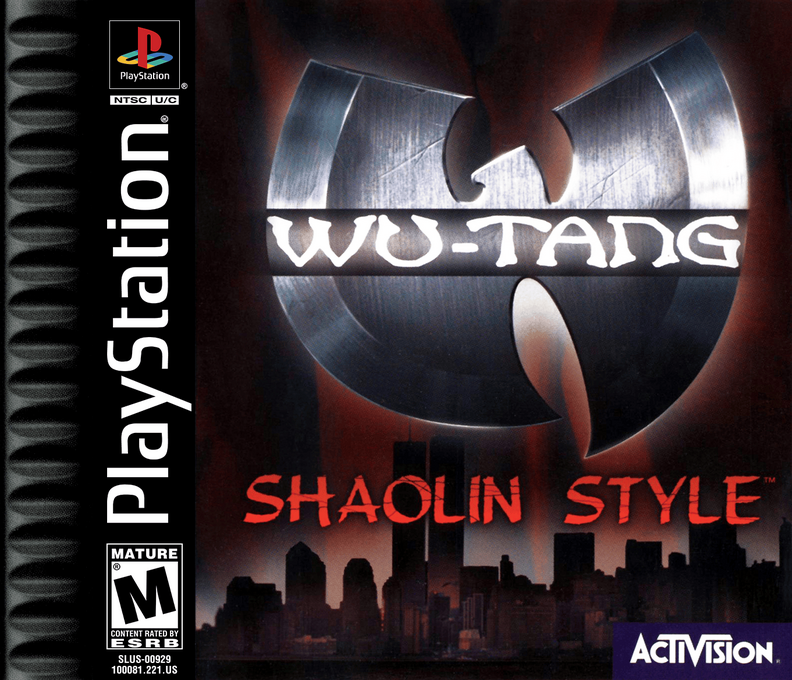
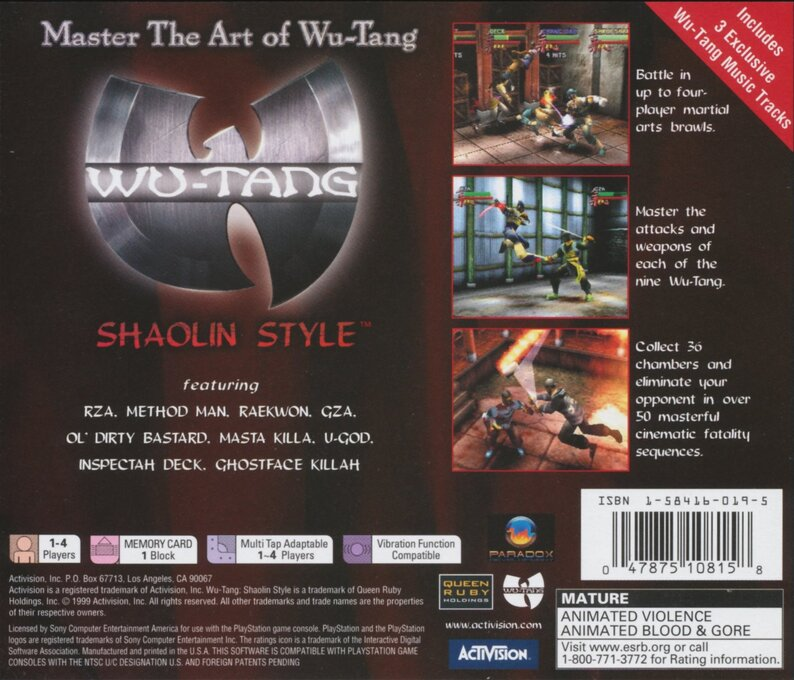
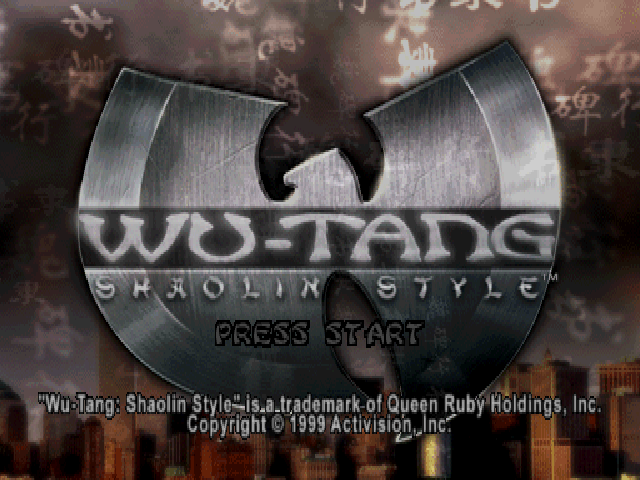
Wu-Tang: Shaolin Style for PlayStation is a 1999 3D fighting game developed by Paradox Development and published by Activision. Built around the martial-arts imagery associated with the Wu-Tang Clan, it turns the group’s nine original members—RZA, GZA, Ol’ Dirty Bastard, Method Man, Raekwon, Ghostface Killah, Inspectah Deck, U-God, and Masta Killa—into stylized combatants. The North American release arrived for Sony’s original PlayStation in late 1999; PAL territories received the game as Wu-Tang: Taste the Pain. It is a single-disc fighting game with both solo play and competitive multiplayer, pairing an original fantasy tale with the group’s recognizable personas.
The premise follows Master Xin, keeper of the secrets of the Wu-Tang fighting discipline. When the warlord Mong Zhu kidnaps him in pursuit of that knowledge, the Clan set out to find their master and stop Zhu’s forces. Story Mode frames this quest with live-action video sequences and sends the player out from a hub area into successive encounters. The journey moves through locations associated with Staten Island and New York before reaching China, giving the campaign a structure beyond a standard sequence of isolated matches.
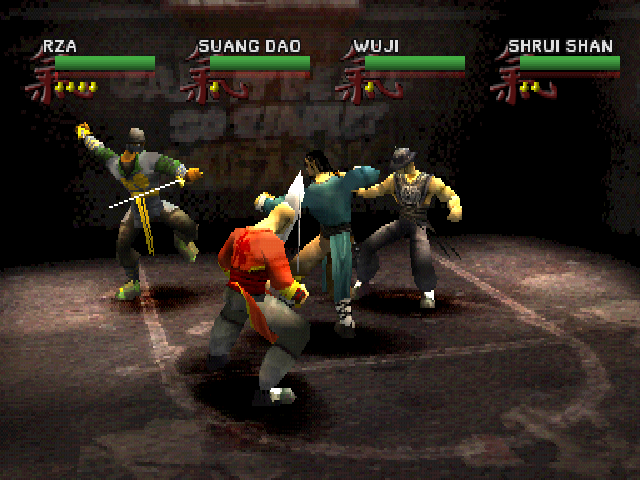
Combat takes place in 3D arenas and uses separate buttons for punches and kicks alongside blocking, crouching, throws, and special attacks. Fights can involve two, three, or four participants at the same time, so matches may be free-for-alls or uneven and team-based contests instead of strictly one-on-one bouts. Each fighter has a health bar and a limited stock of lives; losing all health costs a life and returns the character to the fight while lives remain. A meter fills as blows are dealt and received, then can be spent to strengthen attacks for a short time.
Progress in the story is tied to the 36 Chambers, a set of objectives that takes its name from Enter the Wu-Tang (36 Chambers) and the martial-arts film that inspired the album’s title. These challenges can ask players to visit specific areas or meet combat requirements, and their rewards include additional characters, modes, concept art, and finishing moves. The final confrontation is held back until the earlier chambers have been cleared. Finishing attacks are assigned to the move that ends a match, and more of them become available as the campaign advances.
Wu-Tang: Shaolin Style also stands out for adapting the engine created for Paradox’s unreleased PlayStation fighter Thrill Kill. That lineage helps explain its emphasis on simultaneous multi-fighter battles and graphic finishing moves. A setting in the game can limit mature material, while the instruction manual included the code needed to enable the full violent presentation. Members of Wu-Tang Clan contributed voice work and music to the project, reinforcing the connection between the licensed performers and the game’s action. A special edition was sold with a controller shaped like the group’s distinctive W emblem, making this PlayStation release a particularly unusual crossover of late-1990s hip-hop and console fighting games.
Gallery
Details
- Developer
- Paradox Development
- Publisher
- Activision
- Genre
- Fighting
- Players
- 2-4
- Release Date
- October 31, 1999
- System
- PS1