About
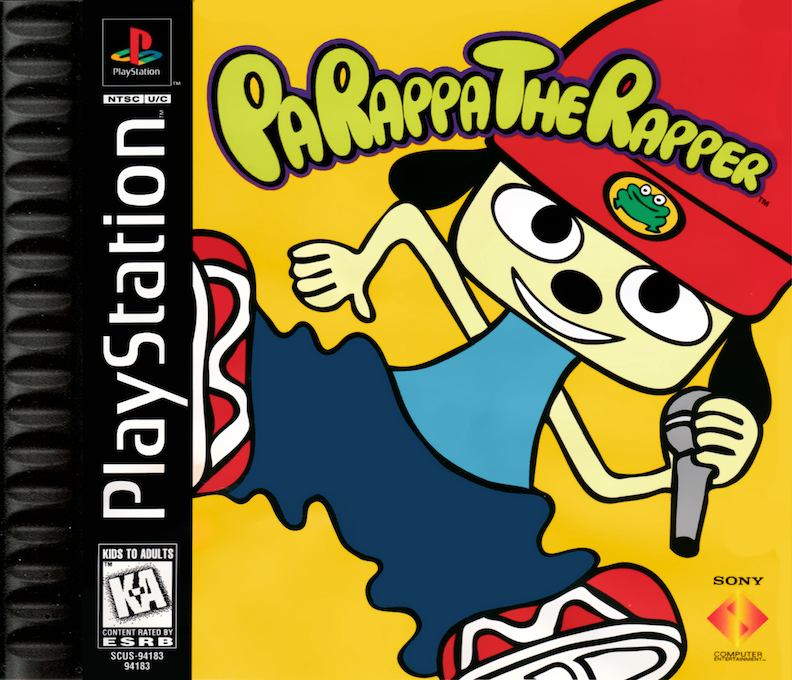
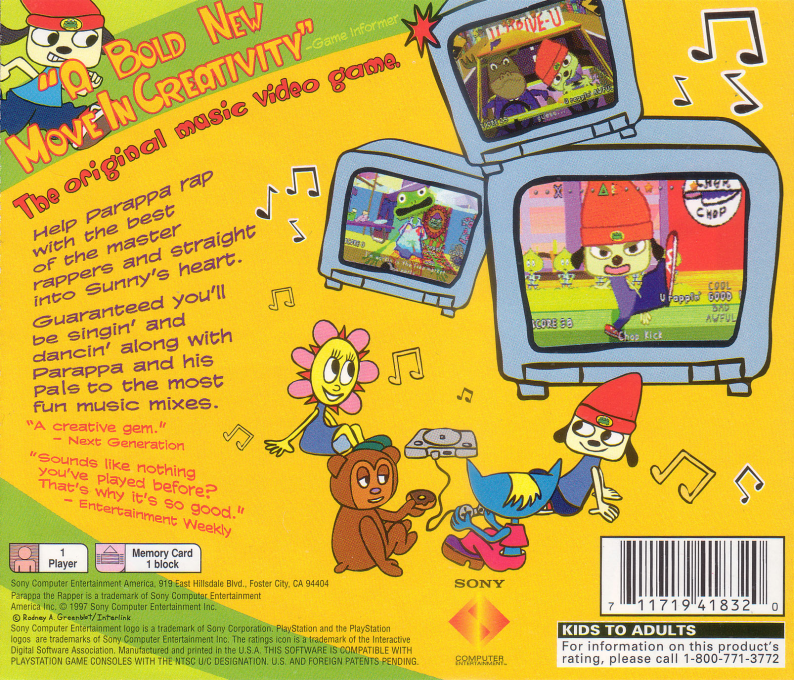
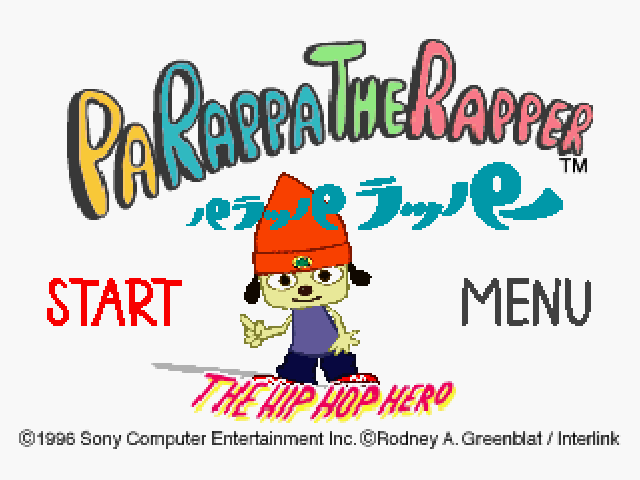
PaRappa the Rapper is NanaOn-Sha's PlayStation rhythm game, published by Sony Computer Entertainment. Created by musician Masaya Matsuura with the distinctive artwork of Rodney Greenblat, it debuted in Japan on December 6, 1996 before reaching Europe in September 1997 and North America on October 31, 1997. Its flat, paper-cutout cast moves through colorful 3D settings, giving this original PS1 release a visual identity that is inseparable from its music.
The story follows PaRappa, a young dog determined to find the confidence to win the attention of Sunny Funny. His ambitions are complicated by the flamboyant Joe Chin and turn everyday problems into rap lessons: martial-arts practice, driving school, a flea-market job, baking a birthday cake, a desperate dash for a bathroom, and a final appearance at Club Fun. Friends including PJ Berri and Katy Kat join the oddball journey, while PaRappa's persistence is summed up by his defining attitude: he has to believe.
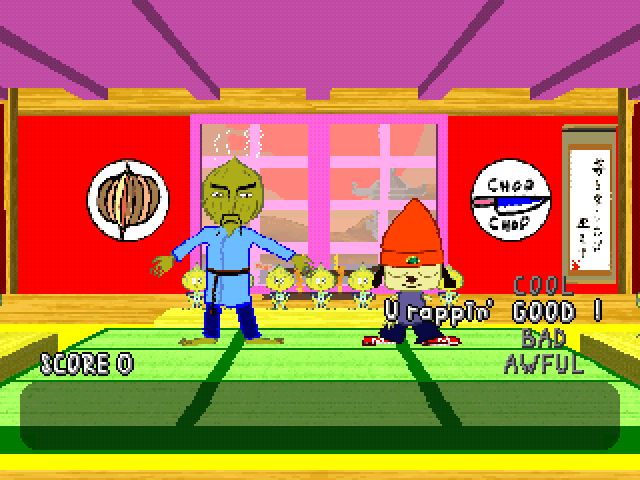
Each of the six stages is built as a call-and-response performance. A teacher delivers a line while a track at the top of the screen displays its button symbols; PaRappa must answer by pressing the matching inputs in time with the beat. The challenge is not simply remembering a sequence. It is reading the rhythm and matching the pace of a rap exchange, so a correct pattern played at the wrong moment can still hurt a performance.
The U Rappin' meter tracks the result with four ranks: Cool, Good, Bad, and Awful. Staying in Good or better carries the song forward, while repeated poor phrases can lower the ranking and ultimately force a restart. A stage is cleared only by finishing in acceptable form, which makes the short lessons increasingly demanding as their rhythms and button patterns become more involved.
Faithfully echoing a teacher is the foundation, but PaRappa the Rapper also rewards invention. Players can depart from the shown response and insert their own button combinations while remaining musical. A successful improvisation can raise the performance to Cool; in that mode the instructor steps away and PaRappa is left to freestyle. Failing to sustain that improvisation brings the teacher back, making Cool both a score goal and a riskier variation on the normal routine.
The teachers give the original game's songs their character. Chop Chop Master Onion introduces kung fu at the dojo, Instructor Mooselini conducts the driving test, Prince Fleaswallow oversees the flea market, Cheap Cheap the Cooking Chicken leads the kitchen, and MC King Kong Mushi commands the final restroom queue before the Club Fun finale. Their absurd names, memorable lessons, and distinct musical settings make every stage feel like a comic scene as well as a timing test.
This entry describes the 1996-97 PlayStation original rather than the later PSP port or PS4 remaster. The original's combination of sampled vocal-style rap, responsive button timing, branching rank behavior, and surreal paper-thin characters established a template that helped define rhythm games on consoles. It remains a compact PS1 experience, but one whose personality comes from the way music, performance, and PaRappa's confidence all advance together.
Gallery
Details
- Developer
- Nanaon-Sha
- Publisher
- Sony Computer Entertainment
- Genre
- Rhythm Game
- Players
- 1
- Release Date
- October 31, 1997
- System
- PS1