About
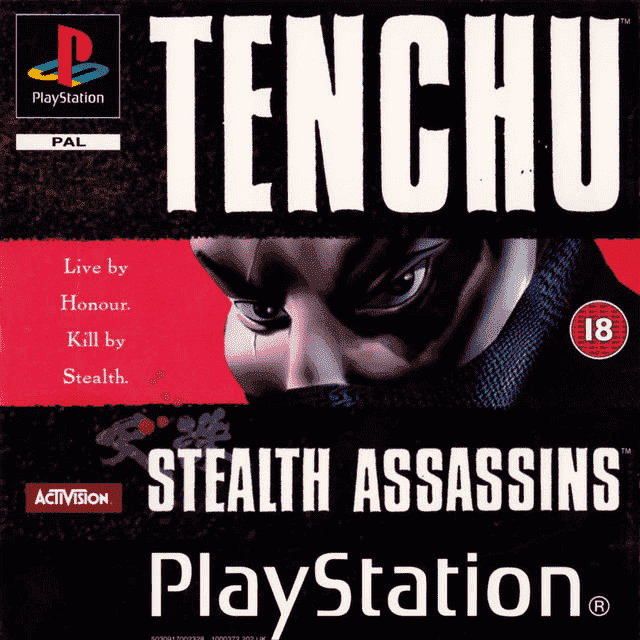
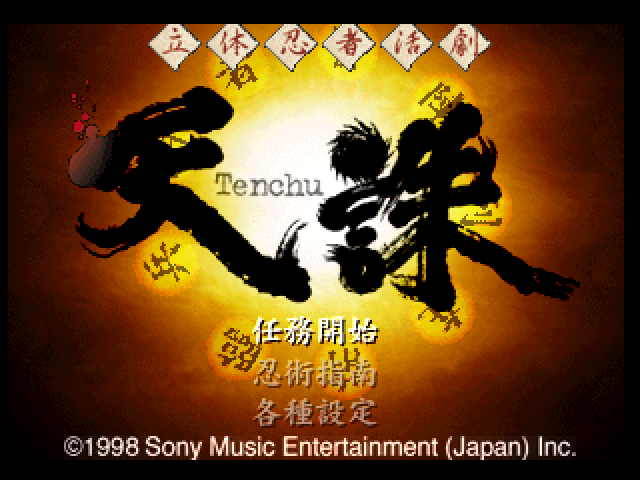
Tenchu: Stealth Assassins for PlayStation is a 1998 stealth action game developed by Acquire. It began life in Japan as Rittai Ninja Katsugeki Tenchu, published there by Sony Music Entertainment Japan on February 26, before Activision brought Tenchu: Stealth Assassins to North America and Europe later that year. The first entry in the Tenchu series puts its ninja fantasy on the PlayStation's 3D stages: success depends less on charging into a fight than on studying patrols, staying hidden, and choosing the right moment to act.
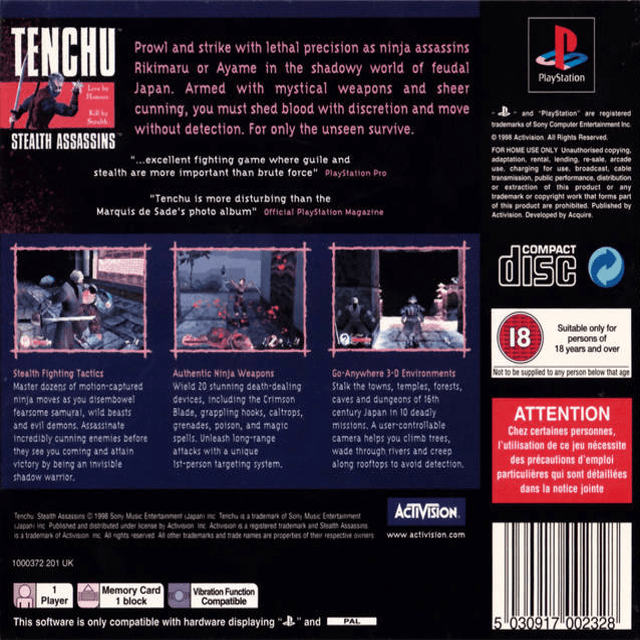
Players select one of two Azuma-clan operatives, Rikimaru or Ayame, and carry out assignments for the benevolent Lord Gohda in Sengoku-period Japan. Rikimaru is the more durable, measured fighter, while Ayame moves faster and fights with two blades. Their missions take them through castles, villages, forests, temples, caves, and other dangerous locations as they investigate threats to Gohda's domain. Briefings establish the immediate objective, while character-specific scenes give the pair different perspectives on the wider conflict involving Princess Kiku, the rival ninja Onikage, and the supernatural Lord Mei-Oh.
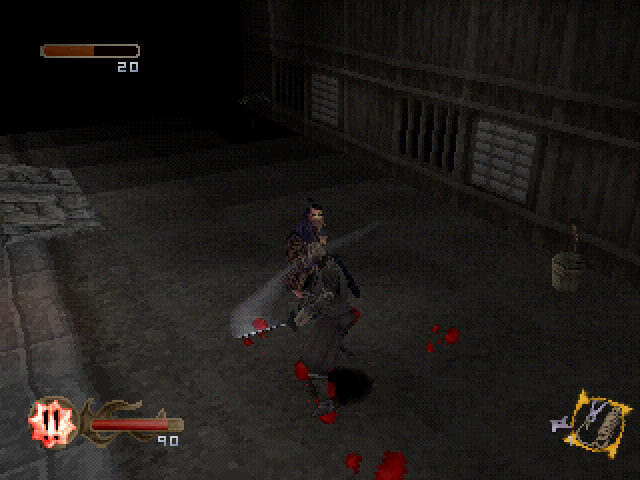
Stealth is built into the basic movement and level design. A ninja can run, crouch, cling close to a wall, hang from ledges, and use a permanent grappling hook to reach roofs, walls, and elevated routes. The hook is aimed from a first-person view, making vertical positioning as important as ground-level cover. Tenchu's Ki meter supplies a compact read on nearby enemies, including their distance and growing suspicion, so it helps the player judge whether a guard can be bypassed or whether a discovered body has turned a quiet approach into an alarm.
An unaware opponent can be dispatched with a close-range stealth kill, but open combat is always a risk. Before each mission, the player chooses a limited supply of ninja tools, and useful options include healing items, shuriken, caltrops, smoke bombs, poisoned rice, mines, and grenades. These items support different approaches: diverting or disabling a guard can be safer than confronting one, while the grappling hook encourages reconnaissance from above. Maps and several possible layouts for missions add to the need to observe each area instead of treating every attempt as a fixed route.
Each completed mission receives a rank, from Thug through Grand Master, based on factors such as detection, kills, and harm to non-combatants. High ranks reward patient play and unlock special abilities for later replays, giving the PlayStation game a strong reason to revisit stages with a cleaner plan. Most missions culminate in a boss encounter, creating a contrast between careful infiltration and direct duels. The Western editions also expanded the original Japanese content with additional missions, alternative layouts, technical refinements, and a level editor, while the later Japanese Tenchu: Shinobi Gaisen incorporated the Western additions.
Tenchu: Stealth Assassins arrived during a formative period for 3D stealth games, but its rooftop traversal, dark feudal-Japan settings, and score-driven assassination missions gave it a distinct identity. Acquire's debut project established Rikimaru and Ayame as the central figures of a long-running series, followed on PlayStation by the prequel Tenchu 2: Birth of the Stealth Assassins. For players exploring PS1 stealth games, Tenchu remains a focused single-player adventure about using information, positioning, and ninja tools to make an impossible mission look effortless.
Gallery
Details
- Developer
- Acquire
- Publisher
- Activision
- Genre
- Other Adventure
- Players
- 1
- Release Date
- October 30, 1998
- System
- PS1