About
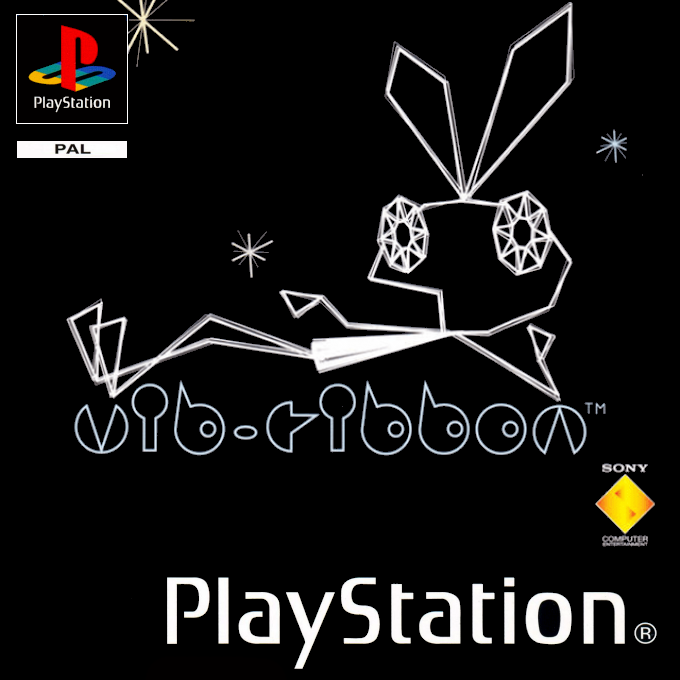
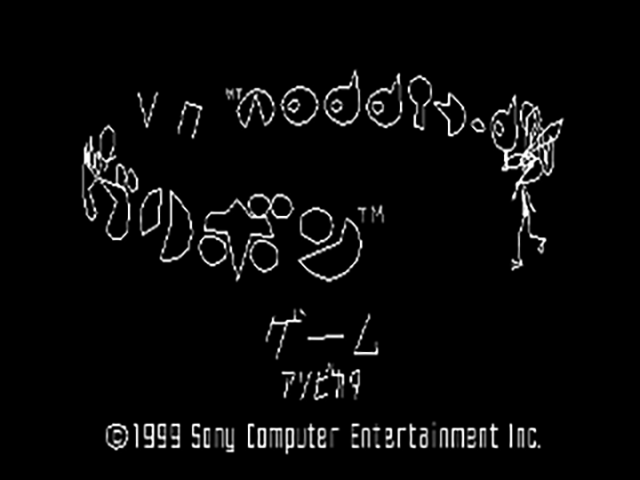
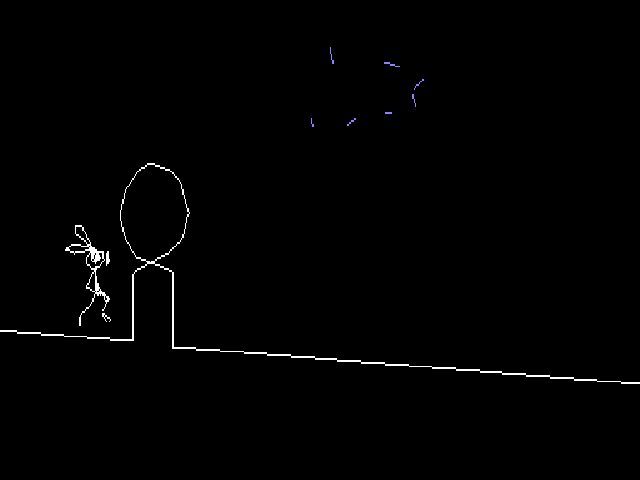
Vib-Ribbon is a PlayStation rhythm game from NanaOn-Sha, the studio founded by musician and producer Masaya Matsuura after its influential work on PaRappa the Rapper. Published by Sony Computer Entertainment, it turns a very spare-looking world into an unusually direct test of timing. The player guides Vibri, a wireframe rabbit, along a thin white route through Music World. Its visual language is deliberately minimal: black background, angular white lines and sudden obstacles that arrive in time with the music. That clarity gives every button press a sharp, musical purpose and remains one of the game’s defining qualities.
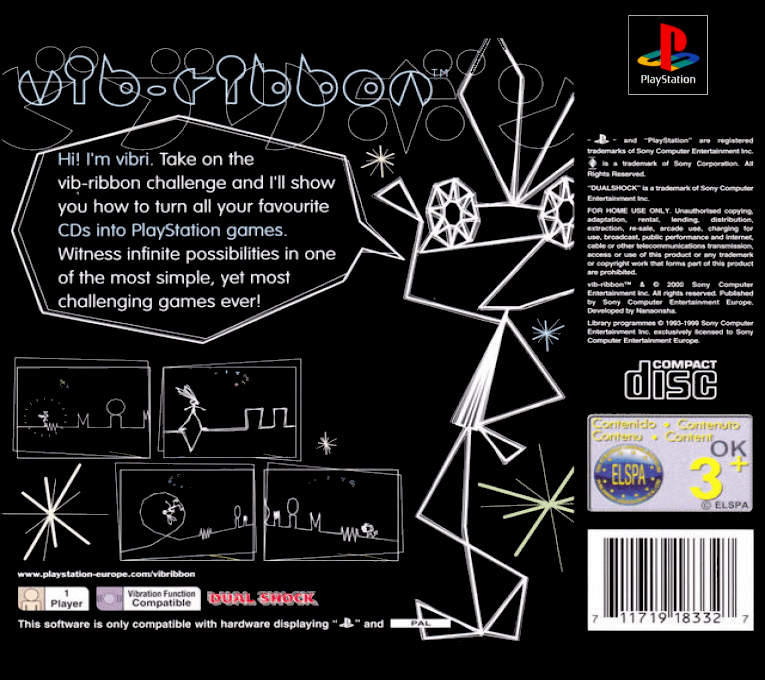
The basic idea is easy to read but demanding to execute. Blocks, loops, waves and pits each call for a different PlayStation controller input, while combined hazards require two buttons at once. Players must recognize the shapes, listen for the rhythm and respond before Vibri reaches them. A mistake temporarily changes Vibri’s form, first into a rough scribble and then into progressively less capable creatures if errors continue. Strong play reverses that decline, and a sustained run can transform her into Super Vibri for greater scoring potential. The changing character is both a charming visual reward and an immediate indication of how a performance is going.
Rather than presenting dense stages or elaborate scenery, Vib-Ribbon builds its identity around readable rhythm patterns. Its line-drawn presentation was not simply an aesthetic preference: the compact program could load into the original PlayStation’s RAM. That technical decision enabled its famous feature. After the software had loaded, players could take out the game disc and insert a standard audio CD. The game would analyze a selected track and create a fresh obstacle course from it, making a personal music library part of the experience on compatible original hardware.
This music-generation system makes Vib-Ribbon feel different from a fixed-song rhythm game. The included tracks establish the rules and offer structured courses, but the CD option lets the character of a song influence the route in unexpected ways. Calm passages, busy percussion and sudden changes can produce very different challenges. The result is not a tool for authoring exact charts; it is an experiment in translating recorded sound into a playable path. That sense of discovery encouraged players to revisit songs they already knew just to see how the game interpreted them.
The original soundtrack was created by the Japanese band Laugh and Peace, with vocals by Yoko Fujita. Its playful, eccentric songs suit Vibri’s abstract world while also demonstrating the range of patterns the game can generate. Matsuura and the NanaOn-Sha team approached the project as a rhythm experience that should not be confined to one musical genre, a goal reflected in the neutral wireframe art and the ability to use outside CDs. The game’s small core team and focused design make it a concise example of late-1990s PlayStation experimentation.
Released in Japan in 1999 and in PAL territories in 2000, Vib-Ribbon did not receive an original North American PlayStation release. Its unusual concept, crisp visual identity and custom-CD feature nevertheless earned it a lasting cult reputation among rhythm-game and PlayStation fans. It later reached additional audiences through a PlayStation Network release, while its ideas continued in Japan-only follow-ups Mojib-Ribbon and Vib-Ripple. For players exploring inventive PS1 music games, Vib-Ribbon stands out as a distinctive blend of simple controls, demanding timing and technology designed around the music already on the shelf.
Gallery
Details
- Developer
- Nanaon-Sha
- Publisher
- Sony Computer Entertainment
- Genre
- Platformer
- Players
- 1
- Release Date
- September 1, 2000
- System
- PS1