About
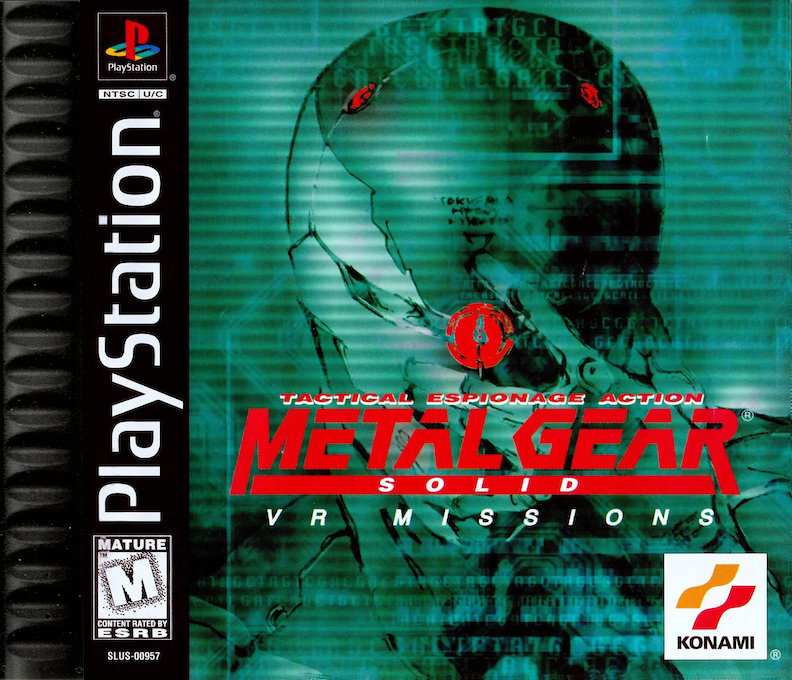
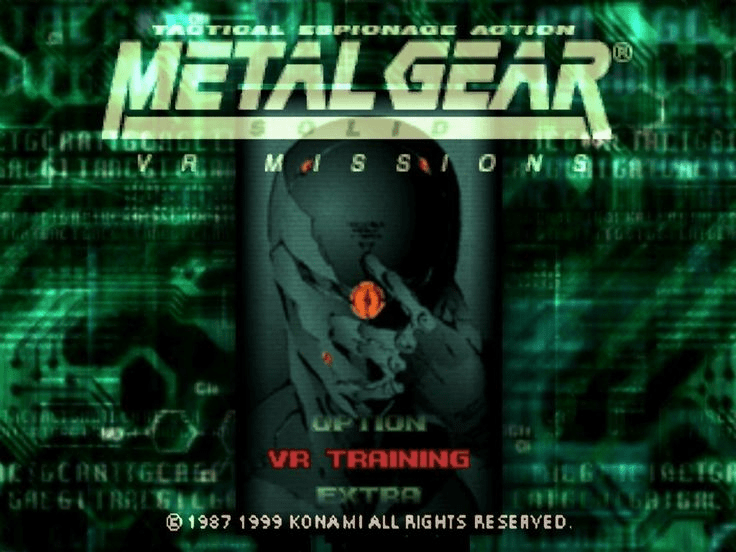
Metal Gear Solid: VR Missions for PlayStation is a 1999 single-player stealth-action challenge collection developed by Konami Computer Entertainment Japan and published by Konami. Released in North America on September 23, it is not a new chapter in Solid Snake’s Shadow Moses story. Instead, it takes the virtual-reality training idea from the original Metal Gear Solid and expands it into a separate disc built around focused exercises. In PAL territories the equivalent release was called Metal Gear Solid: Special Missions, while the material originated as the VR Disc included with Japan’s Metal Gear Solid: Integral.
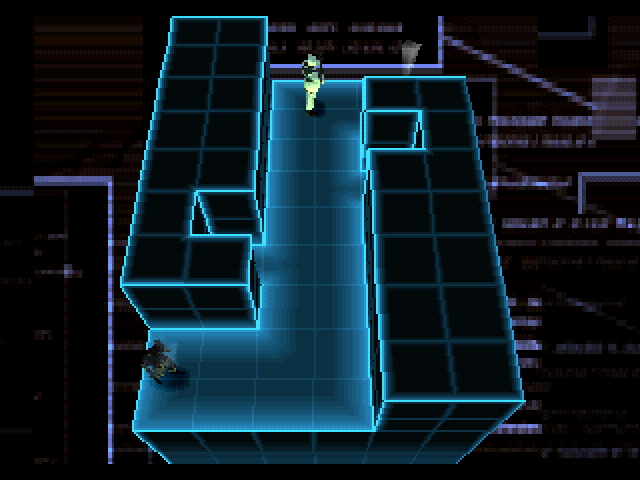
The game places Solid Snake in abstract virtual arenas rather than a continuous world or plot-driven campaign. Its appeal is in repeating compact scenarios until a route, tactic, or weapon choice works cleanly. The familiar PlayStation controls and overhead viewpoint carry over from Metal Gear Solid: Snake can move cautiously around patrols, use cover and corners to control what he sees, and rely on the series’ alert rules to understand the cost of being noticed. This makes the disc useful both as practice for the original game’s tools and as a concentrated test of them.
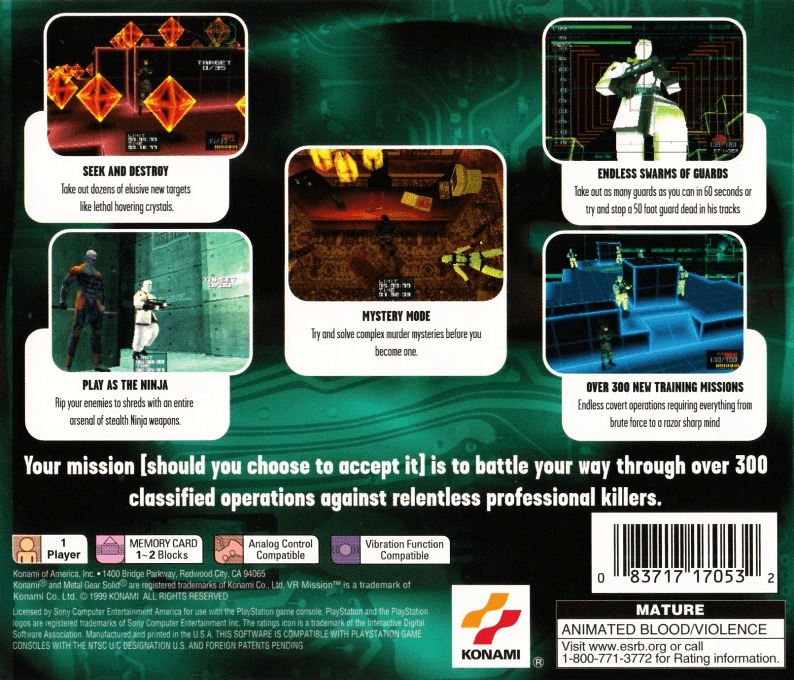
Its 300 stages are divided into Sneaking, Weapon, Advanced, and Special modes. Sneaking missions ask Snake to reach a goal without detection in unarmed exercises, or to manage SOCOM ammunition while eliminating opponents in armed variants. A discovery immediately ends a Sneaking attempt, so observing guard movement, choosing a safe path, and knowing when to wait are central to success. The concise layouts put the emphasis on timing and spatial awareness rather than on lengthy exploration.
Weapon missions turn the training environment into a shooting range. Players use the available equipment to destroy every target and make the exit appear, with stationary, moving, explosive, and environmental targets requiring different handling. The Advanced missions combine those demands: Snake must use weapons and stealth skills to defeat every enemy and reveal the goal, but being spotted no longer automatically ends the session. That distinction gives the collection room to test direct action as well as evasive play.
Special mode broadens the format with unusual conditions and unlocks after the earlier categories are cleared. Across the disc, saved data records which stages are available and completed, as well as best completion times, encouraging players to return to a mission for a sharper run. The structure suits short sessions: each clear condition is explicit, failure sends the player back to a self-contained challenge, and progress steadily opens later material instead of requiring a long narrative checkpoint.
VR Missions arrived shortly after Metal Gear Solid established Solid Snake’s PlayStation-era stealth systems for a wide audience. Rather than retelling the original game’s infiltration of Shadow Moses, it isolates the mechanics that support that adventure—movement, concealment, enemy awareness, aiming, and equipment use—and makes them the entire subject. It is therefore closely tied to Metal Gear Solid, but it remains a distinct companion release designed around drills, score-minded improvement, and experimentation.
Konami has continued to preserve the relationship between these releases in later collections: Metal Gear Solid: Master Collection Vol. 1 includes the original Metal Gear Solid together with VR Missions and Special Missions. For players interested in the PlayStation game’s tactical foundations, Metal Gear Solid: VR Missions offers a large set of controlled scenarios where stealth fundamentals can be learned one objective at a time, without altering the events of the main game.
Gallery
Details
- Developer
- KCEJ
- Publisher
- Konami
- Genre
- Action-Adventure
- Players
- 1
- Release Date
- September 23, 1999
- System
- PS1