About
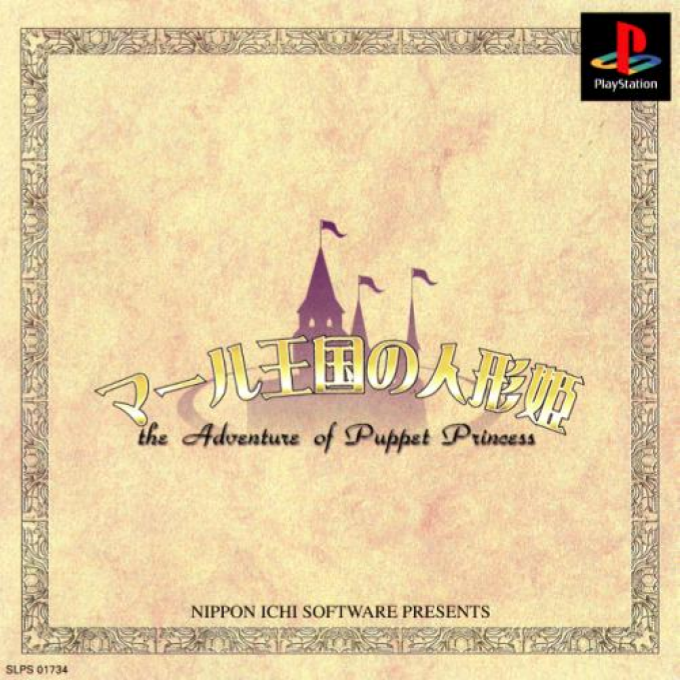
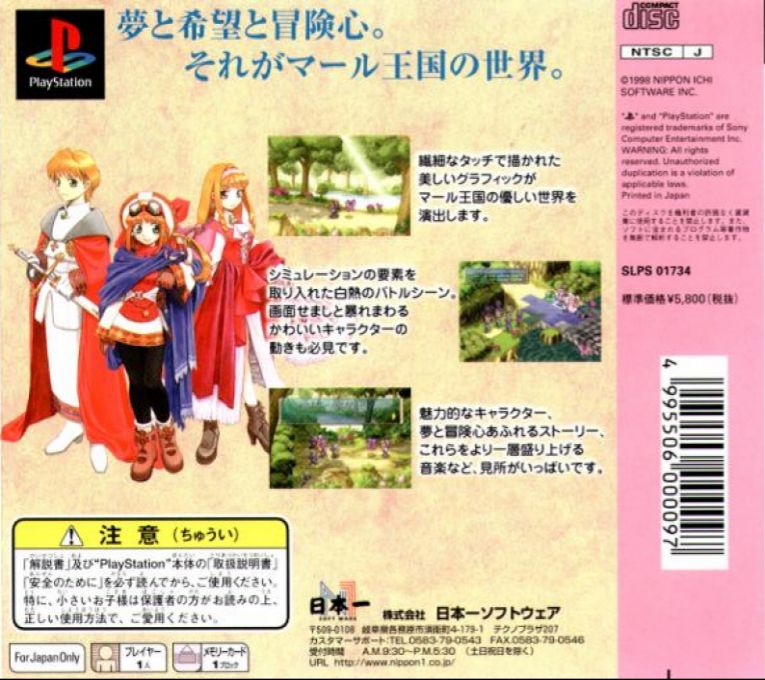
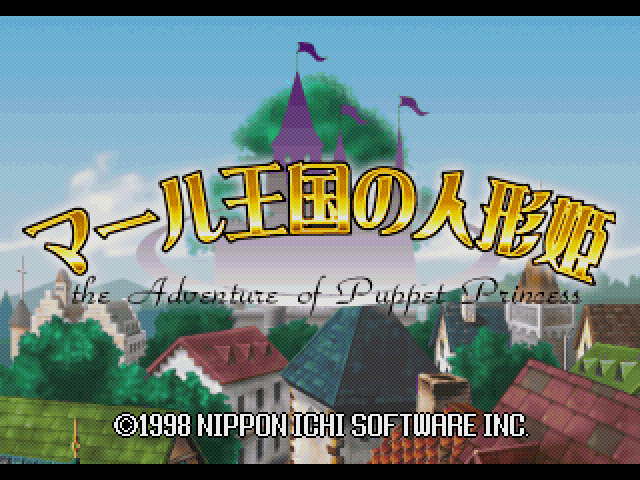
The Adventure of Puppet Princess for PlayStation is Nippon Ichi Software’s 1998 role-playing game, originally released in Japan as Marl Oukoku no Ningyou Hime. It is the opening chapter of the Marl Kingdom series and was both developed and published by Nippon Ichi. A later North American localization arrived as Rhapsody: A Musical Adventure, but this PS1 release is the Japanese original: a fairy-tale RPG that combines an isometric battle system with a presentation built around character songs and animated musical scenes.
The story follows Cornet Espoir, a young woman whose magical horn lets her understand and command puppets. Accompanied by her outspoken puppet companion Kururu, Cornet sets out across Marl Kingdom after Prince Ferdinand is turned to stone. The spell comes from Marjoly, a witch who also desires the prince, turning Cornet’s romantic dream into a journey through towns, dungeons, and the kingdom’s increasingly strange dangers. The adventure’s fantasy setting gives its heroine, puppets, monsters, and rival characters an important role in both the narrative and combat.
Exploration moves through locations selected from a world map, with random battles interrupting travel. Once a fight begins, combat takes place on small tactical fields: units have movement ranges, attack distances, elemental affinities, spells, items, and three accessory slots. Positioning still matters, but the game favors brisk encounters over long, heavily technical battles. Party members share battle experience after a victory, while the character landing a finishing blow earns skill points that improve critical-hit potential.
Cornet herself is especially central to the game’s systems. Rather than functioning as a conventional front-line fighter, she uses her horn to support the puppets and recruited creatures that do much of the battling. Using these abilities fills an Appreciation gauge, eventually allowing powerful Reward techniques. Defeated monsters can sometimes join the group and bring their own special abilities, expanding the available roster alongside the puppets. Elemental strengths and weaknesses, along with status effects, add further choices when arranging a party for a fight.
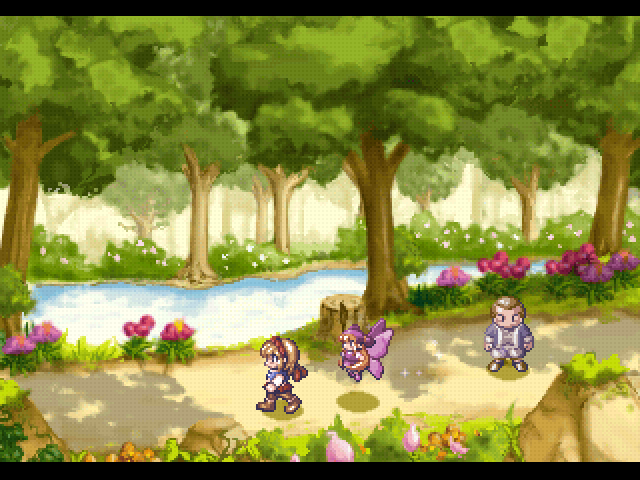
Music distinguishes The Adventure of Puppet Princess from many PlayStation-era RPGs. Major story moments are staged as musical interludes, with characters singing and dancing instead of relying solely on ordinary dialogue scenes. The original game also includes illustrations that can be collected and viewed through the item menu. Its mixture of colorful sprite-based characters, theatrical storytelling, and approachable tactical encounters establishes the identity that the Marl Kingdom series would continue to develop.
The PlayStation game launched in Japan on December 17, 1998. It later received a budget reissue, Marl Oukoku no Ningyou Hime +1, with an art gallery, sound test, and bonus disc, while a subsequent PSone Books edition omitted the extra disc. The core story was localized for North America as Rhapsody: A Musical Adventure in 2000, and a Nintendo DS remake followed years later with substantially changed battles. The original also led to the PlayStation sequel Little Princess: Marl Oukoku no Ningyou Hime 2 and helped begin one of Nippon Ichi’s best-known early RPG series.
Gallery
Details
- Developer
- Nippon Ichi Software
- Publisher
- Nippon Ichi Software
- Genre
- JRPG
- Players
- 1
- Release Date
- December 17, 1998
- System
- PS1