About
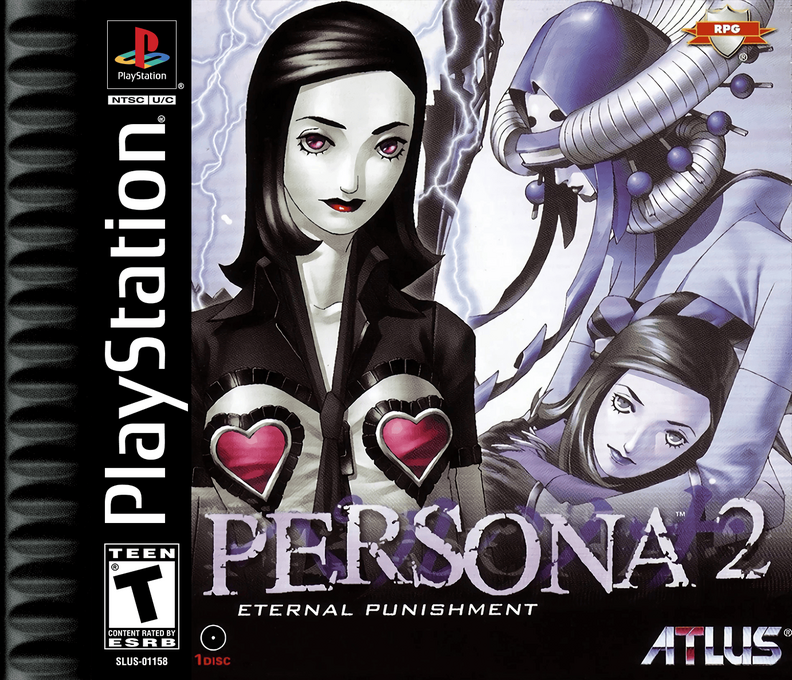
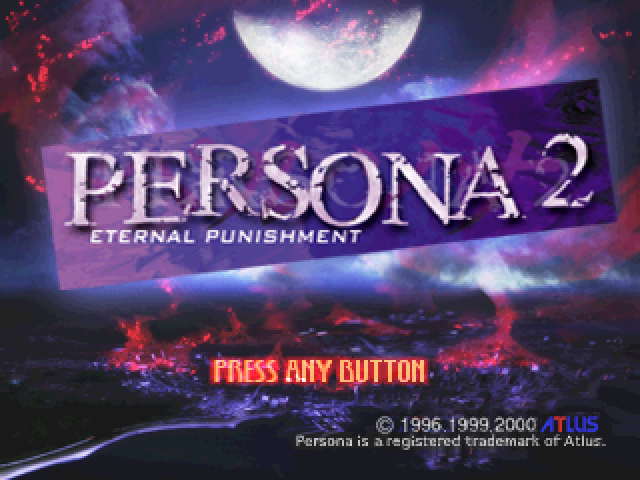
Persona 2: Eternal Punishment is Atlus’s dark, character-driven PlayStation RPG and the second half of the Persona 2 story. Set in the coastal city of Sumaru, it follows Maya Amano, a reporter for the youth magazine Coolest, as a disturbing urban legend turns into a real investigation. A figure called the Joker is said to answer when someone calls their own number, and rumors surrounding the curse begin to leave a very tangible mark on the city. Maya’s search brings her together with the sharp-edged fashion designer Ulala Serizawa, police detective Katsuya Suou, and the elusive fixer Baofu, forming an adult cast with very different stakes in the case.
This is the original 2000 North American PlayStation release of Eternal Punishment, the sequel to Persona 2: Innocent Sin. It carries forward familiar names and ideas while giving Maya a new central role and a story designed to explain its important connections as it goes. That makes it a compelling continuation for players who know Innocent Sin, but its opening mystery, urban setting, and investigative momentum also give newcomers something immediate to hold onto. The tone is more mature than a typical school-focused RPG, balancing supernatural unease with workplace pressures, friendships, and the consequences of what people choose to believe.
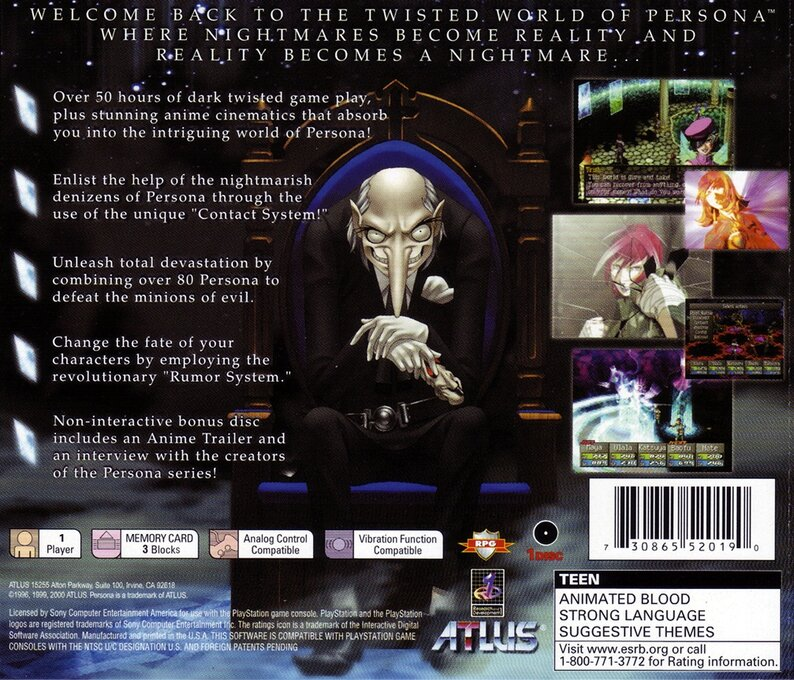
Sumaru is more than a backdrop. Its neighborhoods, businesses, schools, and rumor networks turn the city into a place to explore and interrogate. The Rumor system is one of Eternal Punishment’s defining ideas: after hearing certain claims, the party can spread them through the right channels and watch them affect the world. A whispered lead might open an opportunity, alter what is available, or point the investigation in a new direction. It gives the adventure an unusual sense that information itself has weight, and that the stories people repeat can become another tool—or another danger.
When demons appear, Eternal Punishment uses a strategic turn-based combat system built around Personas, the supernatural aspects summoned by each party member. Before a round plays out, you assign actions and shape a plan, then watch the group carry it through until it is time to adjust. Personas supply elemental attacks, healing, defensive options, and other specialized abilities, while repeated use lets them grow stronger. Positioning is not the focus; the appeal lies in reading enemy weaknesses, managing resources, choosing the right Persona for the job, and building a sequence that keeps the party in control.
Fusion Spells reward thoughtful teamwork. Set up the appropriate actions in the proper order and two or more characters can combine their efforts into a more powerful result. These combinations make party composition and battle planning feel meaningful, especially when a difficult encounter calls for more than straightforward attacks. The game also includes an auto-battle option for routine fights, but its strongest moments come from slowing down, considering each character’s role, and discovering how their abilities work together.
Not every demon encounter has to end in combat. Through the Contact system, party members can speak with demons using their own distinct styles, with success depending on the right approach for the enemy at hand. Productive conversations can make a demon leave peacefully and may earn useful rewards, including cards linked to the Persona system. Those cards matter at the Velvet Room, where they can be used to create new Personas and broaden the party’s options. Negotiation therefore sits alongside battle as a practical part of progression rather than a decorative extra.
Eternal Punishment’s PlayStation presentation combines an angled overhead view, explorable locations, dungeon encounters, menus full of tactical choices, and the distinctive demon designs associated with Atlus’s early Persona games. Its atmosphere comes from the contrast between ordinary city life and a case that keeps becoming stranger, with an understated late-PS1 look that suits the supernatural thriller mood. The pacing asks players to absorb dialogue, investigate leads, and engage with systems that gradually reveal their depth.
For players tracing the series before its modern era, Persona 2: Eternal Punishment remains a memorable chapter: a PS1 RPG where rumor is a game mechanic, demon negotiation can be as valuable as force, and a group of adults face an escalating mystery in Sumaru. It is separate from the later 2012 PSP remake, which remained Japan-only; this entry is the original PlayStation version Atlus localized in North America. Its blend of investigation, Personas, fusion attacks, and citywide consequences gives it a personality unlike most role-playing games of its generation.
Gallery

Details
- Developer
- Atlus
- Publisher
- Atlus
- Genre
- JRPG
- Players
- 1
- Release Date
- December 22, 2000
- System
- PS1