About
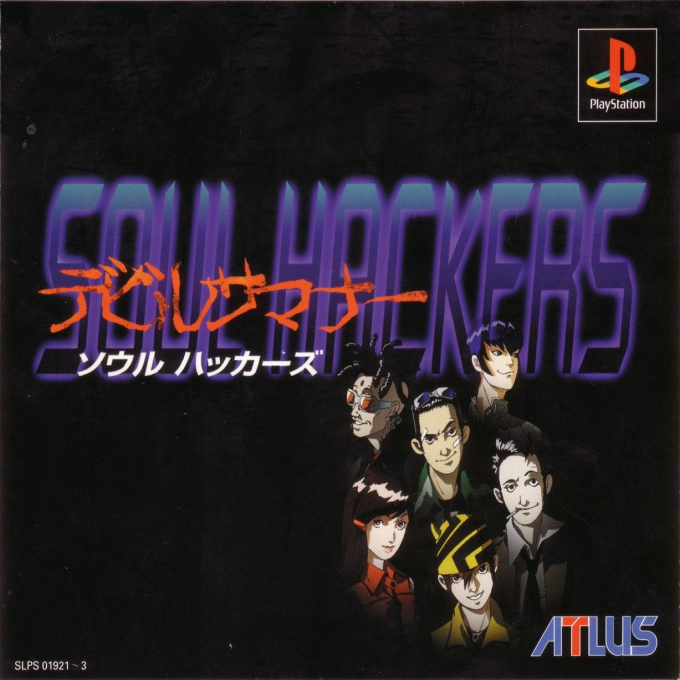
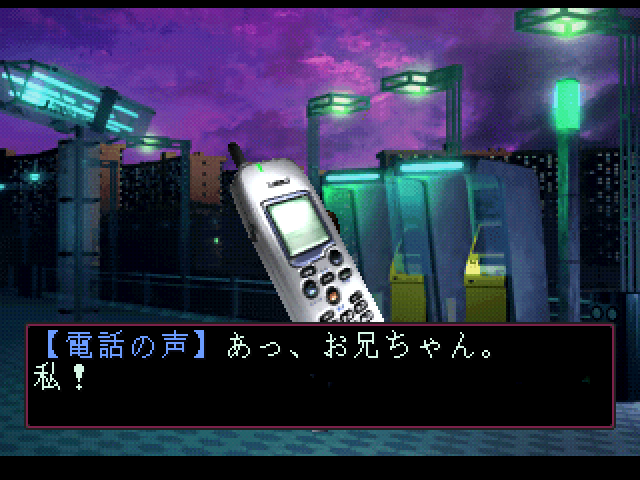
Devil Summoner: Soul Hackers for PlayStation is a first-person dungeon-crawling role-playing game published by Atlus in Japan on April 8, 1999. This PS1 edition is a port of the 1997 Sega Saturn game and the second entry in the Devil Summoner branch of the wider Megami Tensei series. Set in the technologically ambitious Amami City, Soul Hackers combines urban occult fiction with a vision of networked life: homes and businesses are connected through a citywide system, and a virtual attraction called Paradigm X becomes central to a supernatural crisis.
The unnamed hero belongs to the Spookies, a young hacker group whose members gain access to Paradigm X while probing the network built by Algon Soft. Their excursion leads to a far more dangerous situation involving demons, a suspicious organization known as the Phantom Society, and Nemissa, a mysterious being who takes possession of the hero's friend Hitomi Tono. The story moves between physical Amami City and its electronic counterpart, framing its fantasy conflict through computers, online spaces, and the unease surrounding a powerful system that reaches into everyday life.
Exploration follows the classic first-person style used by early Megami Tensei games. Players travel through city locations and maze-like 3D dungeons, inspect their surroundings, find the way forward through puzzles and events, and encounter enemies in turn-based battles. The party always includes human characters, while its other combat slots can be filled by summoned demons. The lead character’s gun-shaped GUMP computer is integral to this role as a fledgling Devil Summoner, providing the means to call supernatural allies into battle.
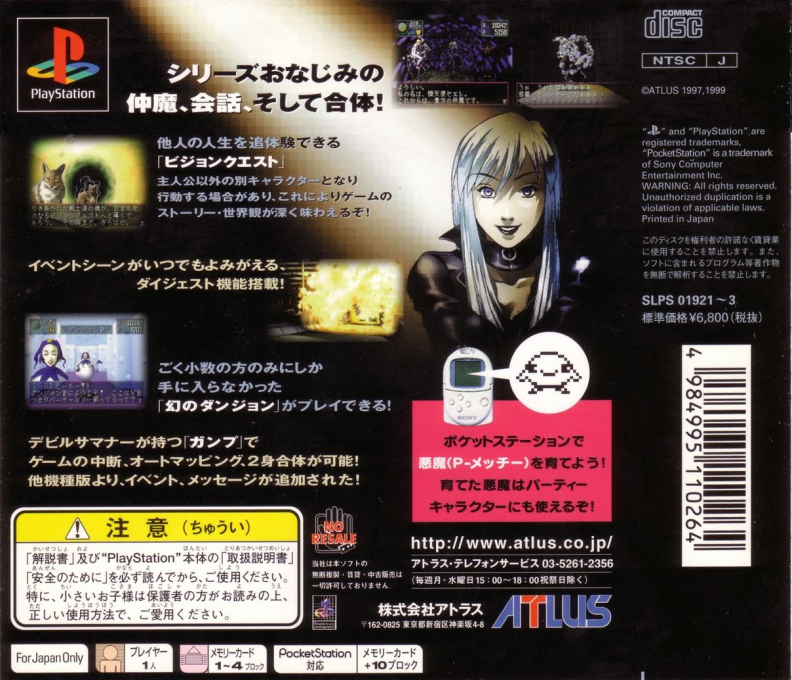
A major part of Soul Hackers is building and managing that demon roster. Rather than simply defeating every enemy, players can attempt conversations with demons, choosing responses or offering items in hopes of gaining money, information, or a new ally. Recruited demons can be combined through fusion to create different ones and pass on useful abilities. Their personalities and alignments matter in combat: demons may favor certain actions, cooperate poorly with incompatible companions, or resist an order they dislike. Raising loyalty through suitable commands, gifts, and room to act makes these partners more dependable.
Summoning is also a resource-management decision. Active demons consume magnetite, so keeping a full supernatural party on the field has a practical cost as well as a tactical benefit. This gives dungeon expeditions an additional layer beyond elemental strengths and party levels, while fusion and negotiation invite players to tailor a team for the challenges ahead. The combination of first-person navigation, turn-based encounters, demon diplomacy, and party customization places the game firmly in the tradition established by its Devil Summoner predecessor, though its story is separate.
The PlayStation release arrived with additions over the original Saturn version, including extra story material and content connected to Paradigm X. It remained a Japan-only release, as did the Saturn original; the game later reached an international audience through a Nintendo 3DS version. For PS1 players, Devil Summoner: Soul Hackers stands as a late-1990s Japanese RPG that joins cyberpunk imagery, occult investigation, and the series’ distinctive demon-collecting systems in a single city-spanning adventure.
Gallery
Details
- Developer
- TOSE
- Publisher
- Atlus
- Genre
- JRPG
- Players
- 1
- Release Date
- April 8, 1999
- System
- PS1