About
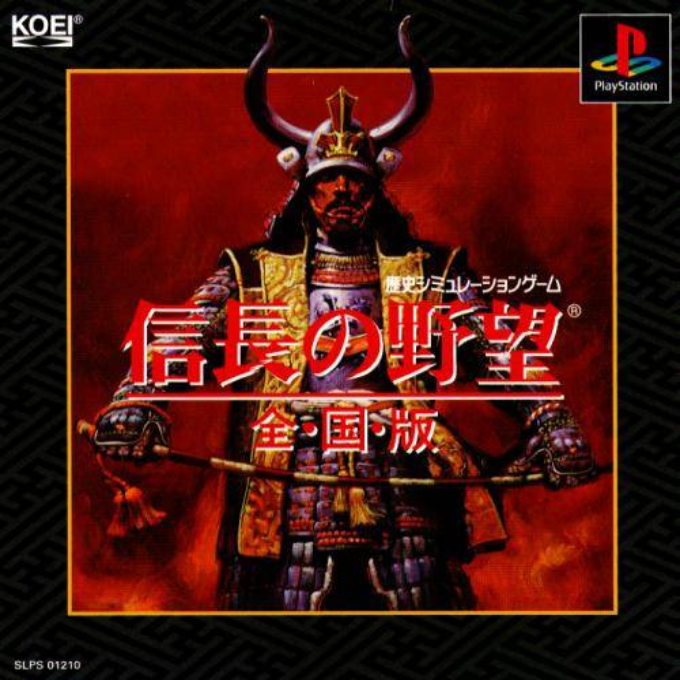
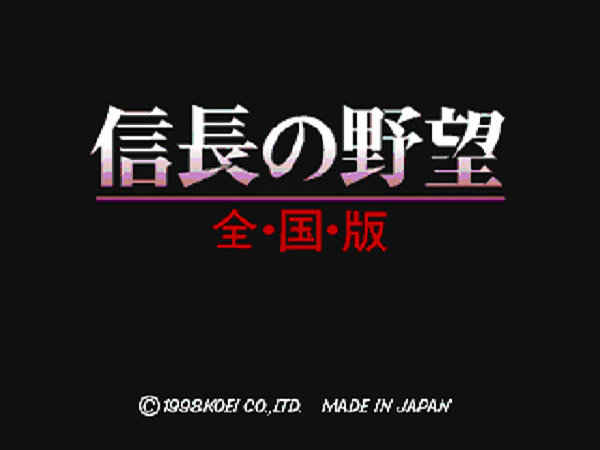
Nobunaga no Yabou: Zenkokuban is Koei’s Japanese PlayStation strategy game, released in Japan on January 22, 1998. The title is a PlayStation version of Nobunaga’s Ambition: Zenkokuban, the nationwide edition of Koei’s long-running historical strategy series, rather than a new mainline entry created for the console. Set amid Japan’s Sengoku period, it places the player in the position of a daimyo competing to bring a fractured country under one banner.
The aim is not limited to winning a single battle. A chosen lord must turn a small domain into a power capable of unifying Japan, balancing the immediate demands of war with the slower work of administration. Oda Nobunaga is central to the series’ premise, but players can select other historical regional daimyos as well. This makes each campaign a contest between competing territories and rulers instead of a fixed retelling with one predetermined path.
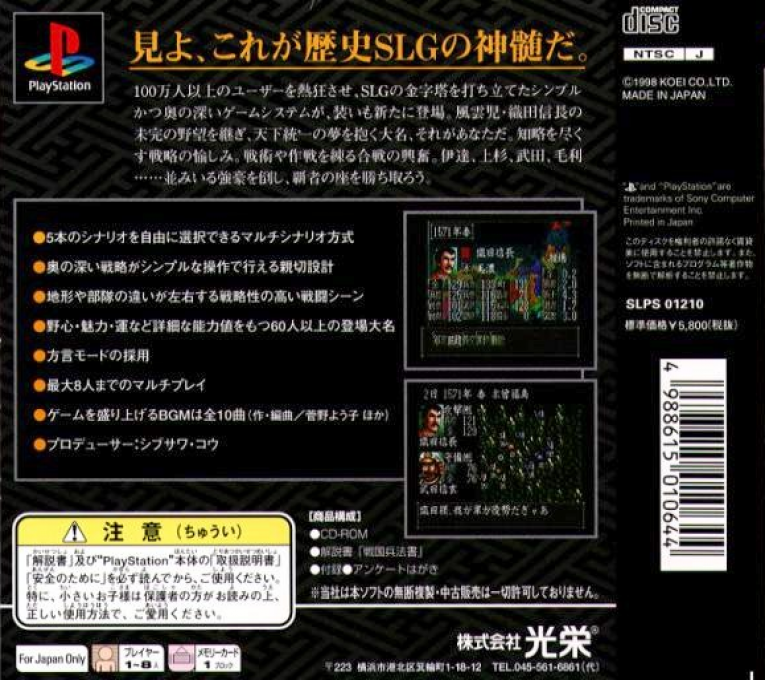
Zenkokuban expands the scope associated with the earlier Nobunaga’s Ambition design to a map of 50 provinces covering all of Japan. Its scenarios draw on different moments in the late sixteenth century, including starts in 1560, 1571, and 1582. The changing starting conditions matter: the territories, rivals, and strategic pressures surrounding a daimyo shape what is possible long before armies meet on the field.
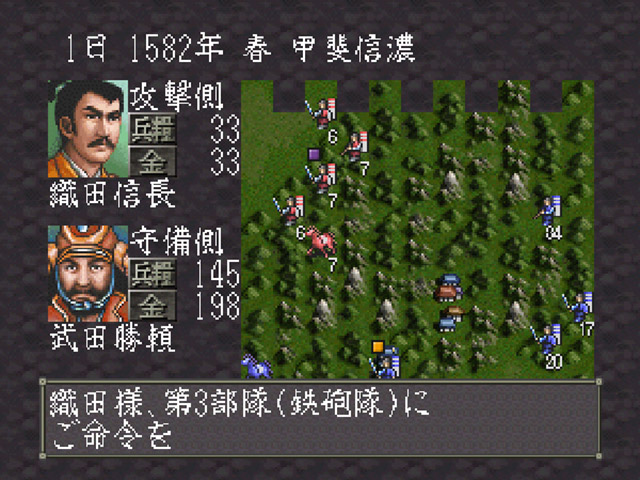
Play proceeds in turns, with the strategic map advancing by seasons and individual battles proceeding by days. On the map, decisions about food, money, population, and military strength are interconnected. Raising taxes can increase income but risk peasant loyalty; cultivation, flood control, and town development affect the resources available to a province. Rice in particular is both an economic concern and a means of supporting people and troops, so expansion without a stable base can create problems as readily as opportunities.
Military preparation is equally deliberate. Players can recruit and train soldiers, move forces between fiefs, assign military strength, and acquire weapons through merchants. Diplomacy and indirect action provide alternatives to simple conquest: rulers may arrange marriages, form non-aggression agreements, investigate rivals, or employ ninja. These choices give the game its characteristic grand-strategy rhythm, in which the condition of a realm, its supplies, and its relationships can influence a campaign as much as the size of its army.
When war begins, success can come through several routes rather than only by annihilating an opponent. An enemy may be forced to retreat, lose its command unit, run short of supplies, or fail to sustain its invasion. That emphasis on logistics and endurance fits the broader design: each battle is part of a continuing effort to govern, finance, feed, and defend a domain. The PlayStation release preserves the historical simulation’s menu-driven focus for players who want to plan a unification campaign instead of follow an action-game narrative.
Nobunaga no Yabou: Zenkokuban belongs to a series Koei began in 1983, one of the formative names in Japanese historical strategy games. The original Zenkokuban edition debuted for Japanese computers in 1986 and established the nationwide scale later associated with the game’s console versions. This 1998 PS1 release therefore offers a later console home for a foundational entry: a game about the political, economic, and military choices behind the ambition to unify feudal Japan.
Gallery
Details
- Developer
- Koei
- Publisher
- Koei
- Genre
- Turn-Based Strategy
- Players
- 1-8
- Release Date
- January 22, 1998
- System
- PS1