About
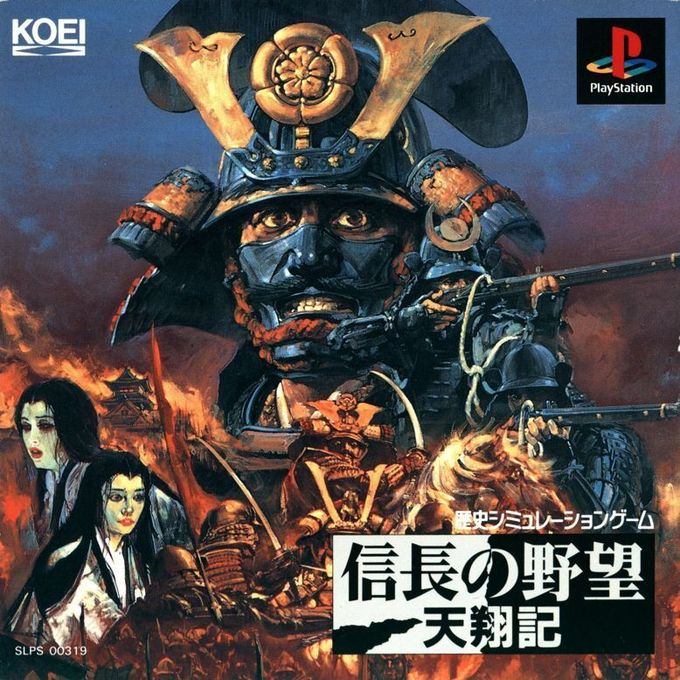
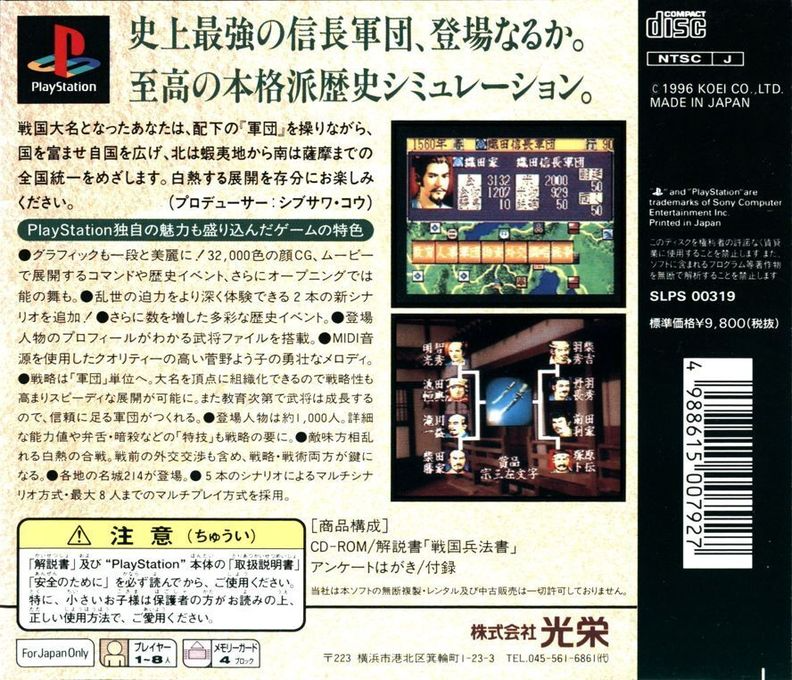
Nobunaga no Yabou : Tenshouki for PlayStation is Koei's Japanese historical strategy simulation set amid Japan's Sengoku era. Released in Japan on March 29, 1996, it is the PlayStation version of the sixth main Nobunaga's Ambition game, whose original computer release arrived in 1994. Rather than placing the player exclusively in the role of Oda Nobunaga, Tenshouki lets them choose from the era's competing daimyo and pursue the same enormous prize: the unification of a fractured Japan.
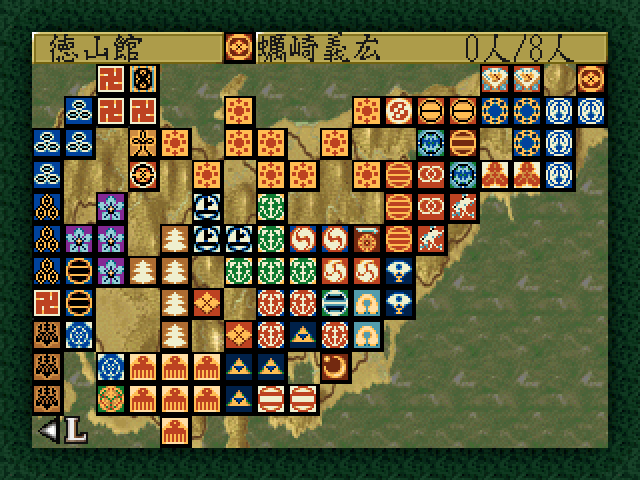
Each campaign begins from a historical starting point with its own balance of territories, retainers, rival clans, and technology. The player must turn a chosen house into a national power by managing castles, securing supplies, recruiting and organizing officers, improving forces, and deciding when a fragile position can support an invasion. The map’s goal is direct control of Japan’s 214 castles, so expansion, defense, and the order in which neighboring powers are confronted all matter more than simply winning a single battle.
Tenshouki places unusually strong emphasis on momentum and command capacity. Actions draw on a faction’s available action power, making the allocation of officers and priorities an important part of every campaign. Castles produce and hold the resources needed to keep an army moving, while the player can build forces, shift personnel toward threatened frontiers, use diplomacy or intrigue, and make difficult choices about whether to consolidate or press an advantage. The result is a strategy game in which political management and military preparation remain closely connected.
Its large officer roster is central to that design. Around a thousand Sengoku figures are represented, with abilities for politics, combat, and intelligence separated into potential and current performance. Young officers do not necessarily begin at their full strength; experience and the education system can develop their practical abilities, and some training can lead to new skills. Rank, troop aptitude, special skills, and occupations further affect how useful an officer may be, encouraging players to look beyond a single headline statistic when assigning work or leading an army.
War in Nobunaga no Yabou : Tenshouki is built around castles rather than a simple province-by-province exchange. A conflict can encompass the target and surrounding castles, allowing field engagements and sieges to develop within the same wider struggle. Several powers may become involved, and taking a castle depends on reaching and securing its inner stronghold rather than merely being the force that started the fight. Unit placement, the officers available, and the decision to enter a siege can therefore change the outcome of a campaign across more than one castle.
As a realm grows, the PlayStation game allows authority to be divided into as many as eight corps. The daimyo leads the first corps, while trusted retainers can be appointed to manage others under broader policies. This helps a large clan operate on several fronts, but it also makes the qualities and ambitions of corps commanders significant. The PlayStation edition belongs to the original 1990s Tenshouki line, with its own console-era scenario selection and presentation; it should not be confused with the later PSP port or the 2015 high-definition version with Power-Up Kit content.
Gallery
Details
- Developer
- Koei
- Publisher
- Koei
- Genre
- Turn-Based Strategy
- Players
- 1-8
- Release Date
- March 29, 1996
- System
- PS1