About
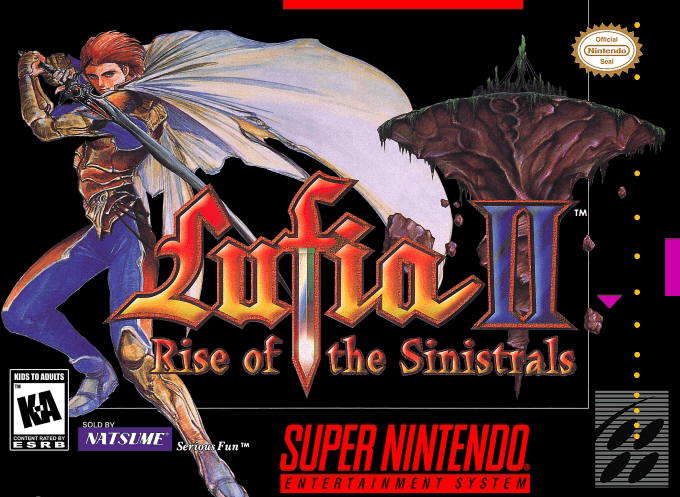
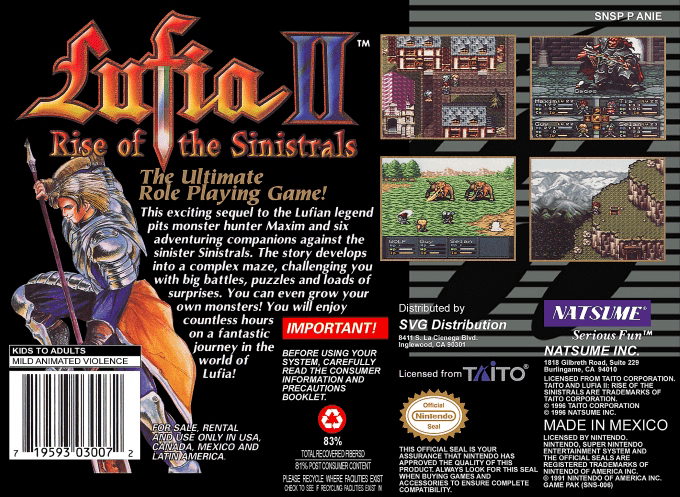
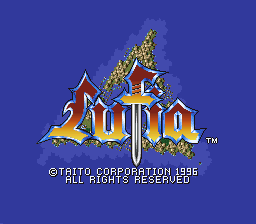
Lufia II: Rise of the Sinistrals for Super Nintendo is a turn-based role-playing game developed by Neverland. It first appeared in Japan in 1995 as Estpolis Denki II, published there by Taito, before Natsume brought it to North America in 1996. Although its numeral suggests a direct continuation, this SNES adventure is set before Lufia & the Fortress of Doom and follows the earlier generation of heroes whose conflict with the Sinistrals shapes the series. European and Australian players received the game simply as Lufia, since the preceding game had not been released in those territories.
The story places players in control of Maxim, a young swordsman and monster hunter from Elcid. A meeting with the mysterious Iris sends him out into a world threatened by the Sinistrals, four immensely powerful adversaries seeking domination. Maxim gathers a changing group of companions over the journey, including his childhood friend Tia, the warrior Guy, the guard Dekar, inventor Lexis, elf archer Artea, and soldier Selan. Their travels connect towns, caves, towers, ruins, and kingdoms while gradually revealing the events that precede the first Lufia game.
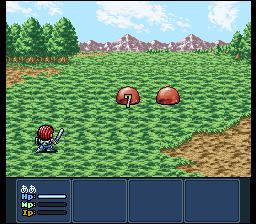
Exploration combines an overworld map with top-down towns and dungeons. Battles on the world map retain random encounters, while dungeon enemies are shown on screen and move only when Maxim moves, making encounters easier to judge and sometimes avoid. Combat is menu-driven and turn-based, with a party of up to four characters using weapons, items, magic, and equipment. Damage contributes to a character’s IP meter, which can be spent on special abilities tied to particular weapons, armor, and accessories. This creates a useful tradeoff between a piece of gear’s basic statistics and the skill it makes available.
Puzzles are central to the Super Nintendo game’s dungeon design. Maxim obtains tools that interact with obstacles and enemies, including a bow, bombs, and a hookshot-like device. These items can stun foes or manipulate the environment, so reaching a treasure chest or exit often requires more than defeating every opponent. The game also introduces Capsule Monsters: optional computer-controlled companions that can join the active party. Feeding them selected items and equipment changes their development, giving players another system to experiment with alongside the main cast.
Lufia II: Rise of the Sinistrals includes substantial optional content beyond its story. Town casinos offer several games, while the Ancient Cave presents a 99-floor challenge with a newly arranged layout on each visit. Entrants begin it stripped of most resources and rebuild their party from equipment and spells found inside; some finds are temporary, whereas rarer blue-chest items can be carried beyond the cave. With its prequel narrative, visible dungeon enemies, puzzle-heavy exploration, equipment-based IP skills, and repeatable Ancient Cave, Lufia II stands apart within the original SNES Lufia trilogy. Neverland later revisited its premise in the Nintendo DS action RPG Lufia: Curse of the Sinistrals, but that reimagining uses a different combat style and altered story.
Gallery
Details
- Developer
- Neverland
- Publisher
- Taito
- Genre
- JRPG
- Players
- 1
- Release Date
- August 31, 1996
- System
- SNES