About
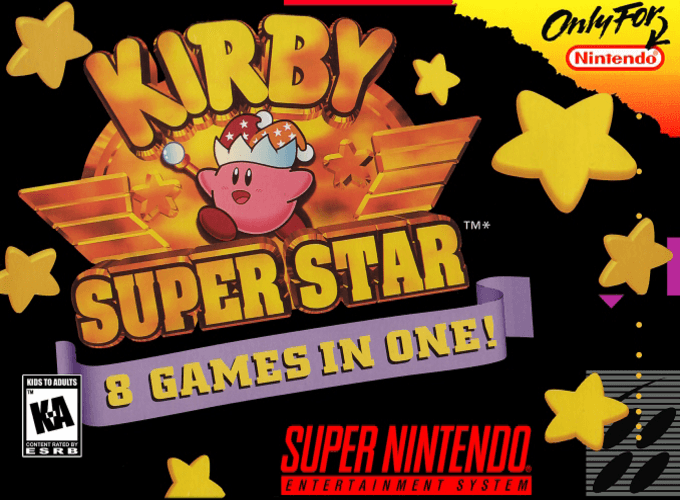
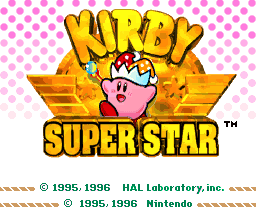
Kirby Super Star for the Super Nintendo Entertainment System is a 1996 action-platform collection developed by HAL Laboratory and published by Nintendo. Released in Japan as Kirby of the Stars: Super Deluxe and in PAL territories as Kirby's Fun Pak, it presents several self-contained Kirby adventures and competition modes from one cartridge. Its format lets players move from a short introductory quest to longer explorations, races, boss battles, and score challenges while retaining the colorful side-scrolling foundations of the series.
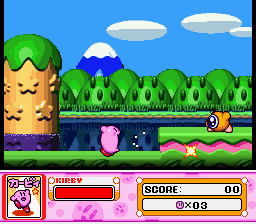
Across its platforming stories, Kirby travels through Dream Land and other fantastical locations by walking, running, jumping, swimming, and using his trademark inhale. Swallowed enemies can become projectiles, while many foes grant Copy Abilities that change Kirby's attacks and movement options. The controls support defensive guarding as well as offense, and food restores health during stages. Those common tools make the different scenarios immediately familiar, but each one applies them toward a distinct goal.
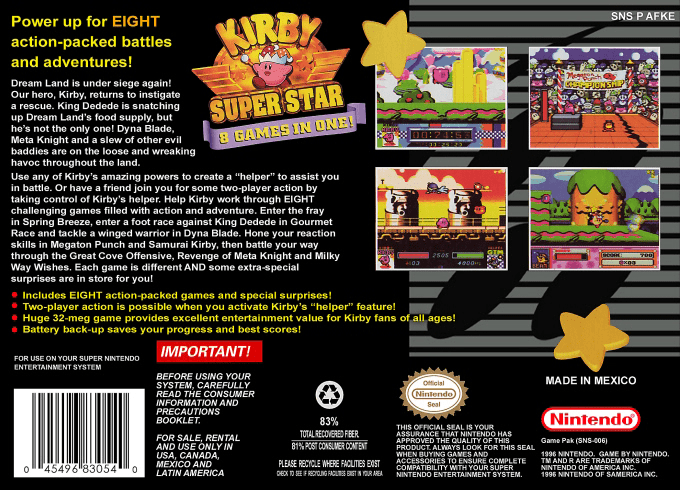
A central addition is the Helper system. When Kirby has a Copy Ability, he can turn it into a computer-controlled ally or allow a second player to take control of that character. Helpers use the ability they are based on, can assist with combat and navigation, and can be restored to a power-up when they are defeated. This cooperative structure gives two players simultaneous roles rather than simply adding a second Kirby, while solo players can still travel with an AI partner.
The available games vary sharply in scale and purpose. Spring Breeze reworks the basic rescue of Dream Land's food from King Dedede into an approachable opening adventure. Dyna Blade sends Kirby after the enormous bird disturbing Dream Land's crops, while Gourmet Race turns movement and eating into a contest against King Dedede. Megaton Punch and Samurai Kirby are compact timing-based sub-games that can be played competitively, providing a change of pace from the main side-scrolling action.
Other modes emphasize exploration or pressure. The Great Cave Offensive has Kirby search a sprawling cave for hidden treasure, with four areas to explore and routes that reward careful use of abilities. Revenge of Meta Knight frames its stages around stopping Meta Knight's airborne Halberd, adding time limits to its action. Milky Way Wishes expands the journey across multiple planets and changes the usual Copy Ability routine: Kirby collects permanent Copy Essence Deluxes and selects from the abilities he has found instead of gaining them directly by swallowing enemies.
Completion opens further challenges, including The Arena, a boss-focused endurance mode in which Kirby has one life and limited opportunities to recover. The overall selection makes Kirby Super Star unusually varied for an SNES platformer: some modes teach the essentials, others focus on collecting, racing, or surviving a demanding sequence of fights. The game was later remade for Nintendo DS as Kirby Super Star Ultra, but the original remains the version built around the Super NES hardware and its two-player Helper play.
Kirby Super Star arrived late in the Super NES era, yet its anthology design gave HAL Laboratory room to explore several takes on Kirby's mechanics in one release. Its scenarios also established memorable series material, including Meta Knight's Halberd and the climactic conflict involving Marx and Nova. For players looking for a broad Kirby adventure on SNES, it offers a connected set of accessible stories and optional challenges rather than one single campaign.
Gallery
Details
- Developer
- HAL Laboratory
- Publisher
- Nintendo
- Genre
- Platformer
- Players
- 1-2
- Release Date
- September 20, 1996
- System
- SNES