About
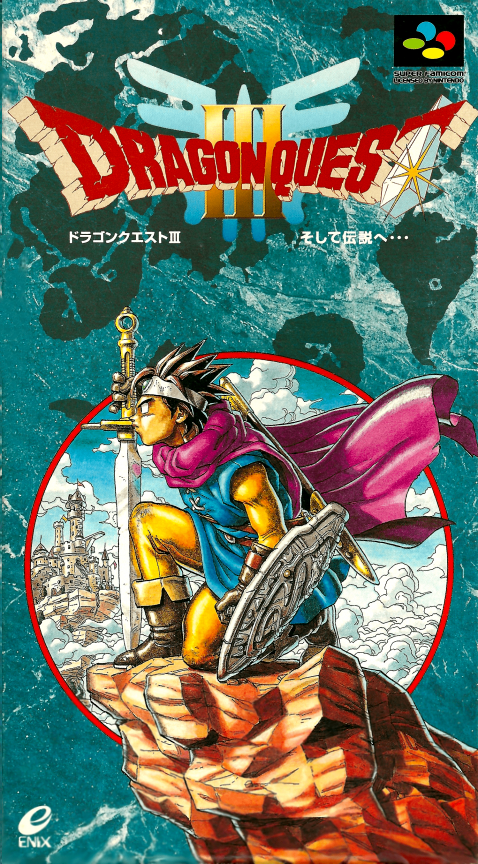
Dragon Quest III: Soshite Densetsu e... arrived on Super Famicom in Japan on December 6, 1996 as a richly expanded remake of Enix's landmark 1988 Famicom role-playing game. It tells the opening chapter of the Roto trilogy: on the Hero's sixteenth birthday, the ruler of Aliahan entrusts them with the unfinished mission of their father, the warrior Ortega. Monsters have spread across the world under the threat of the archfiend Baramos, and the journey begins as a personal inheritance before growing into a globe-spanning adventure.
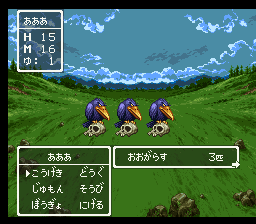
The party sets out from Aliahan to cross continents, explore caves and towers, visit kingdoms shaped by distinct cultures, and eventually take to the sea. Day turns to night as the party travels, changing the atmosphere of towns and the availability of services. Progress comes through classic Dragon Quest rhythms: speaking with townspeople, finding keys and treasures, buying equipment, managing spells and items, and meeting turn-based monster battles on the road. Its measured pace leaves room for the world to unfold one discovery at a time.
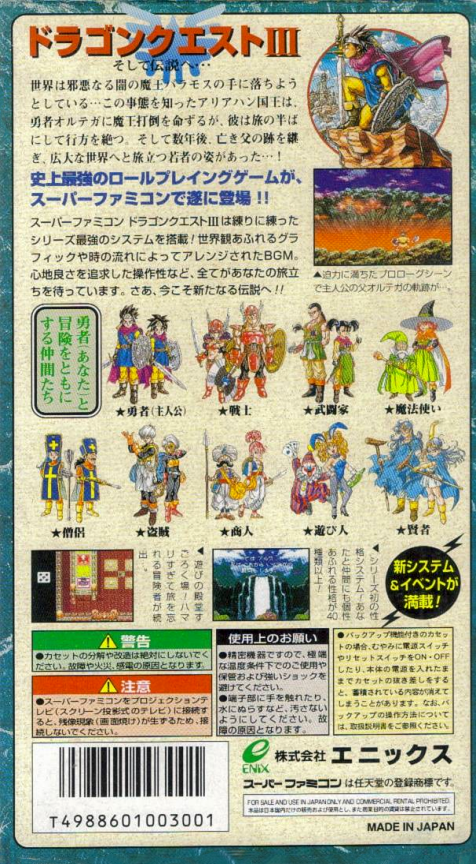
At the heart of the game is its flexible party system. The Hero is joined by companions created and recruited at Patty's Party Planning Place, where players build a four-member team suited to their own approach. Warriors, fighters, priests, mages, merchants, jesters, and the remake-added thief all bring different strengths. Recruits can be exchanged at the tavern, making it possible to revise a lineup as the journey's demands change rather than being locked into a single cast.
The vocation system gives that freedom real long-term weight. Once a companion has gained sufficient experience, the Temple of Dharma allows a change of vocation; the character returns to level 1 with reduced attributes while retaining learned spells. A sturdy former warrior can become a spellcaster, or a seasoned mage can carry magical knowledge into a more durable role. The coveted sage vocation extends those possibilities further. Character personalities, introduced in this remake, also affect the way attributes grow, adding another layer to party creation and development.
This Super Famicom edition recasts the original adventure with detailed 16-bit presentation while preserving the broad map and command-based structure that made Dragon Quest III so influential. Towns, fields, dungeons, and character sprites are rebuilt for the hardware, and battles gain animated monsters and attacks. The remake also expands the opening by showing more of Ortega's own dangerous expedition, giving the Hero's quest a stronger dramatic foundation before the player takes control.
Its additions do not stop at presentation. The Super Famicom remake includes the Mini Medal collecting quest and a Sugoroku board-game diversion, rewarding careful exploration with optional prizes and detours. Extra challenges await beyond the main adventure as well. These features enrich a game already designed around curiosity: a promising rumor in one town may lead to a faraway shrine, a newly acquired vessel may turn a distant shore into the next destination, and an overlooked item can open a route that changes the scale of the journey.
The story's place in the trilogy gives every major step an added sense of purpose. The pursuit of Baramos leads to an even deeper revelation, and the Hero's travels gradually connect this world to the legend behind the first two Dragon Quest games. Familiar names, sacred artifacts, and the land of Alefgard take on new meaning as the adventure reaches its final stretch. The title's promise is not just a flourish: this is the tale in which a hero earns a legacy that will be remembered across generations.
For a player seeking the 1996 Super Famicom version specifically, this is neither the original Famicom release nor the later Game Boy Color adaptation, mobile port, or HD-2D remake. It is the lavish 16-bit Japanese remake that established many of the version's enduring extras, combining a foundational job-based RPG with a bright, expansive presentation. Dragon Quest III: Soshite Densetsu e... remains a rewarding voyage for players who enjoy building their own party, mapping out a world at their own pace, and watching a simple royal command grow into a legend.
Gallery
Details
- Developer
- Enix
- Publisher
- Enix
- Genre
- JRPG
- Players
- 1
- Release Date
- December 6, 1996
- System
- SNES