About
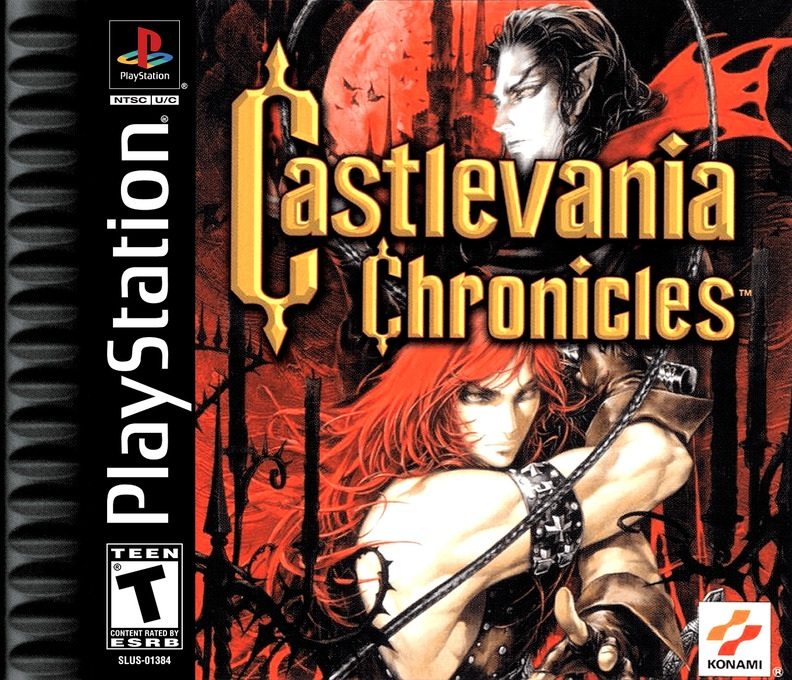
Castlevania Chronicles for PlayStation is a 2D action-platform game from Konami, released in North America on October 8, 2001. Developed by Konami Computer Entertainment Tokyo, it brings the 1993 Sharp X68000 game Akumajō Dracula to PlayStation in a package that preserves its roots while adding a separate revised presentation. That X68000 title had already reworked the 1986 Castlevania, so Chronicles is a chance to play a more elaborate version of Simon Belmont’s first battle against Dracula. Its castle-bound, side-scrolling format deliberately follows the classic, stage-by-stage style associated with the early series.
The story casts Simon Belmont as the vampire hunter called upon when Dracula returns to threaten Transylvania. Armed with the Belmont family’s whip, Simon enters Dracula’s fortress and travels through its hostile chambers toward a confrontation with the Count. The adventure moves through distinct areas full of supernatural enemies, traps, stairways, and environmental hazards, with a boss encounter waiting at the end of each major section. The setting and premise place the game squarely in the Gothic horror tradition of Castlevania, using familiar monsters and a castle designed as an escalating obstacle course rather than one continuously explorable map.
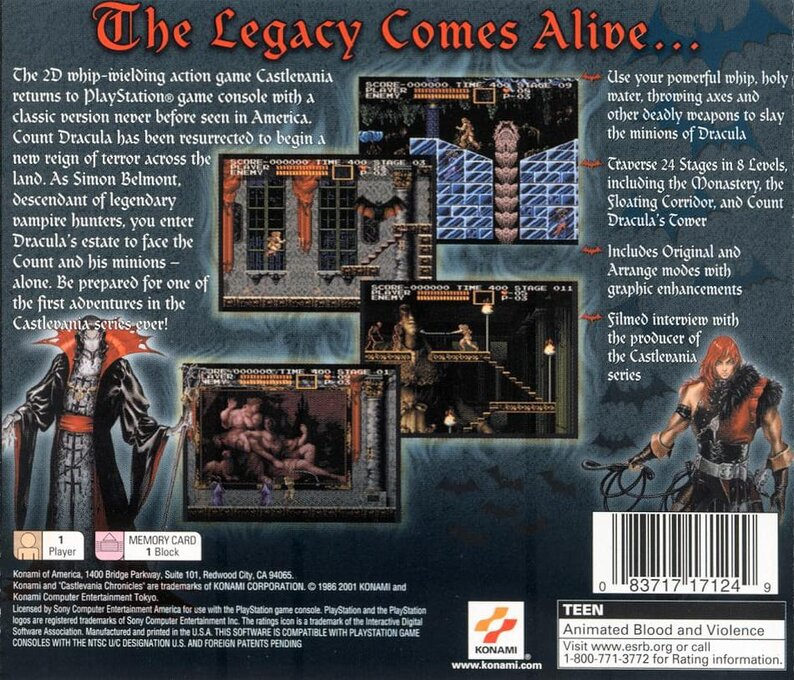
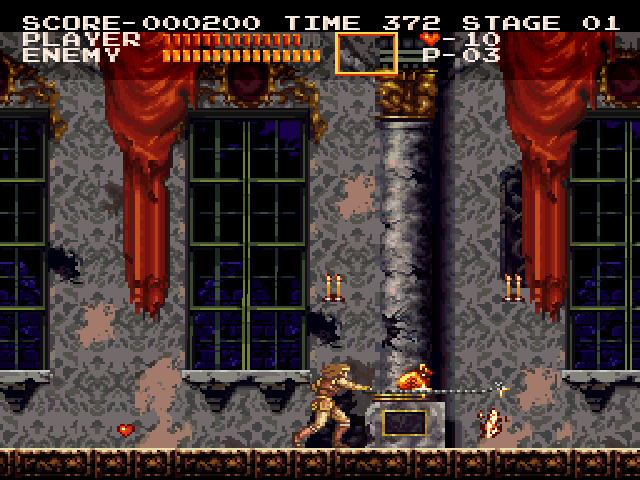
Play is built around measured movement, precise jumps, and committed whip strikes. Simon can attack foes and break candles to uncover items, while hearts act as ammunition for the series’ traditional sub-weapons. These include options such as daggers, axes, holy water, and the stopwatch, each used with an upward input and the attack command. Timing is as important as equipment: enemies can approach from awkward positions, hazards demand careful jumps, and taking damage may knock Simon backward. The game also retains useful hidden rewards, including score items and extra lives, encouraging players to watch for suspicious locations as they make their way through each stage.
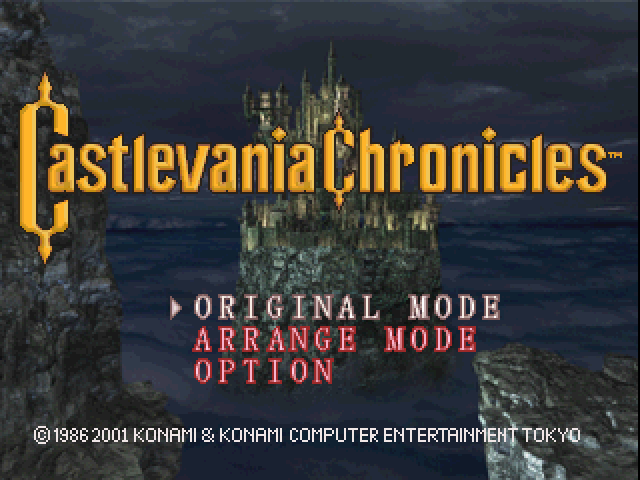
The PlayStation release is organized around two versions of the game. Original Mode presents the X68000 Akumajō Dracula experience, including its stage designs and sound-emulation options. It is a particularly demanding take on the formula, with the original game’s brisk danger and tight margins intact. Arrange Mode revises the presentation and balance for the PlayStation release. It gives Simon and Dracula updated visual designs, changes certain effects, uses a newly arranged soundtrack and sound effects, and lets players choose difficulty, starting lives, and whether to use a time limit. The revised mode therefore offers a different route through the same core adventure without replacing the original version.
The X68000 source material is central to what makes Castlevania Chronicles distinctive. Released in Japan in 1993 for Sharp’s home computer, Akumajō Dracula expanded on the original game with redesigned stages, more elaborate scenery, and a game engine capable of handling detailed animated backdrops and obstacles. Its PlayStation conversion made that version accessible beyond the computer’s original Japanese audience. Original Mode also reflects the source game’s unusual audio heritage by offering emulations of its sound configurations, while Arrange Mode supplies PlayStation-focused musical arrangements. The result is less a new chapter than a curated meeting point between two eras of the series.
Completing Arrange Mode unlocks additional features, including a Time Attack option for replaying stages against the clock. The North American and European editions also include bonus material not shared in the same form by the Japanese release, such as an illustration gallery featuring work connected to character artist Ayami Kojima and an interview feature. Castlevania Chronicles remains a single-player game and a focused example of classic Castlevania design: a sequence of fixed stages, memorable hazards, boss battles, and a whip-wielding hero fighting through Dracula’s domain. For PlayStation owners, it preserves an important X68000 interpretation of the original Castlevania while offering a second, adjusted version tailored to the console.
Gallery
Details
- Developer
- KCET
- Publisher
- Konami
- Genre
- Platformer
- Players
- 1
- Release Date
- October 8, 2001
- System
- PS1