About
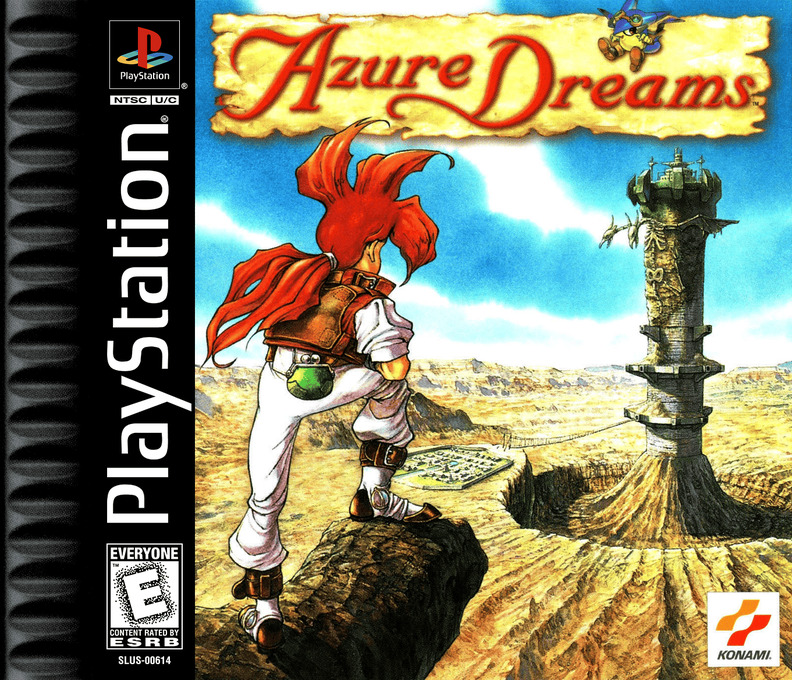
Azure Dreams for PlayStation is a single-player dungeon-crawling role-playing game developed by Konami Computer Entertainment Tokyo and published by Konami. Released in Japan in 1997 and in North America in 1998, it follows Koh, a 15-year-old from the desert town of Monsbaiya. Years earlier, Koh's father Guy entered the immense Monster Tower overlooking the town and never returned. When Koh comes of age, he follows that path, hoping to climb the tower, uncover what happened to Guy, and build a future of his own.
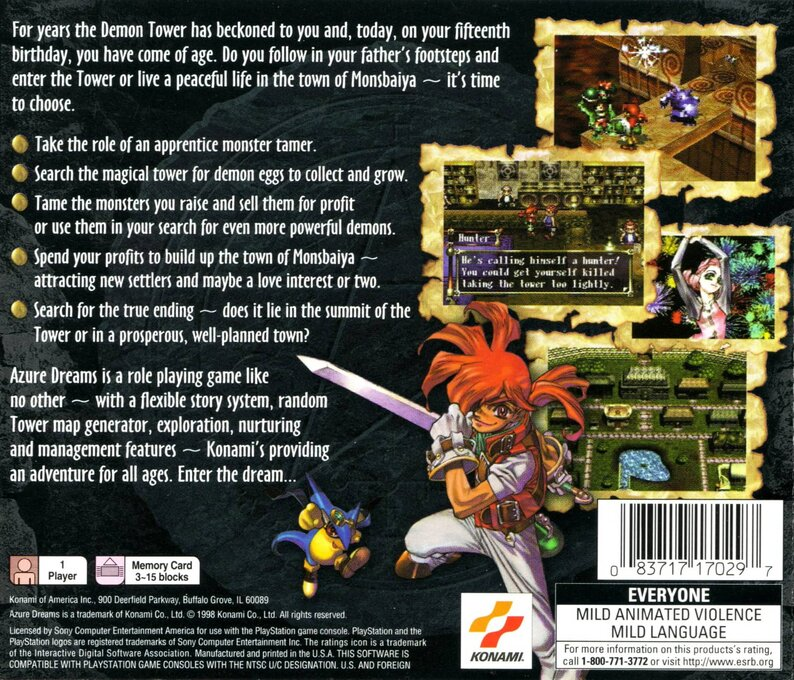
The Tower of Monsters is the heart of the PlayStation game. Each expedition begins with Koh returned to level one, and the tower's floors are rearranged from visit to visit. Rooms, passages, enemies, items, traps, and the upward elevator must be discovered anew, so a run demands careful movement rather than a memorized route. Action takes place directly on the dungeon field in turn-based steps: when Koh moves, attacks, or uses an item, the creatures around him get their turns as well. Swords, shields, magic, food, and found tools all matter, while defeat sends Koh back to Monsbaiya without the equipment he carried.
Koh is not meant to face the tower alone. Monster eggs recovered during expeditions can be taken home and hatched into Familiars, tame companions that accompany him underground. The speaking Familiar Kewne introduces this side of the adventure, but players can collect and raise other monsters with their own elemental affinities, spells, and strengths. Familiars gain experience across trips even though Koh begins each new climb at level one, making their development a major source of long-term progress. Choosing which companion to bring, keeping it healthy, and using its abilities alongside Koh's equipment gives the game its blend of dungeon survival and monster raising.
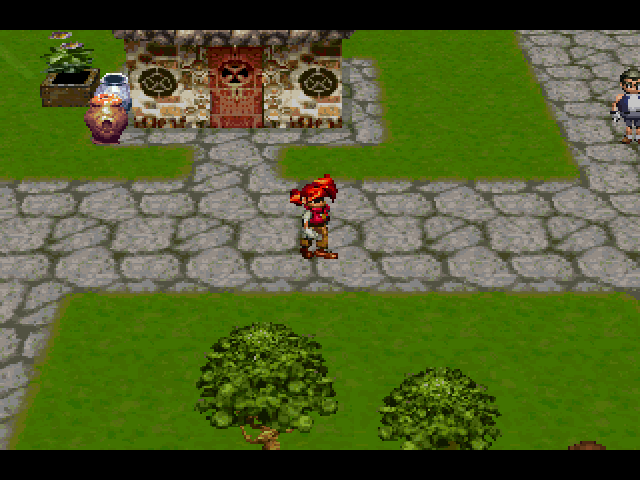
A successful expedition also feeds the life-simulation side of Azure Dreams. Back in Monsbaiya, Koh can sell treasure, tend to eggs and Familiars, improve his home, meet residents, and use his earnings to support new town projects. Buildings such as services, recreation spots, and training facilities alter what is available in the village, while conversations and requests develop its cast. The PlayStation version also includes relationship storylines for Koh, making the town more than a menu between dungeon runs and connecting personal choices to its broader sense of rebuilding.
The tension between risk and preparation shapes the journey up the tower. A Wind Crystal can provide a safe return when one is found, and certain items offer other escape options, but pressing on can yield rarer eggs, equipment, and money for Monsbaiya. Equipment can be strengthened, yet traps can undermine an otherwise promising run. Limited space for carried items and companions forces decisions before entering, while the chance to lose a haul after falling in the tower makes a retreat as important as a victory. These systems give repeated ascents a clear purpose: return stronger, prepare more intelligently, and reach floors that were previously out of reach.
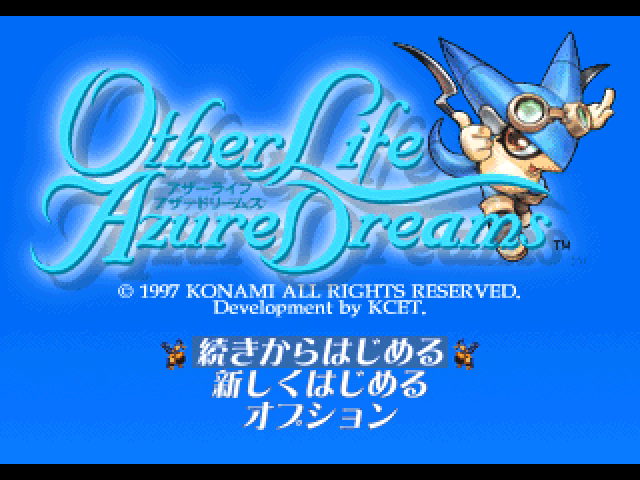
Azure Dreams on PS1 is distinct from the Game Boy Color game that later used the same name. The handheld release was developed separately, changed combat to separate battle screens, and omitted the PlayStation game's town-building and relationship elements. On Sony's console, the combination of randomized tower exploration, persistent Familiar training, equipment management, and Monsbaiya's evolving daily life defines the experience. It is a Konami RPG built around returning to one dangerous place again and again, with every trip contributing to Koh's search for the truth at the top.
Gallery
Details
- Developer
- KCET
- Publisher
- Konami
- Genre
- JRPG
- Players
- 1
- Release Date
- June 30, 1998
- System
- PS1