About
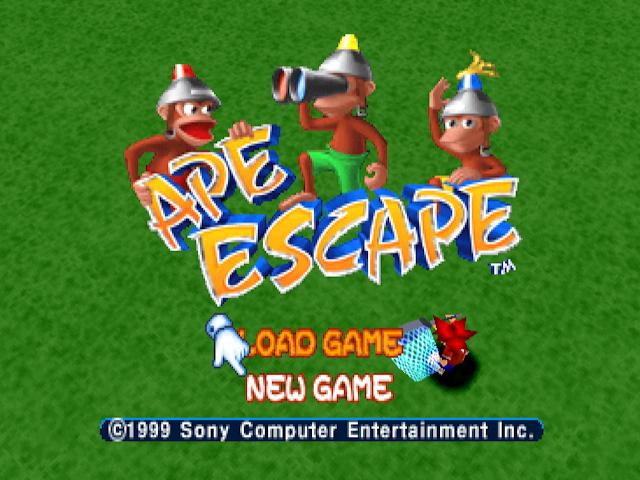
Ape Escape for the original PlayStation is a 1999 3D action-platform game developed by Sony Computer Entertainment’s Japan Studio and published by Sony Computer Entertainment. Known in Japan as Saru! Get You!, it begins when Specter, a remarkably clever white-haired monkey, uses a prototype Peak Point Helmet and equips other apes with similar devices. The resulting army takes control of a laboratory time machine and scatters itself across history, leaving Spike to travel after it and prevent the apes from changing the world’s past.
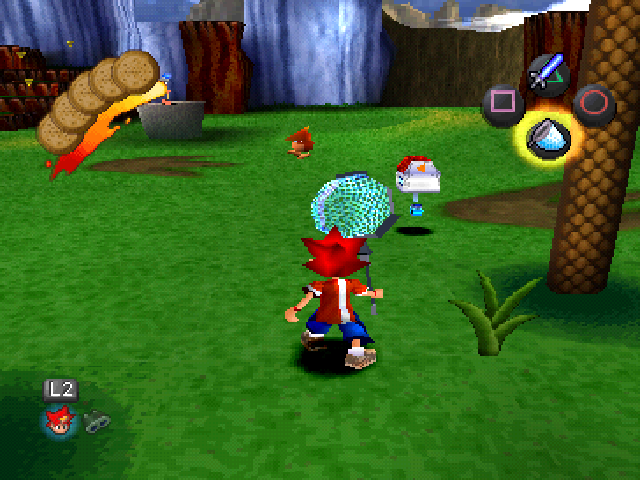
The goal is not simply to reach a finish line. Each area contains a set of escaped apes, and Spike needs to catch the required number before he can move on. Levels can be revisited to find the monkeys left behind, making observation and return trips part of the progression. Apes do not all react in the same way: their alert lights reveal whether they are calm, watchful, or fleeing, while different temperaments affect how readily they run or fight back. Their individual names and entries provide a record of each capture.
Ape Escape is built around a growing toolkit of gadgets. The Time Net is the essential capture device, while tools such as the Stun Club help deal with threats and create openings. As the adventure expands, Spike gains equipment for situations that call for different kinds of movement or searching, including vehicles and gear for travelling over or through water. The changing equipment turns the hunt into a mix of platform navigation, timing, exploration, and careful pursuit rather than a single repeated action.
The PS1 version is especially defined by its control scheme. Ape Escape was the first PlayStation game to require a DualShock controller, using one analog stick for Spike’s movement and the other to aim, swing, and operate many gadgets. That arrangement makes the net and other tools feel directly tied to the player’s hands, while the face buttons and shoulder buttons support the surrounding actions. The game’s design deliberately treats the two-stick controller as part of the challenge, so a compatible analog controller is central to the original experience.
Spike’s pursuit spans colorful time-displaced environments, from prehistoric territory to medieval settings and modern-day locations. Along the way he encounters allies including the Professor and Katie, faces the influence Specter holds over his friend Jake, and eventually pushes toward Specter’s own stronghold. The lighthearted presentation sits alongside a clear mission structure: explore each setting, locate the target apes, avoid hazards and hostile monkeys, then use the right gadget at the right moment to send them back.
Exploration also rewards players with Specter Coins hidden around the stages. Collecting enough of them unlocks separate bonus games, adding activities beyond the main chase. These extras, together with return visits for missed apes, give the campaign reasons to look closely through environments after the immediate objective is complete. The game remains a single-player adventure, with its variety coming from the changing locations, equipment, ape behavior, collectibles, and optional challenges.
Released in Japan in June 1999 and shortly afterward in North America and Europe, Ape Escape established the series that later received sequels and spin-offs. Its original PlayStation incarnation is distinct from the later PSP remake, Ape Escape: On the Loose: the PS1 game was designed around two analog sticks from the outset, whereas the PSP hardware required altered controls. For players exploring the PS1 library, Ape Escape stands out as a platform adventure whose time-traveling monkey hunt and controller-specific gadget play are inseparable from one another.
Gallery


Details
- Developer
- SCE Japan
- Publisher
- Sony Computer Entertainment
- Genre
- Platformer
- Players
- 1
- Release Date
- May 31, 1999
- System
- PS1