About
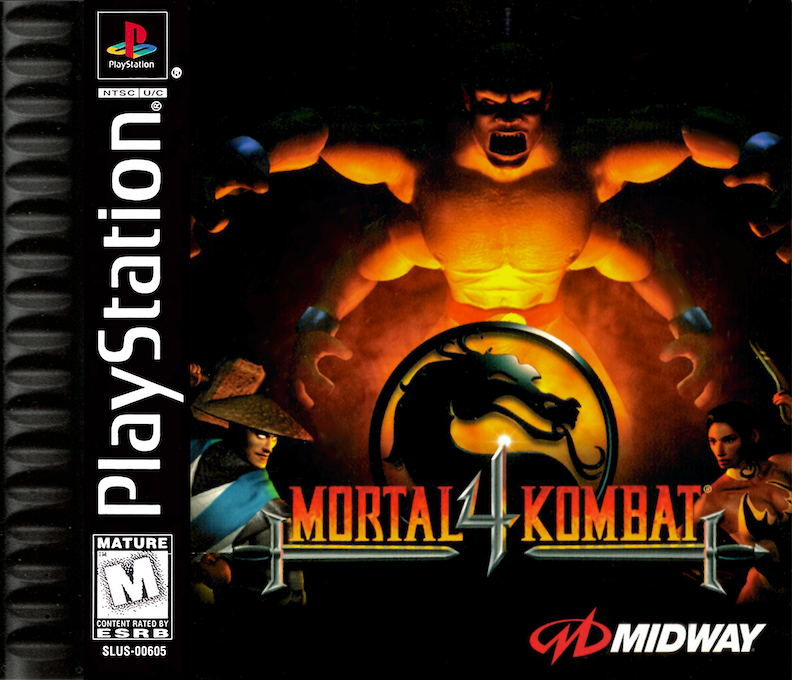
Mortal Kombat 4 for PlayStation brings Midway's landmark 1997 arcade fighter to Sony's 32-bit console in 1998. Developed for the home release by Eurocom and published by Midway, it is the fourth numbered Mortal Kombat game and a direct successor to Mortal Kombat 3. The series' famously fast, one-on-one contests remain at its center, but this installment moves its fighters into polygonal arenas. Its combat still deliberately favors the close, side-on rhythm associated with the earlier games, giving returning players familiar ground while introducing a new visual era for the franchise.
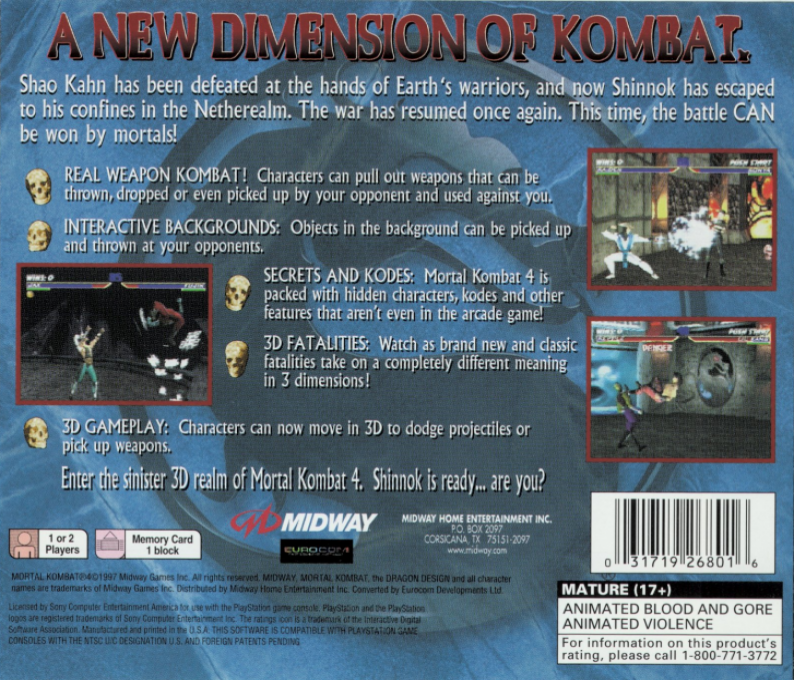
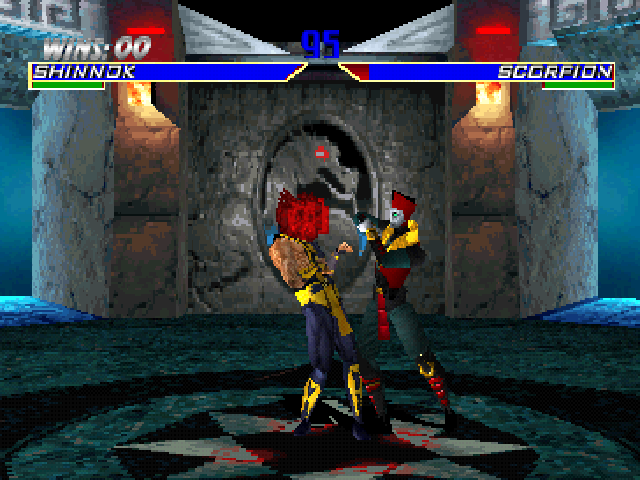
A fight is built around rounds of punches, kicks, special moves, blocks, runs, and chained attacks. Competitors can move around their opponent and sidestep within the 3D spaces, yet the design keeps confrontations focused rather than turning them into free-roaming brawls. Mortal Kombat 4 also adds a weapon system: fighters can summon a signature weapon during a match, use it for attacks, throw it away, or leave it for the opponent to seize. Loose arena objects can likewise be picked up and used. The game limits excessive combo damage with its Maximum Damage rule, an important safeguard against endlessly repeated combinations.
The story turns on Shinnok, a fallen Elder God who escapes the Netherrealm with the sorcerer Quan Chi and sets his sights on revenge and conquest. Raiden calls on Earthrealm's defenders to oppose him, linking the game to the battles against Shao Kahn in the preceding entries. Familiar fighters including Liu Kang, Johnny Cage, Sonya Blade, Jax, Scorpion, Sub-Zero, Reptile, and Raiden share the roster with newcomers such as Fujin, Kai, Jarek, Reiko, Tanya, Quan Chi, and Shinnok. Each character has a distinct move set and finishing moves, and the single-player ladder leads through increasingly difficult opponents toward the final confrontation.
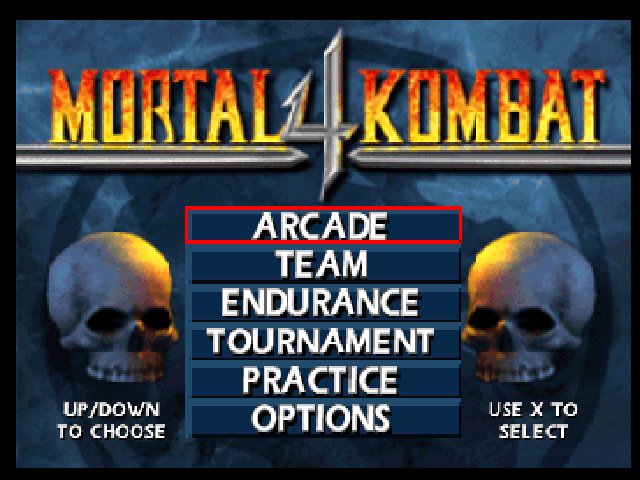
For PlayStation players, Mortal Kombat 4 preserves the arcade game's clashes while presenting the release on CD-ROM with video material for its introduction, character biographies, and endings. The console conversion also expands the playable lineup beyond the arcade selection with secret characters, including Noob Saibot and Meat, while Goro returns as a home-version sub-boss and unlockable combatant. Alternate costumes add more visual variety, and the game retains stage-based finishing opportunities alongside each fighter's Fatalities. These additions give solo play extra secrets to pursue and give local versus sessions a wider set of combatants to explore.
Mortal Kombat 4 occupies a notable place in the series because it was the first Mortal Kombat to use 3D computer-generated character models and the final main entry to reach arcades. Rather than discarding the series' established controls, it blends that foundation with weapons, limited movement around the fighting plane, and digitally modeled arenas. The PlayStation version captures that transition from the sprite-driven style of the early trilogy to the technology and presentation that would shape later Mortal Kombat games. For players exploring PS1 fighting games, it remains a compact snapshot of Midway's late-1990s attempt to carry a defining arcade series into 3D.
Gallery
Details
- Developer
- Eurocom
- Publisher
- Midway
- Genre
- Fighting
- Players
- 1-2
- Release Date
- June 24, 1998
- System
- PS1