About
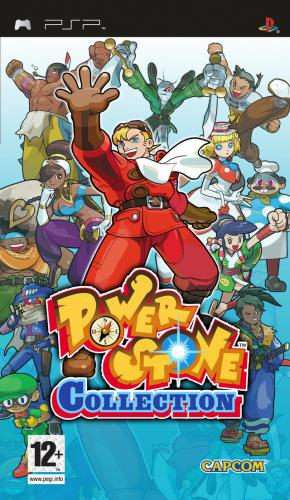
Power Stone Collection for PSP brings Capcom's 3D arena-fighting series to PlayStation Portable in one 2006 release. Known as Power Stone Portable in Japan, it packages enhanced handheld versions of Power Stone and Power Stone 2, the arcade-rooted games previously adapted for Sega Dreamcast. Each title turns a one-on-one fighting premise into a fast, object-filled brawl in which position, movement, and quick reactions matter as much as a character's standard attacks.
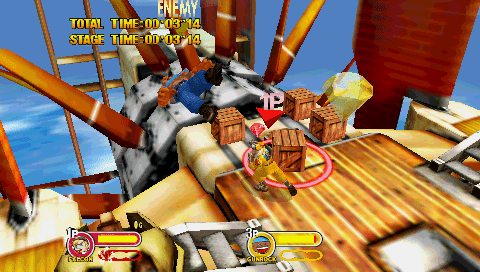
In both games, combat unfolds in three-dimensional locations rather than on a flat fighting-game stage. Players guide a chosen fighter around the arena, attacking rivals, jumping away from danger, and picking up the objects that appear in the environment. Weapons and improvised tools can change the flow of a round, while colored Power Stones are the central prize. Gathering three lets a combatant enter a temporary powered-up form with access to special attacks; that transformation ends as its energy is spent, so deciding when to use it is an important part of each fight.
The first Power Stone follows adventurers from around the world in a 19th-century fantasy setting, all pursuing the legendary stones said to grant wishes. Its cast includes boxer Edward Falcon, martial artist Wang-Tang, swordsman Ryoma, ninja Ayame, fortune teller Rouge, and several other distinct fighters. The PSP version expands the original game's roster with the four characters introduced in Power Stone 2, giving its single-player battles and versus matches more possible matchups than the initial Dreamcast edition.
Power Stone 2 retains the same basic scramble for weapons and gems but broadens the action for larger encounters. Up to four players can battle at once, and its arenas include shifting, multi-part locations that make the surrounding space part of the contest. The sequel adds further characters and an expanded range of items, from close-range weapons to more unusual equipment. Its Adventure mode provides a route for collecting items, while an in-game shop and combination system give those finds a role beyond an individual match.
Capcom adjusted the package for portable play while preserving the separate identity of both games. The collection includes layout changes intended for the PSP screen, new weapons, unlockable material, and the Bomber Battle minigame. Local wireless play supports two participants in Power Stone and four in Power Stone 2. A single UMD can also send a trial version of Power Stone 2 to another PSP, an arrangement designed to make a quick multiplayer session possible even when only one player owns the disc.
As a compilation, Power Stone Collection is not a new chapter in the series: it is a portable presentation of its first two entries. That distinction matters because the games differ in scale. The original concentrates on two-fighter arena duels and its individual cast, while the sequel builds toward four-player clashes, larger stages, and item collection. Together they show Capcom applying its fighting-game experience to a more free-moving, interactive style of competition.
For PSP owners, Power Stone Collection offered a chance to play both games from one UMD, whether tackling the computer-controlled opponents alone or using ad hoc multiplayer with nearby systems. Its mix of character transformations, breakaway movement, and weapons scattered across the arena gives each round a different rhythm from a conventional side-view fighter. The collection remains a useful snapshot of the Power Stone series' early arcade and Dreamcast-era design, adapted for handheld play without merging the two games into a single mode.
Gallery

Details
- Developer
- Capcom
- Publisher
- Capcom
- Genre
- Compilation, Fighting
- Players
- 1
- Release Date
- October 20, 2006
- System
- PSP