About
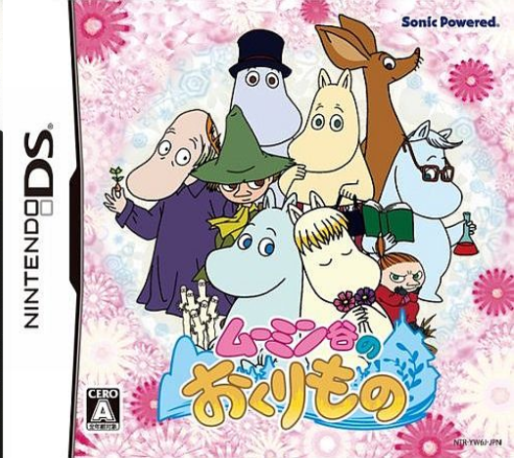
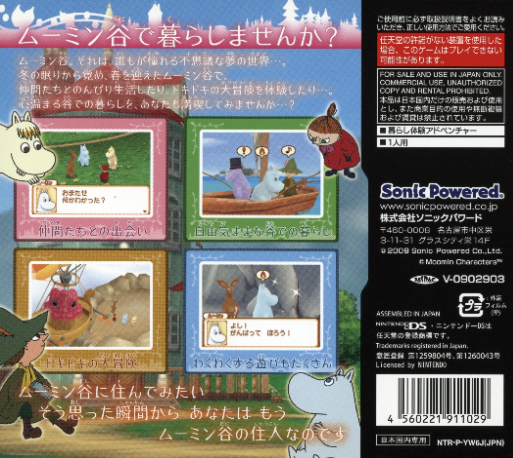
Moomin Tani no Okurimono (Moomin Valley’s Gift) is a Nintendo DS “life-experience adventure” released in Japan on November 19, 2009. It was developed and published by Sonic Powered for one player. Rather than treating Moomin Valley as a stage for combat or high scores, the game invites the player to become Moomintroll and live through a year in its gentle, changeable world. Its Japanese release is based on Tove Jansson’s Moomin series, with stories shaped by the source material and by the setting and world view of the television anime Tanoshii Moomin Ikka.
The adventure begins as the valley’s residents awaken from winter hibernation. Moomintroll receives a diary from Moominpappa, and the diary becomes a record of daily discoveries, conversations and milestones. The seasonal structure is central: spring, summer, autumn and the approach of winter change both the atmosphere and what can be found around the valley. Familiar characters including Snorkmaiden, Little My and Snufkin appear as companions in the player’s everyday routines as well as in larger story episodes.
The main stories are presented as a sequence of happenings around Moomin Valley. Examples include getting to know the newly arrived Fillyjonk family, trying to hold a Christmas celebration in midsummer, finding a storm-damaged ship on the beach and repairing it for an expedition to a mysterious island. Another episode involves Snork’s attempt to test a flying machine, while the year closes with Snufkin preparing to leave the valley for winter. These are not a single continuous quest so much as a collection of small adventures that give the changing seasons and friendships their shape.
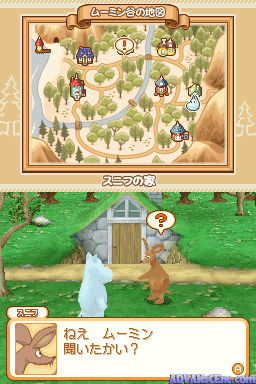
Between story events, the player is free to set the day’s pace. Moomintroll can fish in streams, lakes and the sea; look for shells at the bathing-house beach; gather fruits, nuts and mushrooms; pick flowers; raise plants from seeds or bulbs; and dig in caves or rocky areas for unusual stones. Finds contribute to a catalogue being assembled by the valley’s residents, so exploring is not merely decorative. Seasonal availability matters, making the same locations worth revisiting as the calendar advances.
Requests from neighbours give the collected items a practical role. A character may ask Moomintroll to deliver or find something, and the valley also holds small surprises such as washed-up letters in bottles, music records and places that only become useful after the right conversation or item. The official support material even points players toward an observatory on Lonely Mountain and hints that access depends on meeting someone knowledgeable about astronomy. This design makes observation, talking to residents and remembering locations more important than reflex-heavy challenge.
Its relaxed play is the point of the license rather than an incidental backdrop. Sonic Powered framed the game as a way to enjoy the stories and live freely in Moomin Valley, and the official material emphasizes friendship, family and a positive response to difficulties; it also states that the game contains no violent scenes. Fishing, collecting, gardening, errands and the diary work together as quiet activities within an officially produced Moomin adaptation. For players who know the characters, it offers a year of familiar places and seasonal episodes; for newcomers, it uses the daily life of the valley as an introduction to that world.
Gallery
Details
- System
- NDS