About
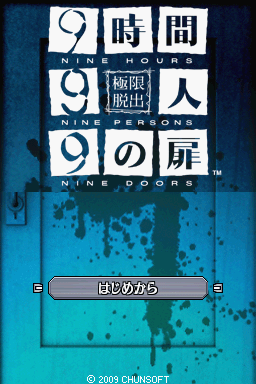
Kyokugen Dasshutsu: 9-jikan, 9-nin, 9 no Tobira is the original Japanese Nintendo DS release of the tense escape-and-suspense adventure later known internationally as 999: Nine Hours, Nine Persons, Nine Doors. Released in Japan by Spike on December 10, 2009 and developed by Chunsoft, this is the handheld edition that introduced its sealed-room mystery through the DS’s two-screen format. It is not the later North American DS localization or the subsequent Nonary Games remaster: this entry preserves the Japanese title, presentation, and identity of the 2009 release.
The story begins when university student Junpei wakes inside a cabin aboard an unfamiliar ship. He is not alone. Eight other people have been brought there, and an unseen figure calling itself Zero announces the rules of the Nonary Game: there are nine hours to find a way out through the door marked 9. From that premise, the game builds an atmosphere of pressure and unease without losing sight of the human connections that make every conversation matter.
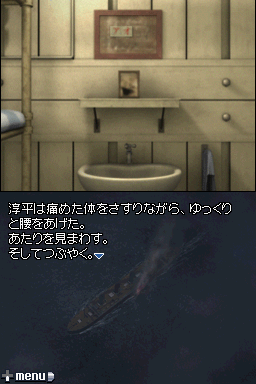
Its structure alternates between story sequences and hands-on escape sections. In the narrative portions, players follow dialogue, study each participant’s reactions, and make decisions at key moments. In the escape rooms, the touch screen becomes the center of the investigation: inspect the environment, collect useful objects, examine clues, combine items, and work through puzzles designed around locks, mechanisms, codes, and the logic of each space. The shift from reading to searching gives the mystery a steady, tactile rhythm.
The game’s central door system gives its progression a memorable shape. Each participant wears a numbered bracelet, and the group must decide how to form the combinations that will open particular doors. That premise turns movement through the ship into more than a matter of choosing the next room. It creates a constant sense that information, trust, and the available routes are intertwined, encouraging players to pay close attention while keeping the details of the larger mystery intact.
Chunsoft’s sound-novel heritage is evident in the pacing. Written and directed by Kotaro Uchikoshi, the adventure balances concise scene-setting with long stretches of character-driven dialogue, while Kinu Nishimura’s character designs give the cast an immediately recognizable presence. The Nintendo DS presentation keeps the focus close and personal: text, portraits, room details, and player input all sit within a compact handheld experience built for deliberate observation rather than quick reflexes.
For puzzle fans, the appeal lies in the variety of problems and the satisfaction of noticing how a room’s details fit together. The escape sections reward careful examination rather than random tapping, and their clues generally encourage players to reconsider objects already in view. For visual-novel players, the appeal is the steady accumulation of questions: who are these people, what brought them here, and what can be learned before the clock reaches its limit? The game makes both sides of that experience feel essential.
Kyokugen Dasshutsu: 9-jikan, 9-nin, 9 no Tobira remains a distinctive Nintendo DS adventure because it treats suspense as something the player actively participates in. Reading alone is not enough; rooms must be searched, puzzles must be solved, and choices must be considered in the context of the people standing nearby. Its original Japanese release captures a carefully constructed blend of escape-room investigation and branching narrative, offering a focused, absorbing mystery for players who enjoy solving problems one clue at a time.
Gallery


Details
- System
- NDS