About
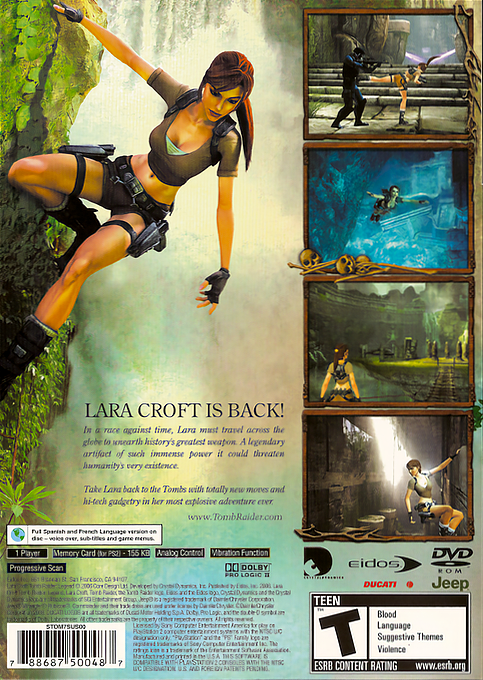
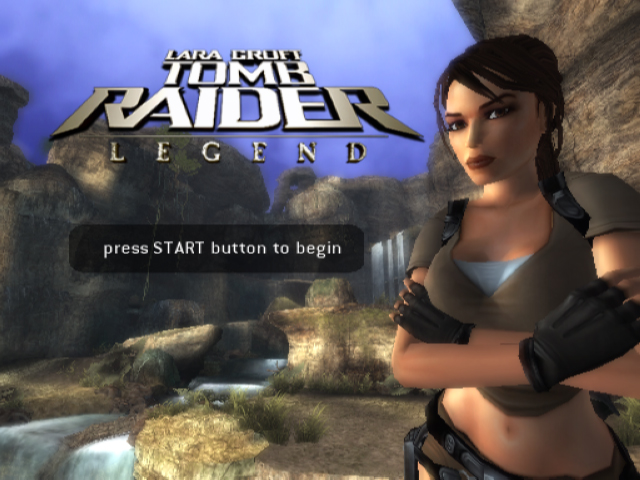
Tomb Raider: Legend on PlayStation 2 is Crystal Dynamics’ 2006 single-player action-adventure, published by Eidos Interactive. This seventh main Tomb Raider game gives Lara Croft a reimagined story and a globe-spanning mission built around the mythical sword Excalibur. The PS2 edition arrived in North America on April 11, 2006, placing Lara’s archaeology, acrobatics and dual-pistol action at the center of a focused adventure.
Lara’s search is tied to an earlier tragedy in the Himalayas, where a childhood plane crash separated her from her mother, Amelia. The present-day investigation leads through ancient sites and dangerous expeditions as the meaning of that event slowly comes into view. Her pursuit of Excalibur brings her into conflict with Amanda Evert, a former friend whose past is bound to Lara’s own. Supporting characters including tech expert Zip and historian Alister Fletcher provide information and conversation from Lara’s manor.
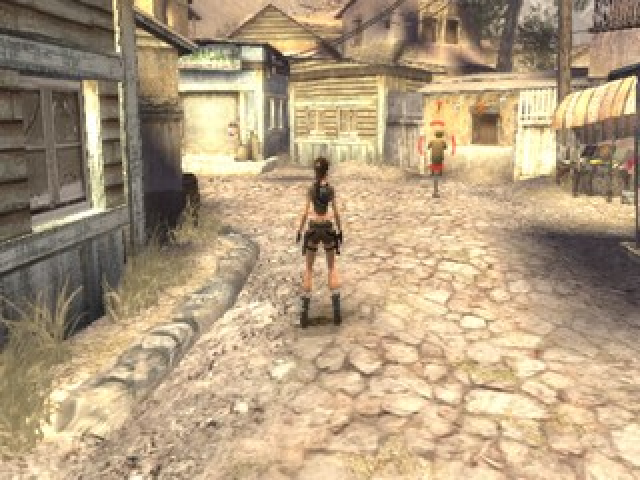
The PlayStation 2 campaign follows Lara across eight levels in seven international locations. From jungle ruins and mountain environments to urban spaces and hazardous industrial routes, each stage presents a linear path with a distinct setting and its own obstacles. The journey moves between quiet exploration, cinematic discoveries and sudden danger, keeping the plot connected to the places Lara investigates rather than treating the locations as unrelated arenas.
Third-person exploration is the foundation of Tomb Raider: Legend. Lara can jump between ledges, climb ladders and poles, shimmy along narrow holds, crawl through tight passages, swing from ropes or horizontal bars, and dive underwater for a limited time. Her magnetic grapple is especially important: it can pull movable objects into place, clear certain obstructions and help her swing over gaps. The combination of movement tools turns rooms, ruins and cliffs into traversal problems that need observation as well as timing.
Environmental puzzles slow the pace between action sequences. Switches, movable blocks, traps and machinery must be read as parts of the surrounding space, while the grapple often offers a way to alter the route ahead. Lara can use binoculars to inspect features in the environment and a torch to see in dark areas. Hidden artefacts reward careful searching, and collecting them unlocks extras. Time Trial challenges add a replay option by asking players to complete individual levels within a set limit.
Combat breaks out against human and animal enemies, with Lara relying on her pistols, found weapons and movement to stay out of harm’s way. Some encounters happen while she is riding a motorbike, blending travel with pursuit and gunfire. Other sections use on-screen quick-time prompts, requiring a fast response at key moments. Health Packs restore damage, while the ordinary PlayStation 2 controls can be reconfigured in the Options menu; the DUALSHOCK 2 vibration setting can also be switched on or off.
This PlayStation 2 version shares its main campaign and level design with the home-console, Windows and PSP releases. It is distinct from the later portable adaptations: the Nintendo DS edition combines 3D environments with 2D sprites and uses touchscreen and microphone features, while the Game Boy Advance version is a 2D side-scroller. The mobile release condenses selected locations into on-rails platforming and combat. On PS2, Tomb Raider: Legend remains the full 3D Lara Croft adventure, designed around exploration, puzzles, traversal and action.
Gallery

Details
- Developer
- Crystal Dynamics
- Publisher
- Eidos Interactive
- Genre
- Other Adventure
- Players
- 1
- Release Date
- April 11, 2006
- System
- PS2