About
Max Payne is a third-person action game set in a snowbound, noir-styled New York City. Its title character is a New York police detective whose wife and infant daughter are killed by drug addicts who have broken into his home. Three years later, Max works undercover in the DEA while investigating Valkyr, the designer drug connected to the murders. When his friend and colleague Alex Balder is shot during a meeting in a subway station, Max is framed for the killing and becomes the target of both the police and the criminal organizations he is trying to expose. The story follows his effort to survive long enough to find the people behind Valkyr and clear his name.
The campaign is structured as three parts, with Max moving through locations including a subway, hotel, bank, abandoned building, construction site and the cold streets of the city. It is told through voiced scenes, environmental dialogue and panels styled as a hard-boiled graphic novel rather than conventional full-motion cutscenes. Those panels give the game room for Max’s terse internal narration and deliberately overripe metaphors, while dream sequences turn his grief into unsettling platforming and maze-like interludes. The plot mixes a personal revenge case with an increasingly wide conspiracy involving the Valkyr drug and the people who manufacture and distribute it.
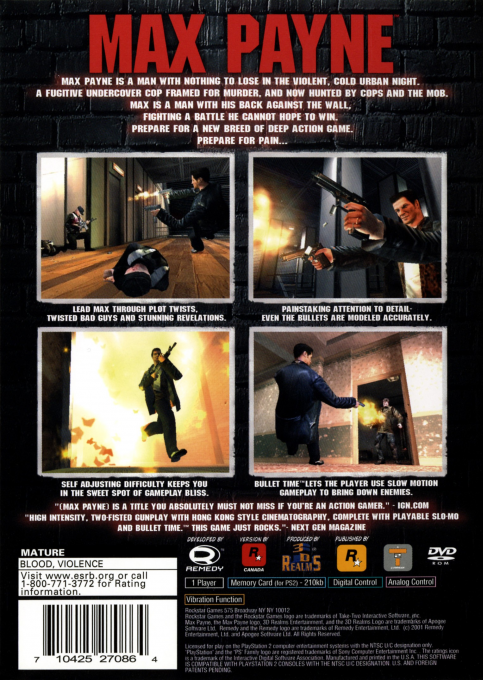
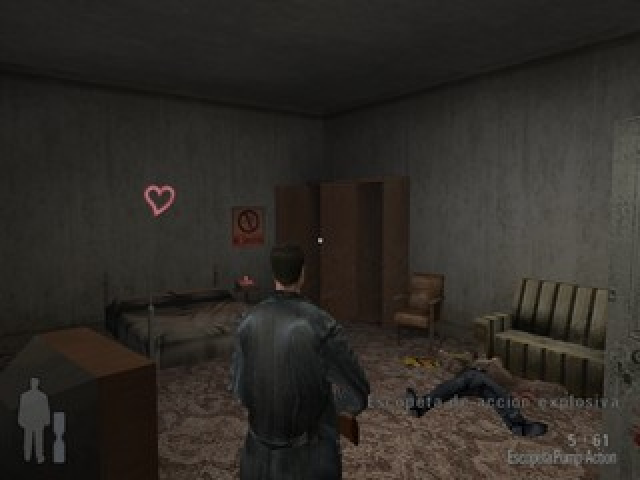
Max carries firearms such as pistols, a shotgun, submachine guns, an assault rifle and a sniper rifle, as well as throwable explosives. Ammunition, painkillers and weapons are collected from the environments and from defeated enemies. Health does not regenerate: painkillers restore it, making pickups and positioning important during extended firefights. Encounters play out in enclosed interiors, corridors and open rooms where opponents can attack from several directions. The game also uses a quick-save system on versions that support it, but the PlayStation 2 edition relies on its own save structure and breaks progression up with more frequent loading screens.
Its defining mechanic is Bullet Time. At the press of a button, Max enters a slow-motion state that makes enemy movement and incoming gunfire easier to read while retaining the player’s ability to aim and fire. The effect is paired with the game’s jump-dive move, allowing Max to launch sideways, forward or backward while guns remain trained on the action. Bullet Time is powered by a meter that is replenished through combat, so it is most useful as a tactical resource when entering a crowded room, avoiding fire, or lining up accurate shots. The mechanic translated the stylized slow-motion action associated with contemporary Hong Kong-influenced crime cinema into a player-controlled shooting system and became the game’s signature feature.
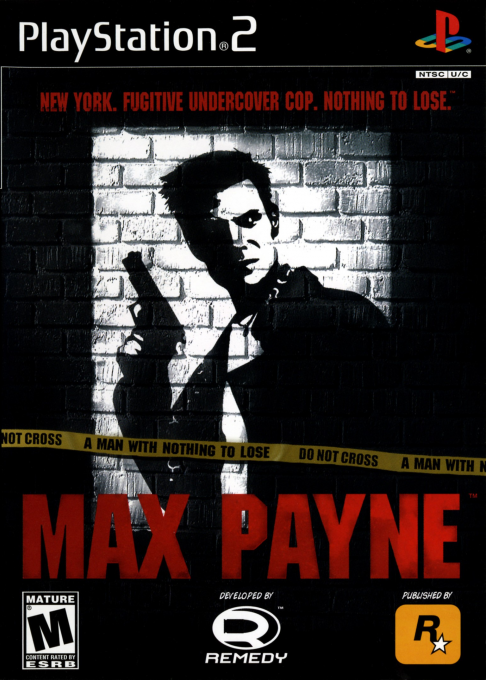
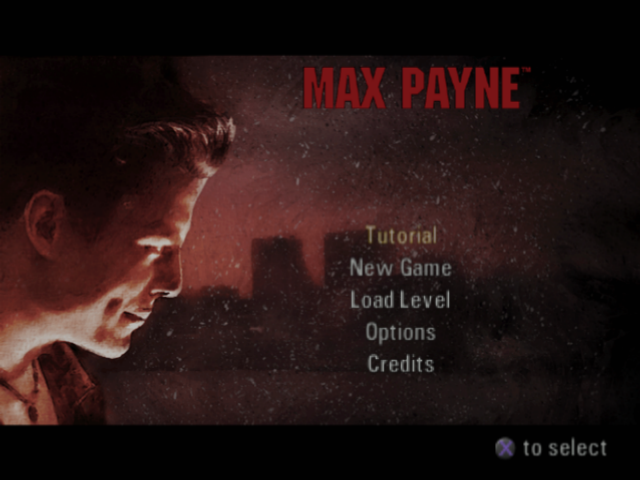
This PlayStation 2 release is a console port developed by Rockstar Toronto, then known as Rockstar Canada, and published by Rockstar Games. It arrived in North America in December 2001, after Remedy Entertainment’s original Windows game had released earlier that year. The PS2 version preserves the central story, locations, weapons and Bullet Time concept, but adapts play to the DualShock 2: the left analog stick moves Max and the right analog stick aims, with controller-oriented aiming assistance. Its presentation is necessarily reduced beside the PC and Xbox releases. Contemporary comparisons noted softer or blurrier textures, a lower and less consistent frame rate, and substantially longer or more numerous loads between sections.
Those compromises matter most in a game whose drama depends on rapidly reacting to gunfire. On PlayStation 2, crowded battles can feel less fluid than in the other contemporary versions, and the extra loads interrupt the momentum between rooms. The altered analog-stick controls remain workable, particularly with aim assistance, but they do not offer the speed and precision of a mouse. Even so, the PS2 edition gives the same complete descent into Max’s wintry conspiracy: a compact single-player shooter built around dramatic dives, slow-motion firefights and a distinctive comic-book crime narrative. It is a historically important console version of a game remembered for giving players direct control over cinematic slow motion rather than simply depicting it in a scene.
Gallery
Details
- Developer
- Rockstar Toronto
- Publisher
- Rockstar Games
- Genre
- Third-Person Shooter
- Players
- 1
- Release Date
- November 1, 2002
- System
- PS2