About
Tenchu: Wrath of Heaven is a PlayStation 2 stealth action-adventure game released in North America in March 2003. Known in Japan as Tenchu 3, it is the third numbered entry in the Tenchu series. K2 developed the PS2 game, while Activision published it outside Japan and FromSoftware handled the Japanese release. Set in a stylized late-1570s feudal Japan, the story resumes a year after the original Tenchu and returns Azuma ninja Rikimaru and Ayame to the service of Lord Gohda. Their missions lead them toward the sorcerer Tenrai and the forces threatening Gohda's land.
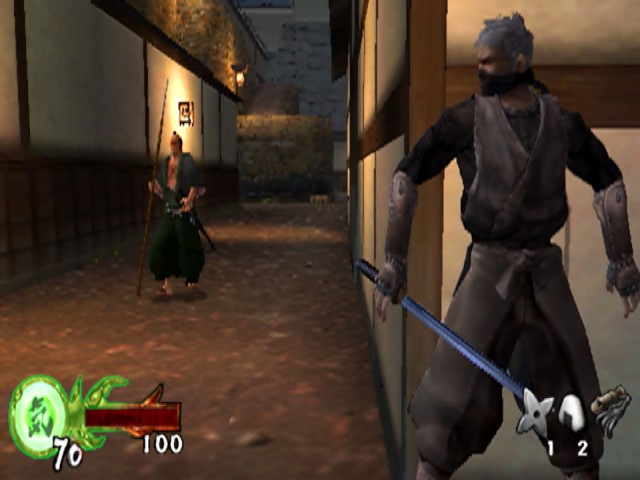
The central challenge is to reach an objective without alerting the guards along the way. Each mission assigns an objective such as infiltrating an estate, gathering intelligence, recovering something important, or eliminating a target. Players use a third-person view to move through villages, temples, rooftops, woods, castles, and other period-inspired locations, watching enemy patrols and choosing a route. A visibility indicator communicates how exposed the ninja is, while sound and line of sight can give away a careless approach. Getting close to an unaware opponent allows a cinematic stealth kill; open combat remains available when plans fail, but it is a riskier solution than staying hidden.
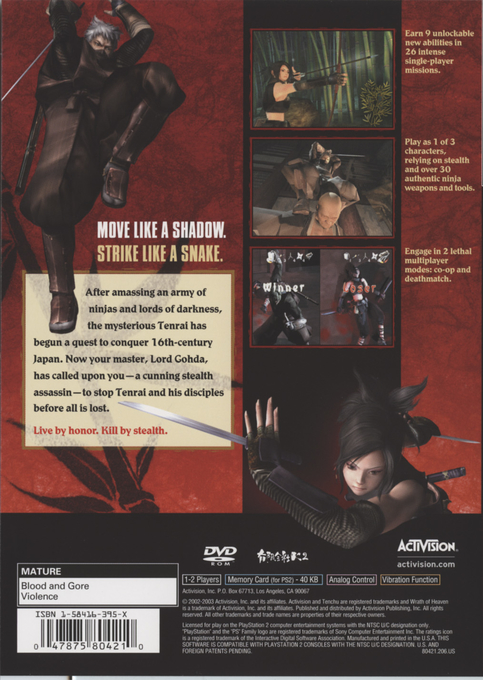
Rikimaru and Ayame bring different weapons and approaches to Tenchu: Wrath of Heaven on PS2. Rikimaru fights with the sword Izayoi and favors a direct, powerful style, whereas Ayame uses paired blades and has faster, more acrobatic assassination animations. The game also introduces Tesshu Fujioka, a doctor who pursues his own nighttime justice as an assassin rather than a Gohda ninja. His unarmed fighting and needle-based stealth attacks distinguish his missions from those of the Azuma pair. Character-specific scenarios present overlapping events from different viewpoints, and completing missions with strong stealth performance can unlock additional moves and content.
Tools make reconnaissance and improvisation as important as swordplay. The grappling hook opens high routes and helps players evade pursuit, while items such as throwing weapons, caltrops, smoke, and other ninja equipment can distract, damage, or slow enemies. Stages mix vertical paths with guarded interiors, giving players reasons to check ledges, roofs, and side routes instead of simply following a straight corridor. The PS2 release includes 25 missions, enhanced combat and animation compared with its predecessors, and weather and lighting effects that reinforce its nighttime infiltration atmosphere. Noriyuki Asakura composed the soundtrack.
Beyond the single-player missions, Tenchu: Wrath of Heaven offers local multiplayer modes for two players, including cooperative and competitive play. Its international title differs from the Japanese Tenchu 3, but both refer to the same 2003 PS2 game. The story also connects returning figures such as Onikage and Tatsumaru to Tenrai's plot, while the three playable leads give the campaign a broader perspective on its conflict. The game later received an expanded Xbox version, Tenchu: Return from Darkness, in 2004, with additional material and online options, and a PSP adaptation followed in Japan. As a PS2-era sequel, Wrath of Heaven remains a notable chapter in Tenchu's blend of stealth, ninja tools, and feudal-Japan action.
Gallery
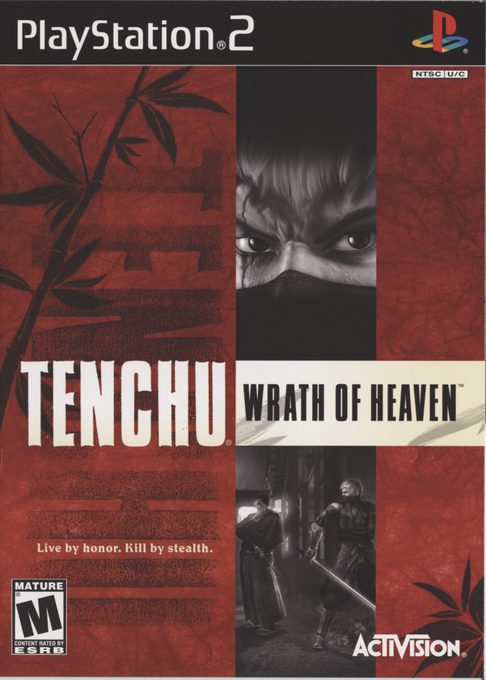
Details
- Developer
- Acquire
- Publisher
- Activision
- Players
- 2
- Release Date
- March 6, 2003
- System
- PS2