About
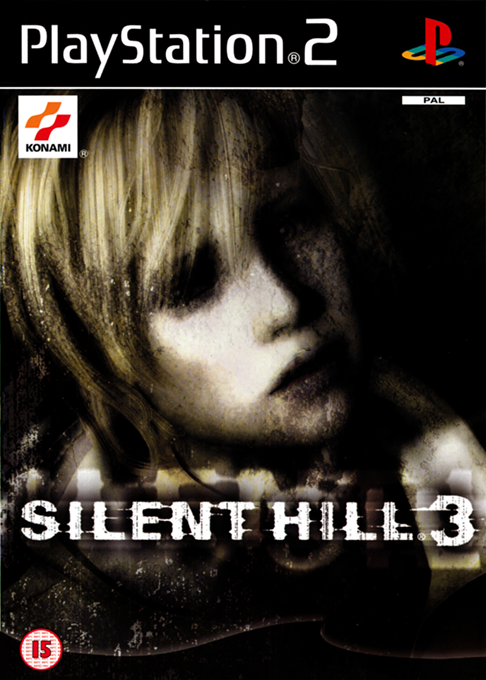
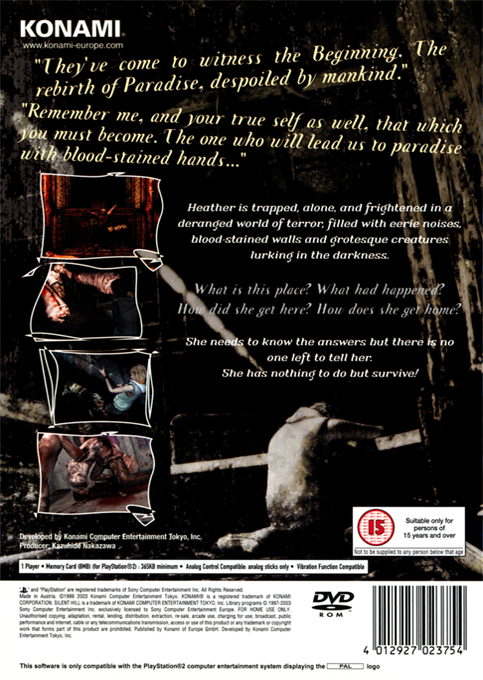
Silent Hill 3 is Konami's 2003 survival horror game for PlayStation 2, developed by Konami Computer Entertainment Tokyo's Team Silent. Released in North America on August 5, 2003, it is the third numbered Silent Hill game and a direct sequel to the original Silent Hill. The PS2 adventure places players in the role of Heather Mason, a sharp-tongued 17-year-old whose ordinary trip through a shopping mall becomes an escalating nightmare. For players looking for a psychological horror classic on PS2, Silent Hill 3 combines a tightly focused campaign with the series' unsettling world, memorable characters, and dense environmental detail.
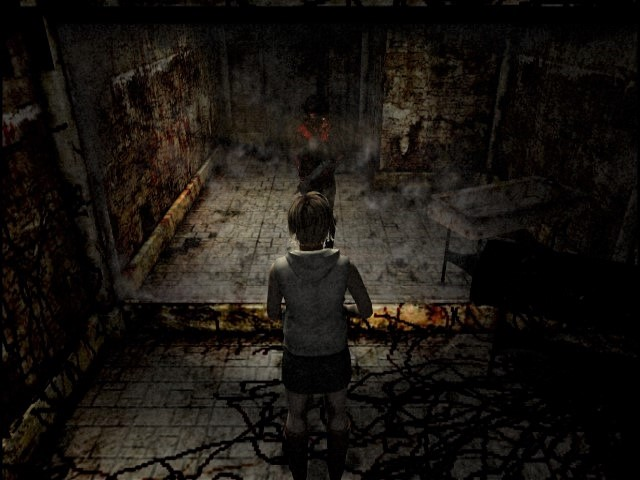
Heather's search for safety leads from a deserted mall and subway tunnels to her apartment, the fogbound town of Silent Hill, and locations shaped by the series' cult mythology. The story follows her growing connection to events from the first game, so returning players will recognize important threads while newcomers can still follow Heather's immediate struggle. Reality repeatedly gives way to the Otherworld: familiar corridors rust, stain, and twist into hostile spaces full of ominous imagery. That contrast is central to Silent Hill 3's horror, turning everyday places into uncertain territory rather than relying only on sudden shocks.
PlayStation 2 gameplay uses a third-person perspective built around exploration, navigation, puzzles, and combat. Heather collects maps and marks them as she discovers locked doors, blocked routes, and useful points of interest, making close observation a practical part of progress. A flashlight illuminates the dark but can make Heather easier to notice, while her portable radio crackles when creatures are near. The game lets players set combat and puzzle difficulty separately, a useful feature for anyone who wants to emphasize its story and riddles or make the survival challenge more demanding.
Silent Hill 3 gives Heather a varied but deliberately limited set of tools. Handguns, shotguns, melee weapons, healing items, and ammunition must be used with care as grotesque enemies block halls and open areas. She can block attacks and sidestep to avoid danger, rewarding measured movement over simply trading hits. The tension comes from deciding when to fight, when to conserve supplies, and when to run through an unfamiliar route while the radio warns of something nearby. Searchable rooms, puzzle items, and alternate paths keep the pace moving between confrontations.
The original PS2 release is especially notable for its expressive character models, animated shadows, elaborate textures, and carefully layered sound design. Akira Yamaoka composed the soundtrack, which blends industrial noise, melancholy melodies, and vocal tracks to support the changing mood of Heather's journey. Fixed and guided camera angles frame scenes for unease, sometimes restricting what can be seen around a corner or behind the player. This presentation works alongside the game’s monster designs and decayed environments to create psychological horror that feels oppressive as well as visually striking.
Silent Hill 3 is designed as a concise single-player experience, but replaying can reveal unlockable costumes, weapons, and additional endings. Its first playthrough follows Heather's story to a standard conclusion, while later runs can open other outcomes under specific conditions. That structure gives the PS2 game incentive beyond the main campaign without diluting its focused narrative. The game also includes a range of puzzle styles, from item-based problem solving to more demanding written clues at higher puzzle settings, making it a strong fit for fans who enjoy survival horror with adventure-game elements.
This entry refers specifically to the PlayStation 2 original. A Windows version arrived later in 2003, and Silent Hill 3 was later included in the 2012 Silent Hill HD Collection for PlayStation 3 and Xbox 360. Those releases are distinct versions; the original PS2 game remains the 2003 release developed by Team Silent, with its original platform presentation and controls. North American PS2 copies were also packaged with the soundtrack CD, a regional release detail tied to that edition rather than to the later ports or compilation.
For retro horror fans, Silent Hill 3 on PS2 stands out as a direct continuation of Silent Hill's story and a showcase for the series' early-2000s atmosphere. Heather is an unusually defined protagonist, and her reactions give the frightening situations a human perspective. The journey balances cult mystery, supernatural imagery, exploration, and resource-conscious survival gameplay in a compact form. Whether approached after the first Silent Hill or as a standalone introduction to Team Silent's work, it remains a landmark PlayStation 2 horror game with a tense, personal story at its center.
Gallery
Details
- Developer
- KCET
- Publisher
- Konami
- Genre
- Survival Horror
- Players
- 1
- Release Date
- August 5, 2003
- System
- PS2