About
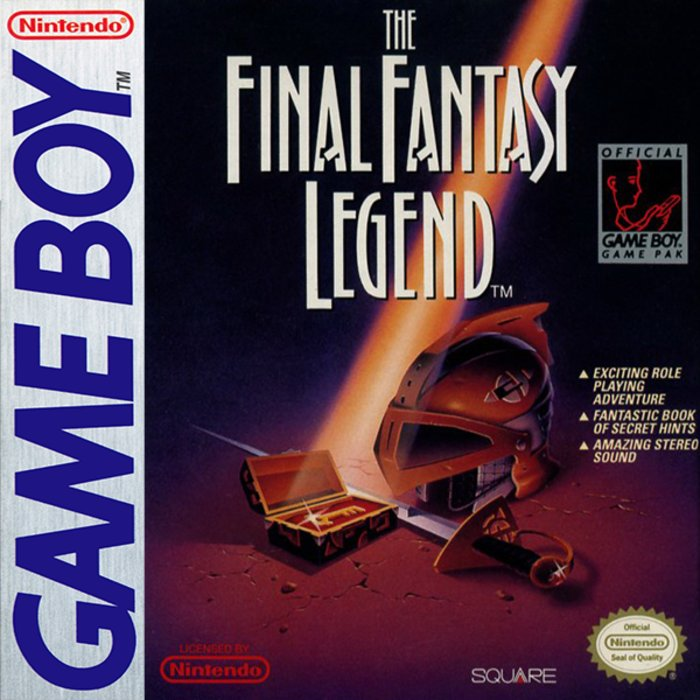
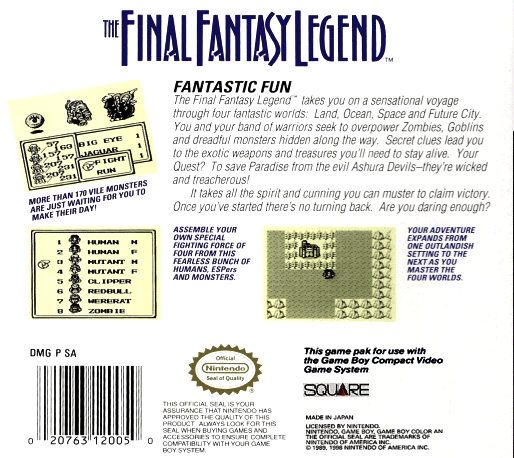
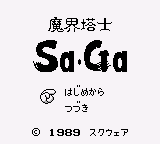
The Final Fantasy Legend for Game Boy is Square’s turn-based role-playing game, released in North America in September 1990 after debuting in Japan in December 1989 as Makai Toushi SaGa. Despite its Western title, it is the opening chapter of the SaGa series rather than a direct Final Fantasy sequel. The adventure casts a party of up to four travelers on a climb through a colossal tower said to lead to Paradise, crossing distinct worlds on the way and confronting the monsters and rulers that block the route upward.
Players create a leader and recruit companions from three different character types: humans, mutants, and monsters. Each develops in a fundamentally different way, making party construction part of the game’s identity. Humans improve their attributes with purchased stat-raising items, mutants can gain abilities and stat increases after battles, and monsters change form by eating meat left by defeated enemies. The system encourages experimenting with a mixed group, since a character’s strengths, equipment options, and growth all depend on its type.
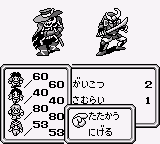
Exploration moves between towns, caves, castles, hostile areas, and world maps, with random encounters interrupting travel. In battle, the player selects an action for every party member from menu-based commands and equipped weapons, spells, abilities, or items; agility helps determine the order of action. Many weapons and restorative tools have a limited number of uses, so supplies and equipment management are as important as choosing attacks. Inns restore spent uses, while towns provide shops and guilds where replacement party members can be recruited.
The journey begins in a continent ruled by rival kings and then opens further layers of the tower. Its major worlds change both scenery and circumstances, ranging from island seas to lands suspended in the sky and a ruined technological city. Progress depends on locating the means to unlock the next ascent, talking with inhabitants, navigating local hazards, and defeating powerful foes. The Game Boy’s monochrome presentation keeps the maps and combat readable, while Nobuo Uematsu’s compact score provides the music for the quest.
Makai Toushi SaGa established several traits associated with later SaGa games: unconventional character advancement, a willingness to make player choices consequential, and fantasy settings that mix different eras and technologies. Square used the Final Fantasy name for the North American release, but the original Japanese SaGa identity remained central to the series that followed. The Game Boy game later returned in Square Enix’s Collection of SaGa: Final Fantasy Legend, a package that brings together the three original handheld SaGa titles and preserves the English title used for this first Western release.
As a single-player Game Boy RPG, The Final Fantasy Legend offers a focused tower-climbing quest built around flexible party roles instead of a fixed cast. Its finite-use equipment, changing monster forms, and unpredictable mutant growth give each run a different balance of risks and resources. For players exploring early handheld role-playing games or the origins of SaGa, it remains a distinctive Square adventure whose title connects it to Final Fantasy while its systems point in a different direction.
Gallery
Details
- Developer
- Square Enix
- Publisher
- Square Enix
- Genre
- JRPG
- Players
- 1
- Release Date
- September 30, 1990
- System
- GB