About
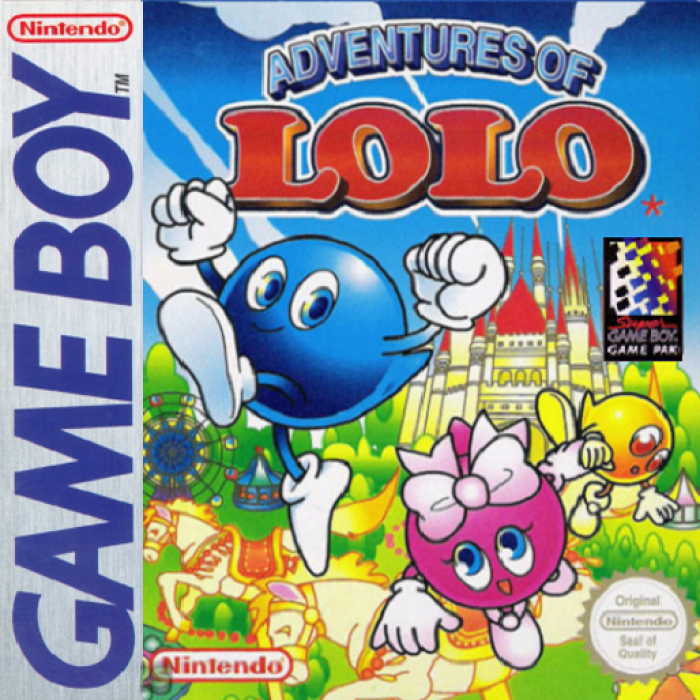
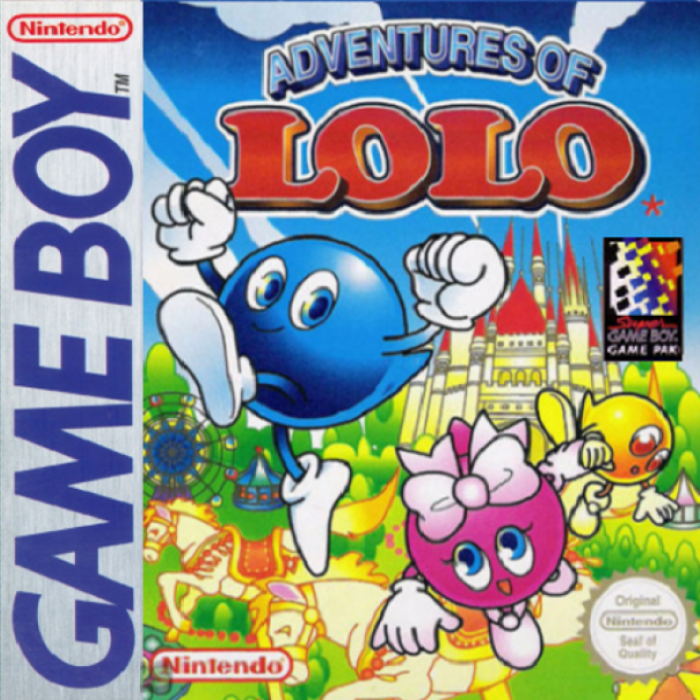
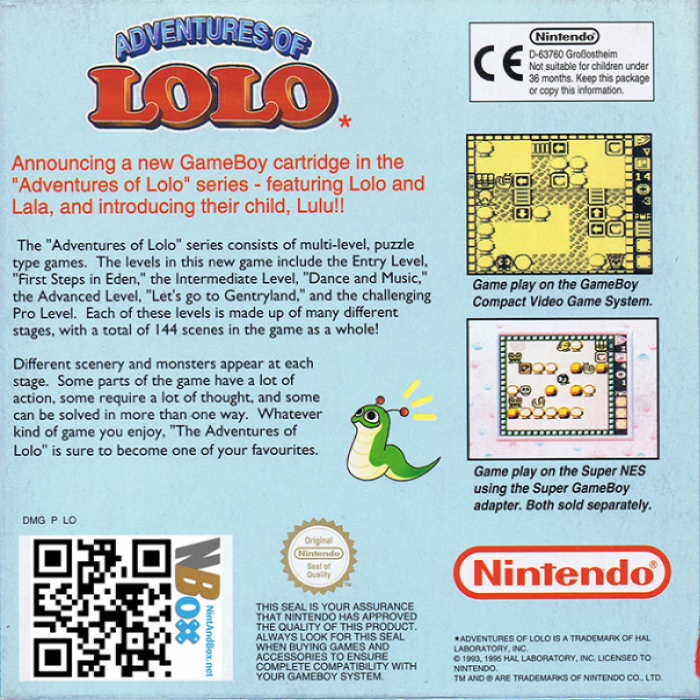
Adventures of Lolo for Game Boy is a single-player puzzle game developed by HAL Laboratory. It began in Japan in 1994 as Lolo no Daibōken and later reached Europe under the Adventures of Lolo name. Although it shares its English title and its round blue hero with the earlier NES releases, this portable entry is a separate installment in HAL’s Eggerland/Lolo puzzle series rather than a conversion of the original NES game. The Game Boy adventure places Lolo in a new story built around his family and an amusement park overrun by King Egger and his followers.
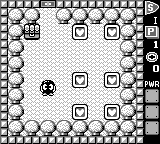
Lolo’s goal is to clear compact, single-screen puzzle rooms by collecting every Heart Frame. Once the required hearts have been taken, a treasure chest becomes available; its contents open the route forward. The simple overhead presentation makes each room readable at a glance, but the order in which hearts, obstacles, and enemies are approached is crucial. A seemingly open route can become unusable if Lolo blocks a passage, wakes an enemy at the wrong moment, or spends a useful object too early.
Movement is controlled directly across the board, while the puzzles turn the room’s terrain into a set of rules to exploit. Grass can protect Lolo from enemies that cannot cross it, sand slows him down, and solid stones can provide cover from hostile shots. Trees and water create different kinds of barriers, and directional arrow tiles limit which way a route may be entered. These details make progress less about reflexes than planning a safe sequence of moves through the maze.
Heart Frames can also grant Lolo the means to alter a room. With the appropriate ability, he can turn certain enemies into eggs and push those eggs into position. An egg may serve as a temporary obstruction, help contain a threat, block a projectile, or provide a way across water. Other rooms supply tools with specific uses: the hammer breaks stones, the bridge spans water, and an arrow changes the direction of an arrow tile. Each tool is limited to the situation that provides it, so the challenge comes from recognizing how its effect changes the whole layout.
The Game Boy release preserves the series’ familiar mix of cute characters and demanding logic puzzles while introducing Lulu, Lolo and Lala’s child, to its scenario. Across the game’s staged set of rooms, the player returns to the basic Heart Frame–chest–exit rhythm but encounters increasingly involved combinations of terrain, enemies, and special items. Passwords are awarded after levels, allowing progress to be recorded without relying on a cartridge save feature. It is a one-player game designed around deliberate experimentation: restarting a room can be as useful as advancing when a puzzle’s solution becomes clearer.
For players exploring the Adventures of Lolo Game Boy catalog, this version is notable for its regional identity. HAL Laboratory’s own record lists the Japanese release as Lolo no Daibōken, published there by Imagineer on March 25, 1994, while the European localization adopted the Adventures of Lolo title. That naming can make it easy to confuse with the NES game, whose rescue story and stage selection are different. The Game Boy installment instead stands as its own portable chapter in the Eggerland lineage, using the same accessible premise to deliver a new collection of room-by-room puzzles.
Gallery
Details
- Developer
- HAL Laboratory
- Publisher
- Nintendo
- Genre
- Logic Puzzle, Other Strategy
- Players
- 1
- Release Date
- January 1, 1995
- System
- GB