About
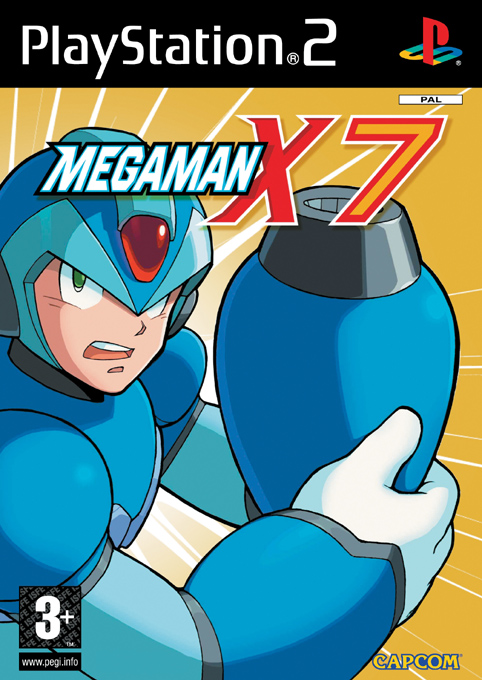
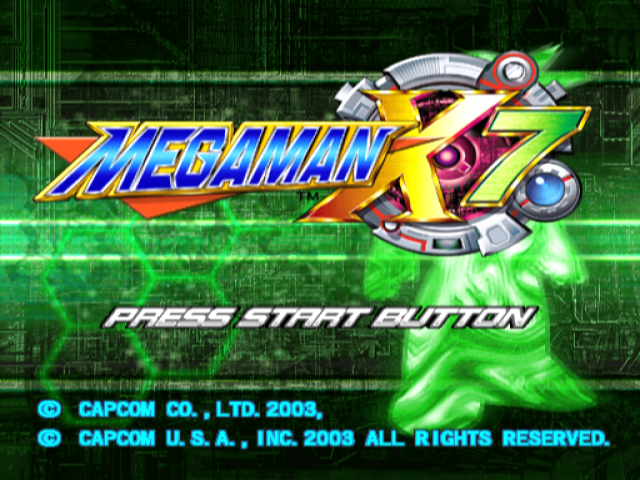
Mega Man X7 PS2 is Capcom's action-platform sequel in the Mega Man X series, released in Japan in 2003 and in Europe in March 2004. Published by Capcom for PlayStation 2, it is the seventh numbered X adventure and the series' first move to Sony's sixth-generation console. The game combines the familiar Maverick Hunter setting with polygonal presentation, alternating between traditional side-view platforming and fully three-dimensional areas. It is a single-player campaign built around a choice of missions, boss encounters, character upgrades, and the fight to stop a new threat to the uneasy human-and-Reploid world.
The story takes place in the 22nd century, when Reploids live alongside humans and Maverick incidents continue to endanger cities. Tired of the endless conflict, X has stepped away from frontline work, leaving Zero to answer the next emergency. The immediate crisis begins with Axl, a young Reploid who leaves Red Alert, a self-appointed anti-Maverick group whose methods have grown increasingly violent. Red Alert wants Axl back, and its leader Red turns the pursuit into a challenge against the Maverick Hunters. Zero brings the runaway to Hunter headquarters, then enters the contest while Axl tries to earn a place among the Hunters.
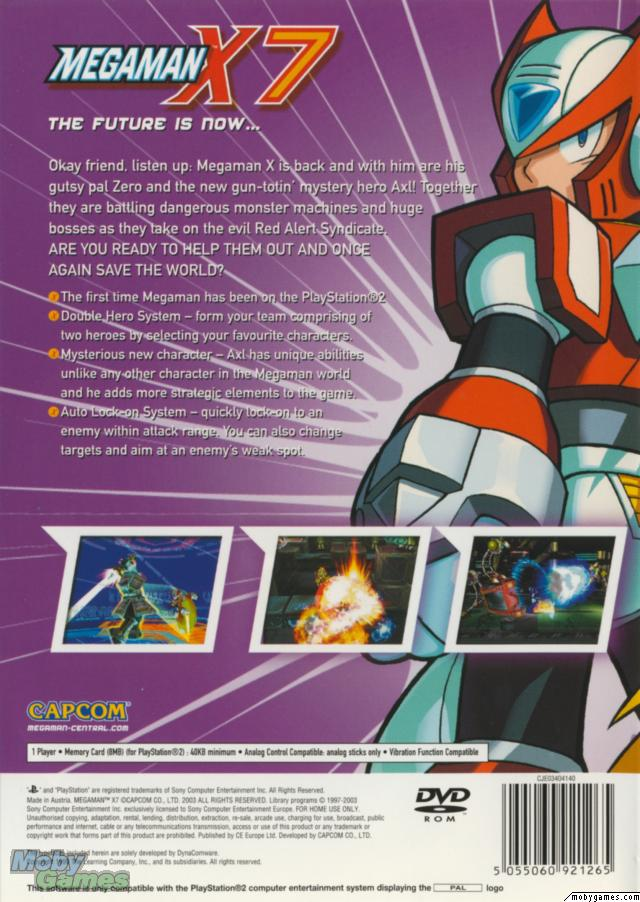
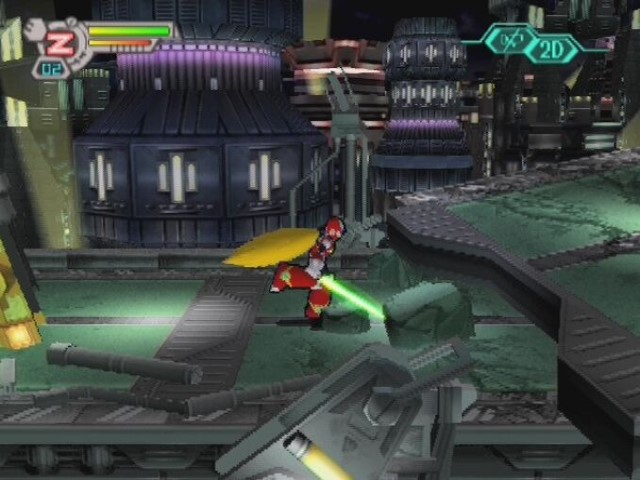
After the introductory mission, Mega Man X7 follows the series' recognizable structure of selectable stages led by eight Maverick bosses. The route through those missions is player-directed, so the powers earned from one victory can inform the next choice. Levels mix running, jumping, dashing, climbing and combat with changing camera perspectives: some sections retain the series' side-on format, while others use 3D movement or a more distant angle. A lock-on system supports the shooting characters by letting players acquire targets and cycle between them, an important addition for arenas and encounters designed around the new viewpoint.
Zero and Axl are available at the start, and the game lets the player take the pair into a stage and switch between them. Zero is the close-range specialist, using the Z-Saber for slashing attacks and techniques gained through progress. Axl fights with guns and brings a distinct Copy Shot ability. Defeating certain enemies with that shot can leave behind an item that allows Axl to assume their form temporarily, giving access to that enemy's movement and attack traits. X joins the playable roster later rather than opening the adventure as the lead; once available, he uses his charged X-Buster and can air-dash. This three-character setup makes weapon range, mobility, and combat style part of choosing how to approach a mission.
Rescuing Reploids is another major layer of the PS2 game. Captives appear across the stages, and their recovery provides chips and support-related benefits for the character who receives them. Those upgrades can affect health, weapons, or other capabilities, so exploration has a practical role beyond simply reaching the goal. Finding 64 Reploids unlocks X, although clearing all eight principal Mavericks also makes him available. Dr. Light capsules return as well, offering armor parts for X; completing a set gives players an armored option on the stage-select screen. Mission performance is graded, adding another measure to each completed operation.
Mega Man X7 was developed within Capcom's Mega Man production team, with Valuewave credited for program and graphics support, and it carries the Japanese title Rockman X7. Its 3D-and-2D construction marks it apart from the preceding PlayStation entries while keeping the series' Maverick stage format, weapon-based progression, and science-fiction cast intact. Axl's introduction is especially important to the later X storyline, while X's hesitation about the Hunters' role gives this chapter a different starting point from the series' usual immediate call to battle. For PlayStation 2 players, it is the entry where the X series tests its established action formula across a new set of perspectives.
Gallery
Details
- Developer
- Valuewave
- Publisher
- Capcom
- Genre
- Platformer
- Players
- 1
- Release Date
- March 5, 2004
- System
- PS2